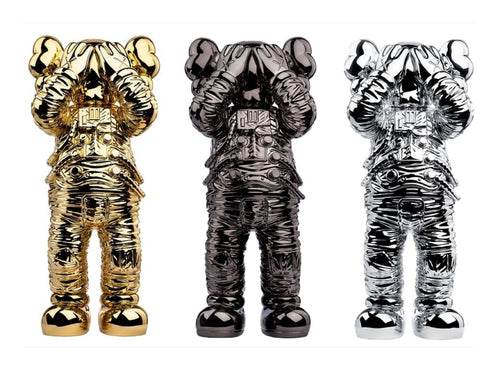
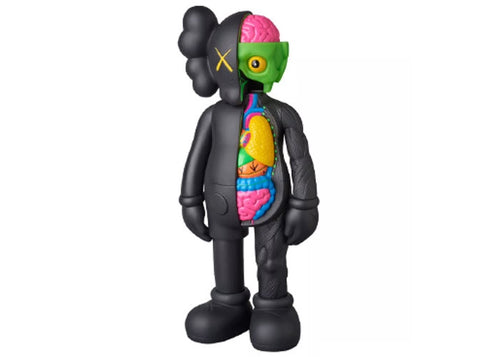
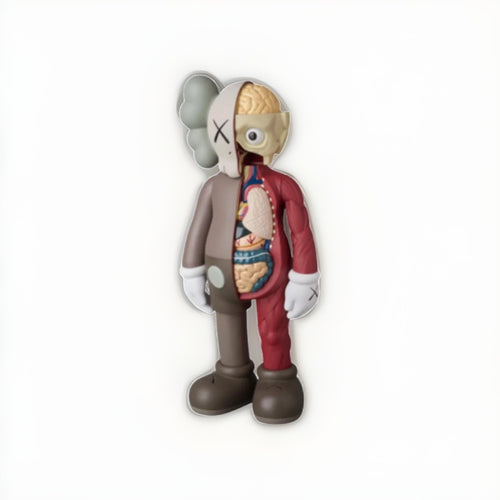
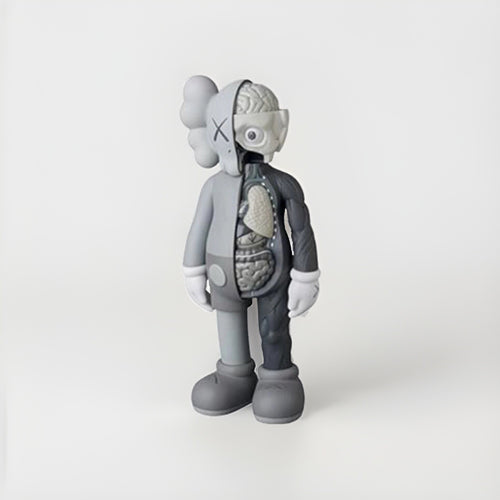
Should KAWS be part of an investment portfolio? For collectors with a long horizon and tolerance for illiquidity, KAWS occupies a defensible 3-7% allocation within a broader alternatives sleeve. The artist's institutional validation, multi-generational appeal, and verified secondary market depth make him one of the more credible entries in the contemporary collectibles category — but no collectible should replace traditional equity, fixed income, or real-asset exposure.
Why Contemporary Art Belongs in a Diversified Portfolio
Family offices and private banks have spent the last decade quietly shifting their collectibles guidance from "passion asset" to "portfolio diversifier." The case rests on three observations. First, blue-chip contemporary art exhibits low correlation with public equity indices over rolling 10-year windows. Second, the buyer base for top-tier contemporary work has globalized — Asian, Middle Eastern, and Latin American collectors now compete alongside traditional US and European buyers. Third, scarcity in this category is structurally engineered: editions close, artists die, OriginalFake-era pieces become permanently finite.
Within contemporary art, KAWS (Brian Donnelly, born 1974, Jersey City NJ) represents an accessible entry point. Legacy contemporary names — Basquiat, Warhol, Richter, Kusama — require six- to eight-figure capital commitments for primary works. KAWS offers a tiered market that begins in the low four figures for authenticated screenprints and extends to eight figures for unique paintings. That tiering is the feature, not the bug. It allows portfolio construction at multiple capital levels.
The 2019 Inflection Point
The market repriced KAWS on April 1, 2019, when The KAWS Album sold at Sotheby's Hong Kong for HK$115.97 million — approximately US$14.7 million — against a high estimate of roughly US$1 million. The result was not an outlier auction; it was an institutional validation event. Within 18 months, every major auction house had a dedicated KAWS specialist, and the secondary market for his editions, paintings, and sculpture expanded materially. That single hammer reset the conversation from "designer toy artist" to "contemporary asset class."
KAWS Market Liquidity by Tier
Liquidity is the single most underestimated risk in collectibles investing. Within the KAWS market, liquidity varies sharply by format. The Gauntlet Gallery 160,000+ comparable sales database tracks transaction velocity across each tier.
| Format | Typical Range (Documented Secondary Market) | Liquidity | Best For |
|---|---|---|---|
| Open-edition screenprints | Low four figures | High — weekly comparable sales | Entry-level collectors |
| Signed limited prints | Mid four to low five figures | High — multiple platforms | Core portfolio sleeve |
| Companion vinyl (OriginalFake era) | Mid four to mid five figures | Moderate — provenance critical | Long-hold collectors |
| Bronze and large sculpture | Mid five to mid six figures | Moderate to low | Patient capital, museum buyers |
| Unique paintings | Six to eight figures | Low — auction-dependent | Trophy allocation only |
Liquidity Considerations Across Formats
Limited-edition prints are the most actively traded segment of the KAWS market and exhibit the tightest bid-ask spreads. They clear within days on authenticated platforms and across multiple auction houses each month. Vinyl figures from the OriginalFake era (2006-2013) trade more slowly because authentication is harder and box condition materially affects value. Paintings are the least liquid tier — they trade only at scheduled auction events and require months of lead time to consign properly.
The Hidden Cost Stack
Collectibles carry a cost stack that traditional securities do not. Honest portfolio modeling requires accounting for all of it.
- Authentication. Independent expert review or platform authentication fees apply per item. Counterfeit rates on open marketplaces have been estimated at 40-60% for KAWS-branded objects.
- Storage. Climate-controlled storage runs annually as a percentage of value. Vinyl figures degrade in heat and UV; paper works require humidity control.
- Insurance. Fine art policies typically run 0.1-0.5% of insured value annually, with premiums increasing for works held in residence versus bonded storage.
- Transaction friction. Auction house seller's commissions, buyer's premiums, and platform fees compound on every transaction. Round-trip cost can exceed 30% of hammer for lower-value works.
- No income stream. Unlike equities or real estate, KAWS produces no dividend, yield, or rental income. Returns are realized only at sale.
The Case For KAWS in a Portfolio
Cultural staying power. KAWS has sustained a 25-year career arc spanning street art, gallery exhibition, and museum acquisition. Major institutions including the Brooklyn Museum, the National Gallery of Victoria, and MoMA Design Store have hosted dedicated programming. Institutional acquisition is the single strongest forward indicator for long-term value retention.
Multi-generational appeal. Few contemporary artists hold equal cultural weight with collectors in their 20s and collectors in their 60s. KAWS does. Streetwear culture, character-driven design, and gallery-grade execution converge in a way that attracts both new and established buyers — a critical structural feature for any asset whose value depends on future demand.
Institutional validation. Auction representation at Sotheby's, Christie's, Phillips, Heritage, and Bonhams creates a price discovery infrastructure that did not exist for designer-toy artists a decade ago. Verified secondary platforms have further professionalized the resale layer.
The Case Against
Cultural taste dependence. Contemporary art is reflexive — value depends on continued cultural relevance. If KAWS exits the cultural conversation, prices compress. This is not a hypothetical risk; it has happened to other 1990s and 2000s street artists.
Illiquidity at higher tiers. Above the print level, exit timing is constrained. A painting consigned in a soft auction season can underperform fair value by 20-40%. Patient capital is mandatory.
Concentration risk. Single-artist exposure is fundamentally unhedged. A reputational event, a legal dispute, or a death (with associated estate complexity) can reprice the entire body of work.
Authentication burden. The same counterfeit rate that creates opportunity for authenticated sellers creates risk for inexperienced buyers. Acquiring through unverified channels is functionally equivalent to setting capital on fire.
Portfolio Allocation Guidance
For investors with sufficient net worth to consider an alternatives sleeve, conventional family-office practice allocates 5-15% of total portfolio to alternatives broadly — private equity, hedge funds, real assets, and collectibles. Within that alternatives sleeve, collectibles typically receive 10-30%.
Applied to KAWS specifically, a defensible framework looks like this:
- Entry-level collector ($50K-$250K allocated to collectibles): 60-80% screenprints and signed editions, 20-40% Companion vinyl with documented provenance. Skip paintings and large sculpture entirely.
- Established collector ($250K-$1M): 40-60% prints and editions, 30-40% vinyl and small sculpture, 10-20% bronze or larger works. Diversify across collaboration eras.
- Trophy collector ($1M+): Same base allocation plus optional unique painting or major sculpture as a separate trophy line — sized so a 50% drawdown does not impair total portfolio.
In every tier, hold period is the lever. KAWS has rewarded 7-10 year holders far more reliably than 2-3 year flippers.
The Authentication Imperative
No KAWS investment thesis survives without an authentication strategy. Gauntlet Gallery, founded in 2012, has built one of the most granular KAWS authentication datasets in the secondary market — and the 160,000+ comparable sales database underpins every valuation. For a deeper walk-through of authentication, edition structure, and provenance documentation, see our KAWS Collector Guide.