BE@RBRICK Series Releases vs Collabs: Where the Real Value Lives

Every few months, a collector messages us with the same question.
They've got a Series 47 blind box they pulled themselves. They've got a collab 1000% they bought from a reseller. They want to know which one matters more for their collection — and more specifically, which one holds its value when the market shifts.
The answer isn't what most people expect.
It's not as simple as "collabs always win." It's not as simple as "blind box series are gambling money." The real answer lives in understanding what Medicom Toy actually built here, how the two product lines function differently in the secondary market, and where authentication intersects with long-term value in ways that most collectors don't think about until they're already sitting on the wrong piece.
Let's get into it.
What Medicom Toy Actually Built With These Two Lines
Medicom Toy has been running the BE@RBRICK series since 2001. The blind box series format — numbered sequentially, released in waves, with defined categories like Basic, Secret, Artist, Flag, Skull, and Cute — was the original product architecture. It was designed around collectibility through discovery. You didn't know what you'd pull. That's the point.
The collaboration model came later and operates on completely different logic.
With collabs, Medicom partners with a brand, artist, or IP holder and produces a defined edition in standard sizes — most commonly 100%, 400%, and 1000%. The partnership is usually announced. The edition size is often (not always) disclosed. The figure is sold through Medicom's retail channels, the partner's channels, and select authorized retailers globally.
These two lines have different DNA. They attract different buyers. They perform differently over time. And they require different authentication approaches when they enter the secondary market.
The Series Format: Scarcity by Design
Each numbered series typically ships in cases of 24. Inside a case you get a predictable distribution of common colorways and a very small number of rare pulls — Secrets, Artist pieces, occasionally a chase variant that never appears on the box checklist at all.
The scarcity here is mechanical. Medicom builds it into the distribution model.
A Secret from a popular series isn't rare because Medicom made fewer — it's rare because the distribution ratio makes pulling one statistically unlikely if you're buying single boxes. But if someone buys a full case, they're getting one. That dynamic creates a floor for Secret values that persists, but it also caps the ceiling. There are always enough Secrets in circulation to prevent truly extreme premiums on most series figures.
Where series figures break out is when the category itself becomes culturally significant retroactively. Early series pieces from 2001 through roughly the mid-2000s trade at premiums that have nothing to do with original rarity ratios — they trade on age, condition, and the nostalgia economy that now surrounds the early BE@RBRICK era.
The Collab Format: Scarcity by Partnership
Collab scarcity is a different animal entirely.
When Medicom partners with an artist or brand, the edition is bounded by that relationship. The number of pieces produced is a negotiated outcome between Medicom, the partner, and commercial reality. Some collaborations have produced figures in the low hundreds. Some have produced figures in the tens of thousands.
So how do you know which is which before you buy?
You often don't — not from the packaging alone. This is where provenance research and authentication become non-negotiable disciplines rather than optional due diligence.
The Authentication Stack: What's Actually Required

This is the section most casual BE@RBRICK content skips. It shouldn't.
Authentication for BE@RBRICK sits at the intersection of several verification frameworks, and the requirements have evolved as the market has grown and counterfeiting operations have become more sophisticated.
The Hologram + Release Record Framework
For Medicom collab releases, authentication rests on what Medicom actually ships: packaging quality and the hologram sticker, the figure's printed and molded markings, and a match against the documented release record. These elements working together are what establish authenticity. One without the others is incomplete.
This matters enormously in the secondary market because figures sometimes surface in legitimate packaging with a swapped or counterfeit figure inside. The box alone does not authenticate the physical piece if the markings, build quality, and weight do not match the documented release.
The Checklist, Element by Element
Element by element, the authentication framework breaks down like this:
-
Original Medicom packaging — intact, unaltered, with correct printing and logo placement for the release year
- Check that the packaging generation matches the figure. Early series boxes have different physical characteristics than later ones.
- Counterfeit packaging has become sophisticated enough that visual inspection alone is insufficient for high-value pieces.
-
Hologram verification — Medicom's hologram stickers have changed across production eras
- Know which hologram style corresponds to which release period.
- Reproduced holograms are a documented problem in the market.
-
Medicom release record — cross-reference the specific figure against Medicom's official release history
- This is the step most casual buyers skip. Don't skip it.
- Documented provenance from original retail or authorized secondary channels strengthens the chain significantly.
PSA certification is available for BE@RBRICK and applies its standard grading framework to the physical piece and packaging. PSA certification does not replace the Medicom-specific authenticity checks — it grades condition and provides a third-party record of the item's state at the time of submission. These are complementary layers, not substitutes for each other.
Beckett Authentication Services (BAS) handles BE@RBRICK in the context of figures that carry artist signatures — when a collab figure has been hand-signed by the collaborating artist, that signature is a separate authentication question from the figure's own Medicom provenance.
Where Series Pieces Actually Hold Value
Let's be direct: for most collectors entering the market today, standard series pulls do not hold value as investments. They function as collection depth, display pieces, and the cultural backbone of what BE@RBRICK is as an object.
But that's not the whole story.
The Cases That Actually Matter
Value in series pieces concentrates in specific categories:
Early series pieces in sealed or documented condition. The earliest Medicom series now carry genuine vintage premiums. The market for well-preserved early series figures — especially with original packaging and documented provenance — is distinct from the general series resale market and attracts a different type of buyer.
Secret figures from culturally significant series. When a numbered series carries a Secret that intersects with a broader cultural moment — a collaboration that wasn't widely known before the box hit retail, a design that became iconic after the fact — that specific pull can trade at multiples of its original secondary market price years later.
Artist category pieces from notable contributors. The Artist category within the blind box series has occasionally featured artists who later achieved significant market recognition. A 100% Artist series pull that predates someone's breakout moment trades very differently than a generic colorway pull from the same series.
Series-exclusive variants that never entered the collab channel. Some of the most interesting BE@RBRICK pieces exist only in series format. They never got a 400% or 1000% treatment. For collectors building comprehensive BE@RBRICK holdings, these create necessary pieces that can't be replicated through the collab market.
The Ceiling Problem
The structural challenge for series pieces is the ceiling problem. Because the distribution model means there are always a finite but non-trivial number of any given pull in collector hands, extreme secondary market premiums are hard to sustain. The exceptions — the early pieces, the retroactively significant Secrets — are real, but they're exceptions.
Are you buying series pieces expecting appreciation, or because they're part of a collection you actually want to own?
The answer to that question should determine how much you're spending per box.
Where Collab Pieces Actually Build Value

This is where the conversation gets genuinely interesting.
The BE@RBRICK collab market is not monolithic. A Medicom collaboration with a global luxury brand operates on completely different value dynamics than a Medicom collaboration with a regional streetwear label, even if the physical figures look equally premium on a shelf.
The Factors That Drive Collab Value
Cultural weight of the partner. This is the primary driver. When Medicom collaborates with an entity that carries decades of cultural equity, that equity attaches to the figure. The figure becomes a physical artifact of a moment between two significant cultural presences. That's not marketing language — that's how the secondary market actually prices these things.
True edition size versus perceived edition size. Some collabs that felt abundant at retail become genuinely scarce in the secondary market once collectors absorb them and they stop cycling. Others that seemed limited have enough copies in circulation that secondary market premiums remain modest. Doing real research on how many figures actually exist matters more than what the hype cycle suggested at release.
Size tier selection. The 100% is a different market segment entirely — it's accessible and tradeable, but it's rarely where serious value appreciation concentrates. If you're allocating budget toward value retention, the 1000% is generally the right tier for collabs that matter. Compare the same BE@RBRICK release, size and collaboration using dated completed sales, including packaging, condition and provenance. A format-wide growth rate does not value an individual figure.
Colorway specificity. For collabs that released in multiple colorways, the market quickly establishes hierarchy. Getting that right at purchase, or identifying it early in the secondary cycle, is a real skill that experienced collectors develop over time.
Artist-driven versus brand-driven partnerships. Collabs with living artists carry additional dynamics — the artist's career trajectory matters. A collab with an artist at their cultural peak trades differently than the same collab a decade later if that artist's market has moved. This creates both opportunity and risk that pure brand collabs don't carry in the same way.
The KAWS Case Study Framework
Without citing specific figures or specific results, the KAWS collaboration history with Medicom illustrates the broader pattern clearly.
Early KAWS x BE@RBRICK pieces were produced before the broader art market recognized KAWS as a primary market artist of the stature he subsequently achieved. Those early pieces traded at multiples of their issue price in the secondary market not because Medicom produced fewer — but because the cultural weight of the partnership grew faster than the supply of pieces changed.
This pattern — where a collab's value is partly a function of what happens to the partner's broader cultural standing after the figure releases — is one of the most interesting dynamics in the BE@RBRICK market.
Can you actually predict which collaborating artist or brand is going to appreciate culturally over a ten-year horizon?
No. But you can make educated assessments. And you can buy with enough market understanding to avoid paying peak premiums for collabs whose cultural moment has already passed.
The Secondary Market Mechanics: Series vs Collab in Practice
Understanding how these two product lines behave differently in the secondary market is practical knowledge, not theory.
Liquidity Profile
Series pieces are generally more liquid at lower price points. There's always a market for common series pulls at accessible prices — they're entry-level collectibles with a large base of casual buyers. But this liquidity doesn't help you if you're trying to exit a significant position in a high-value series piece. The buyer pool for a four-figure series Secret is meaningfully smaller than the buyer pool for a four-figure collab 1000%.
Major collab 1000% figures in strong condition with complete provenance documentation trade in a more focused market but with buyers who understand value and aren't hunting for bargains. The transaction is harder to initiate but easier to complete at fair market value when you find the right buyer.
Condition Sensitivity
Both categories are condition-sensitive, but collab pieces at 1000% are dramatically more condition-sensitive at the high end of value. Shelf wear, yellowing, any damage to the figure or box, and provenance gaps all compress value significantly. Series pieces have more tolerance for minor imperfections simply because the price points and buyer expectations are calibrated differently.
This means storage discipline for collab 1000% figures isn't optional if you're treating them as value-holding assets. Climate control, UV protection, and original packaging preservation are baseline requirements, not collector neurosis.
The Counterfeit Pressure
Counterfeiting pressure is heavily concentrated in the collab segment — specifically at 400% and 1000% for the highest-demand collaborations. The economic incentive to counterfeit a widely recognized, high-premium collab figure is real and has been acted on by sophisticated operations.
Series counterfeits exist but are less economically attractive to produce at scale given the lower per-unit secondary market values. The authentication discipline required for collab pieces is substantially higher than for series pieces.
This is not a hypothetical concern. FBI Operation Bullpen established clearly that sophisticated counterfeit operations targeting high-value collectibles are real, organized, and capable of producing items that pass casual inspection. The collectible toy market is not immune to this reality.
PSA's certification and verification warnings specifically address the problem of certification tampering — where legitimate PSA cases are opened, the authenticated item swapped for a counterfeit, and the case resealed. This is documented in the market. Medicom's du-al.io NFC system addresses this specific attack vector directly for the releases where it has been deployed.
Building a Collection That Holds

If you're building a BE@RBRICK collection with any attention to long-term value, the architecture that makes sense looks something like this:
-
Anchor pieces in collab 1000% with full provenance
- Complete original packaging
- Hologram + Medicom release record verification, with markings and build quality matched to the documented release
- Documented purchase channel (authorized retailer receipt or verifiable secondary market provenance chain)
-
Strategic series holdings in documented early pieces or verified Secrets
- Focus on condition and provenance over rarity alone
- Prioritize pieces with documented ownership history where possible
-
Signed collab pieces treated as a separate authentication question
- Artist signature on a collab figure requires BAS, JSA, or PSA/DNA opinion on the signature independent of the figure's own Medicom provenance
- Both layers of authentication need to be solid — figure provenance and signature authenticity are separate questions with separate documentation requirements
-
Maintain organized records
- Purchase receipts, provenance documentation, authentication certificates
- Photographs of condition at acquisition
- Storage logs if you're holding significant pieces long-term
The collectors who exit the BE@RBRICK market cleanly, at or above their cost basis, are almost uniformly the ones who treated documentation as part of the purchase process from the beginning — not as an afterthought when they decided to sell.
Red Flags
Before you buy in either market segment, run through these.
- Collab figure sold without original packaging at 1000% scale. This is an immediate and significant red flag. The packaging is part of the piece. "Box lost in storage" is a story that transfers the authentication burden to the buyer.
- Foot stamp or copyright markings that don't match the documented release. Do not accept explanations about production variations. This is how counterfeit figures in genuine boxes operate.
- Packaging without the corresponding figure — or vice versa — sold separately and then reunited. The pairing needs to be original. Mixed pairs are unverifiable.
- Pricing significantly below the established secondary market for a significant collab. The BE@RBRICK market is well-documented. If a high-demand 1000% collab is priced at a major discount to comps, something is wrong. Good deals don't look like that in this market.
- Hologram placement or appearance inconsistent with the claimed release era. Know what the correct hologram looks like for the release period you're buying in. Medicom's hologram presentation has changed over production eras.
- Provenance that jumps from "original owner" to current seller with no documentation of the interval. Gaps in provenance chains are real risk factors, not administrative inconveniences.
- PSA slab that looks slightly off in any physical dimension. Slab tampering has been documented in the broader graded collectibles market. If the encapsulation looks irregular, don't proceed without contacting PSA directly for verification.
- Seller who can't answer basic questions about the Medicom release record for the piece they're selling. Legitimate sellers of significant pieces know what they have. Vagueness about release history is a red flag for either inauthenticity or the seller not knowing they have an inauthentic piece.
Bottom Line
Series releases and collab releases are different products that serve different functions in a BE@RBRICK collection.
Series pieces give you depth, discovery, and access to early-era pieces that carry genuine vintage premiums. They're the foundation of the hobby and they're not going anywhere. But treating a blind box pull as an investment vehicle — absent extraordinary circumstances — is a category error.
Collab pieces at 1000%, from partnerships with genuine cultural weight, with complete provenance and proper authentication, are where serious value has consistently concentrated in this market. That's not guaranteed to continue. No market dynamic is. But it reflects the underlying logic of what makes a BE@RBRICK collab worth holding: the figure is a physical artifact of a specific cultural moment between two entities that mattered, in a format that Medicom has made consistently desirable as an object for over two decades.
The authentication work isn't optional. Hologram and marking verification, Medicom release record cross-reference, original packaging, and documented provenance — these are the table stakes for buying anything significant in this market. Skip them at your own cost.
Buy what you love. Document what you buy. Understand what you own.
That's the whole framework.
Frequently Asked Questions
Is a collab BE@RBRICK always worth more than a series BE@RBRICK?
Not automatically. A common 400% from a mid-tier collab may trade below a well-preserved Secret pull from an early numbered series. The question of value requires specificity — which collab, which series, which condition, which documentation. "Collab beats series" is a useful heuristic, not a universal law.
How do I verify a BE@RBRICK if I'm buying in person?
You need to run the physical checks at point of purchase, not after. Inspect the hologram and packaging against the release era, check the figure's markings and build quality, and cross-reference the release record before the transaction is complete. A figure that fails any of these checks is a non-starter regardless of what other documentation the seller provides. Don't accept the figure pending "follow-up verification." Do it at the table.
Does PSA grading add meaningful value to a BE@RBRICK piece?
PSA grading adds a documented condition record and a layer of market credibility that some buyers value in the secondary market. It does not substitute for Medicom-specific authenticity checks. For high-value collab pieces, PSA encapsulation is one layer in a stack that also requires hologram and marking verification and original packaging provenance. A PSA-graded figure without the full authentication stack is still an incompletely documented piece.
What's the right size tier to buy if my primary concern is value retention?
Size alone does not establish value retention. Compare the exact collaboration, release, condition, packaging and provenance in dated completed sales. Include display space, storage and delivery costs in the collecting budget.
I have a BE@RBRICK with a hand-signed artist signature. How do I authenticate the signature separately from the figure?
The signature is a separate authentication question from the figure's Medicom provenance. For artist signatures on collab or series pieces, Beckett Authentication Services (BAS), JSA, or PSA/DNA opinions are the appropriate frameworks. The BAS process distinguishes between basic certification and full Letter of Authenticity (LOA) opinions — these carry different weight in the market and you should understand which you're getting. The figure's own Medicom documentation and the signature authentication are both required for a fully documented signed piece.
Are there BE@RBRICK series pieces from early production years that are genuinely hard to find now?
Yes, and this is an underappreciated corner of the market. The earliest Medicom series — particularly pieces from the first few years of production in the early 2000s — exist in collector hands in genuinely limited numbers. The pool of well-preserved, documented early series pieces is small and doesn't replenish. These trade as vintage collectibles, not as secondary market resells of a recent product, and the buyer pool for them is different from the general BE@RBRICK collector market.
How do I evaluate the cultural weight of a Medicom collab partnership before I buy?
There's no formula, but there are useful questions. Does the partner have meaningful presence outside their primary industry? Is the partnership generating attention in communities that don't typically follow BE@RBRICK releases? Does the collab design create something genuinely new, or is it a logo-placement exercise? Has the partner's broader market trajectory been upward over the past several years? None of these guarantee outcome, but they help you think past the initial hype cycle to the underlying cultural substance — or lack of it.
What should I do if a seller can't produce original packaging for a 1000% collab they want a significant price for?
Walk away, or reprice accordingly. The packaging is not a nice-to-have for significant collab 1000% pieces — it's part of the piece. Missing packaging doesn't just represent a condition deduction; it removes a layer of provenance and authenticity context that can't be reconstructed after the fact. If the seller's explanation for missing packaging doesn't hold together logically, treat it as a red flag for the figure's authenticity as well as its condition. The secondary market has functioning prices for unboxed figures. They're not the same as prices for complete pieces, and they shouldn't be.
Shop BE@RBRICK
Explore current pieces available from the gallery.
-
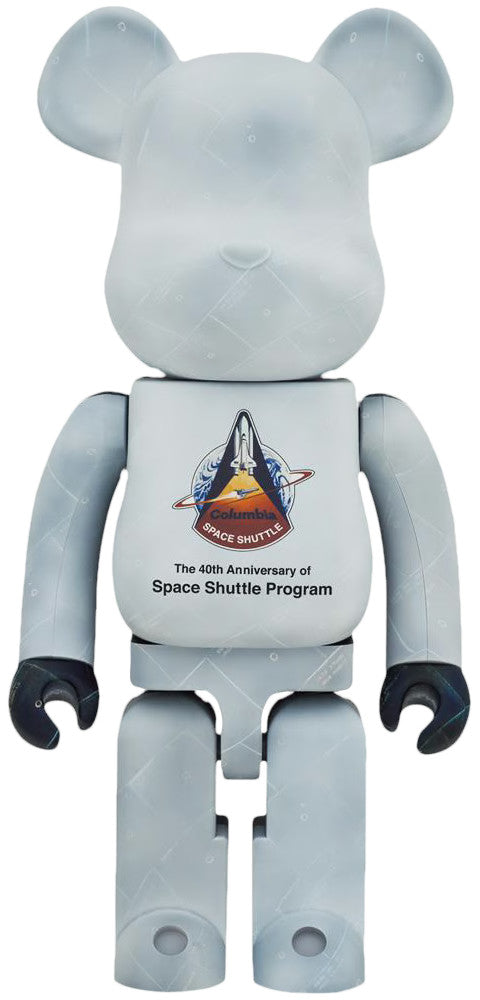
BE@RBRICK NASA Space Shuttle 40th Anniversary 1000% Medicom Toy Bearbrick
$600.00 USD
-
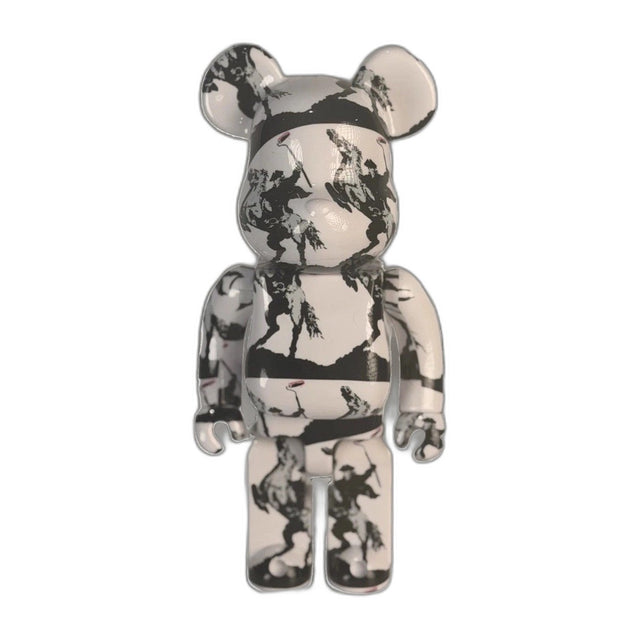
BE@RBRICK Brandalism Sync Banksy Medicom Toy Art Figure du-al.io Authenticated
$199.00 USD
-
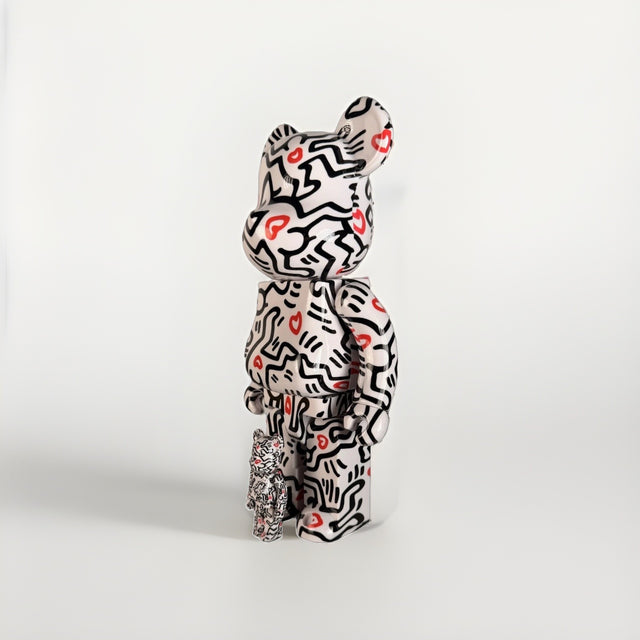
BE@RBRICK Keith Haring 400% + 100% Set Medicom Toy Bearbrick Foundation Art New
$199.00 USD
-
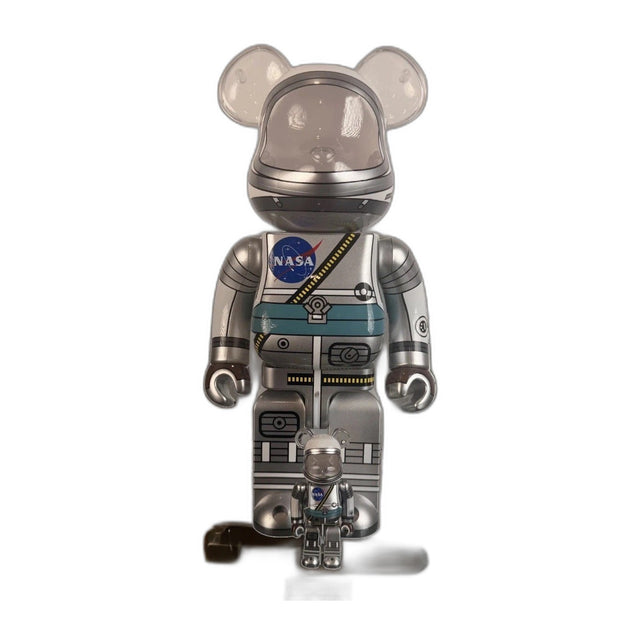
Bearbrick BE@RBRICK Mercury Astronaut 400% 100% Set NASA Medicom Toy Sealed New
$225.00 USD
-
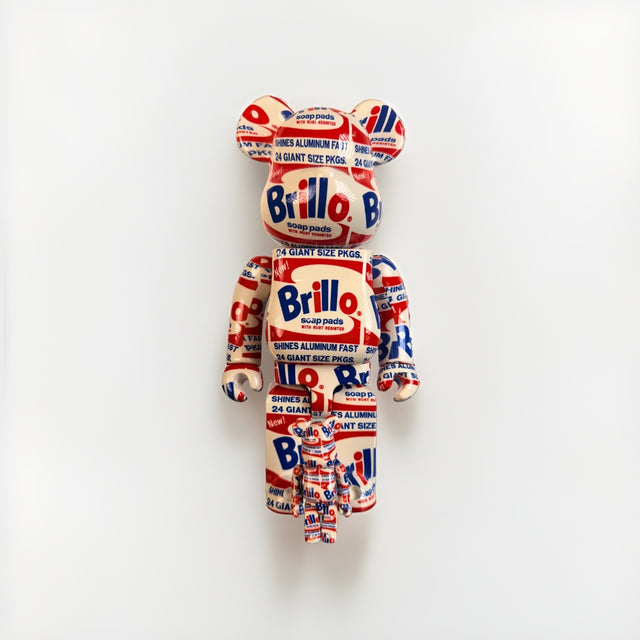
Bearbrick BE@RBRICK Andy Warhol Brillo 400% 100% Set Original 2020 Medicom New
$275.00 USD
Browse the collection for current listings.