KAWS Companion Open Edition vs Limited: You Need to Know the Difference Before You Buy

The single most common question we field from first-time KAWS buyers is some version of: "Is this one limited?"
It's the right question. It's just that most people asking it don't yet have the vocabulary to understand the answer — and sellers know it.
The KAWS secondary market is enormous, which means the opportunity for confusion, misdirection, and outright fraud is enormous too. An open edition Companion and a limited edition Companion can look nearly identical in a photograph. The price difference between them can be several thousand dollars. That gap is where problems live.
This is your working guide. We're going to walk through exactly how KAWS structures his releases, what distinguishes open editions from limited ones, how authentication works in 2024, and what red flags to watch before you wire anyone any money.
First: Understand How KAWS Actually Releases Work
KAWS — Brian Donnelly — has been producing collectible figures since the late 1990s. Over that time, the release infrastructure has evolved considerably. Understanding that evolution matters because authentication protocols differ depending on the era of the piece you're looking at.
The Medicom Era (Early Pieces)
The earliest Companion figures were produced in partnership with Medicom Toy. For this tier, authentication relies on original packaging integrity, hologram stickers, and cross-referencing against documented Medicom release records.
There is no NFC chip on these. There is no digital certificate. What you have is physical evidence and provenance chain, and that's it.
If someone is selling you a Medicom-era KAWS piece and claiming there's a digital authentication element, that's a fabrication. Full stop.
The OriginalFake Era
KAWS operated his OriginalFake retail channel from 2006 to 2013. Figures released through OriginalFake have their own documentation trail. Release records exist, colorways are documented, and edition structures were communicated at point of sale.
Again: no NFC chip. Authentication for this era runs through original packaging, receipt or purchase documentation where available, hologram verification, and provenance.
Recent Releases (KAWS:HOLIDAY and NFC Chips)
For some contemporary releases — notably KAWS:HOLIDAY editions distributed through AllRightsReserved from roughly 2022 onward — figures include an embedded NFC authentication chip.
Where that chip exists, it is a strong signal. The NFC chip physically embedded in the figure ties it to its release. If someone claims a figure from one of these releases but cannot demonstrate the corresponding NFC chip, that claim verifies nothing. For everything else, authentication still runs through packaging, markings, and documented release records.
Hold that thought. We'll come back to it in the Red Flags section.
What "Open Edition" Actually Means for KAWS

Open edition does not mean unlimited in a literal sense. It means no fixed ceiling was publicly announced at time of release.
In practice, KAWS open edition Companions are produced in quantities determined by market demand during the release window, then production stops. The molds don't stay active forever. But the key distinction is that buyers at release had no guaranteed scarcity signal.
Open editions are typically released through KAWSONE drops, available to anyone who gets through the queue. No lottery. No waitlist in most cases. You either got to checkout or you didn't.
What you get with an open edition Companion:
- The figure itself, in original KAWS-branded packaging
- Documentation appropriate to the release era (packaging inserts and the documented release record)
- No edition number
- No accompanying print or additional materials in most cases
The secondary market pricing for open editions reflects this. They trade, often meaningfully above retail, but they don't achieve the same ceiling as true limited editions from comparable periods.
So why does any of this matter if you're buying for the art and not flipping?
It matters because you're still spending real money. And because the counterfeit market targets open editions heavily, precisely because buyers assume they're lower-stakes purchases. They're not. A convincing fake at a "reasonable" open edition secondary price is still fraud.
What "Limited Edition" Actually Means for KAWS
A KAWS limited edition Companion has a fixed, publicly announced production number. That number is printed on the accompanying documentation. The piece is individually numbered.
This can mean different things in different contexts:
Gallery Exclusives and Museum Editions
Some limited editions are released in conjunction with specific exhibitions or gallery partnerships. These often come with additional documentation from the releasing institution, independent of KAWS's own certification infrastructure. The edition size is typically small — measured in the hundreds or fewer.
Holiday and Drop-Specific Limiteds
KAWSONE has periodically offered time-limited figures with fixed edition counts, available via lottery rather than open queue. The lottery mechanism itself is a scarcity signal. If you got one, documentation at point of purchase confirmed the edition number and total run.
Companion Variations That Command Premium
Certain colorways have never been released in open edition format. If you encounter a colorway you can't find in open edition release records and a seller is pricing it as limited, that claim needs to be verifiable against documented release history. Undocumented claims of limited status are not evidence of limited status.
The Physical Tells: How to Distinguish Them in Hand
Here's the practical part. You have a figure in front of you. What are you looking at?
Edition Numbering
A genuine limited edition Companion will be individually numbered. That number appears on the figure — typically on the base or foot — and matches the number on the accompanying certificate. The formatting is consistent: X/XXX or similar, hand-stamped or engraved depending on the release.
Open editions have no edition number. If you see a number on an open edition, that's a production or quality control marking, not an edition designation. Don't let anyone tell you otherwise.
Packaging Differences
Limited editions from gallery or museum contexts often come with distinctly different packaging from standard KAWSONE retail boxes. This might include:
- Slipcase or clamshell boxes rather than standard retail packaging
- Tissue wrapping or interior padding that differs from open edition boxing
- Additional printed inserts documenting the edition and release context
- Gallery or institution stamps on outer packaging
None of these packaging elements are unfakeable. But they are part of the holistic picture you're assembling.
Accompanying Documentation
The difference between limited and open editions is in what the documentation states. A limited edition’s paperwork will specify the edition size and the specific piece number. An open edition’s will not contain edition numbering.
Limited editions should come with original paperwork that explicitly states the edition. This might be a printed card, a certificate from the releasing gallery, or documentation from Medicom or OriginalFake depending on the era.
No paperwork that explicitly states the edition number and total run = you cannot claim limited status at resale. The burden of proof is on the seller, always.
The NFC Chip Verification (KAWS:HOLIDAY Releases)
For NFC-equipped KAWS:HOLIDAY figures, this is non-negotiable. Scan the chip. Verify it resolves correctly for that release.
If the chip doesn't scan, the scan produces an error, or the scan returns information that doesn't match the figure, walk away. That piece has a problem.
It's worth noting: NFC chips can be damaged. A chip that doesn't scan on a genuinely authentic figure is a resale problem regardless of the reason. Don't accept "maybe the chip is damaged" as a reason to proceed on a high-value piece without further verification.
Provenance: The Layer Most Buyers Skip

Physical authentication and digital verification tell you about the object. Provenance tells you about the object's history in the world.
For any meaningful KAWS purchase, you want:
- Original purchase documentation — receipt from KAWSONE, AllRightsReserved, or the releasing gallery. This is your cleanest provenance anchor. It ties a specific piece to a specific transaction at the point of original sale.
- Chain of custody between original buyer and current seller — who has owned this piece and in what sequence. This matters more for high-value limited editions than for open editions, but the principle applies across the board.
- Consistency between documentation dates and claimed release — if someone presents you with documentation that predates the release date of the piece, or that bears inconsistencies with the known release timeline, that's an immediate problem.
Why would a legitimate seller not have original purchase documentation?
There are real reasons: pieces change hands many times, original buyers don't always preserve receipts, estate sales and liquidations lose paper trails. These situations exist. But they increase your risk profile, and your pricing should reflect that. A piece with no provenance anchor is not worth the same as an identical piece with clean documentation.
Secondary Market Realities: Pricing as a Signal
Pricing on the secondary market is not random. It reflects the collective intelligence of buyers who have done this before. When a price sits well below where equivalent pieces are trading, there's a reason.
We won't cite specific dollar figures here because this market moves. But we can give you structural guidance:
- Open edition Companions in production-current colorways trade at premiums above retail that reflect demand and scarcity of new stock, not rarity in the numismatic sense.
- Open editions from discontinued colorways that were produced in high volumes may trade close to original retail or even below on the secondary market during soft periods.
- Genuine limited editions with clean provenance and verified authentication command meaningfully higher premiums, often multiples of original retail.
- Pieces priced between "this seems too good" and "this is clearly market rate for an open edition" deserve the most scrutiny — this is where mislabeled or misrepresented pieces tend to cluster.
Use StockX, GOAT, and auction records from established houses as your pricing benchmarks. These aren't perfect data sources, but they give you a picture of where the legitimate market is.
The Counterfeit Problem Is Real and It Is Large

FBI Operation Bullpen, which ran from the late 1990s into the 2000s, was specifically about sports memorabilia fraud — not designer toys. But it established a template for understanding how sophisticated counterfeit operations work: you don't fake the object alone, you fake the entire documentation ecosystem around it.
The KAWS counterfeit market operates on exactly that principle. The most dangerous fakes don't just attempt to replicate the figure. They replicate the box, the hologram stickers, the certificate, and in more recent iterations, they attempt to replicate or spoof the NFC chip verification process.
PSA certification-verification warnings have consistently highlighted that certificates themselves — even those bearing real-looking serial numbers and holograms — are not self-authenticating. This is why PSA and comparable authentication services exist: to verify the object, not just the paperwork. The same logic applies here. A convincing-looking certificate proves nothing without the object itself checking out — the markings, the packaging, and, on NFC-equipped releases, a successful chip scan.
Verify the chip. Don't skip this step.
Red Flags
Before you move forward on any KAWS Companion purchase — open or limited — run through this list.
-
No original packaging, or packaging that doesn't match the claimed release
- Open editions have standardized retail packaging for each release. Limited editions from gallery contexts have distinct packaging. Know what the packaging should look like before you buy.
- Sellers who say "I removed the figure from the box to display it" are describing something that reduces the piece's value and raises its risk profile simultaneously.
-
NFC chip that doesn't scan, or seller who discourages you from scanning it
- There is no legitimate reason a seller would discourage you from verifying an NFC chip on an NFC-equipped release. None.
-
Edition number claimed verbally but not documented in the piece or certificate
- Stories about a piece being limited are not documentation. The number is either stamped on the figure and matching the certificate or it isn't.
-
Price that sits at an unusual discount to comparable pieces with full documentation
- The secondary market prices authenticated pieces. A significant discount without explanation is a signal, not a deal.
-
No provenance chain available for a high-value limited edition
- Ask where it came from. Ask for original purchase documentation. A seller who can't or won't answer these questions is not someone you should be buying a significant piece from.
-
Hologram stickers that look printed rather than embossed, or that peel without resistance
- Genuine holograms on Medicom and OriginalFake packaging have tactile and visual properties that differ from printed replicas. Handle enough authentic pieces and you'll develop the feel for this. Until then, trust your instinct when something seems off.
-
Claims of Medicom-era pieces with digital certificates
- As noted above: digital authentication infrastructure did not exist for early KAWS pieces. Anyone presenting a digital certificate for a Medicom-era figure is presenting fabricated documentation.
-
Sellers who can't explain the release context
- If you ask a seller where a piece was originally released — KAWSONE, AllRightsReserved, a specific gallery, a museum collaboration — and they can't tell you, that's a problem. Legitimate provenance has a starting point. Know what it is.
How to Actually Verify Before You Buy
This is the process. It's not complicated, but it requires discipline.
-
Identify the release
- Before anything else, identify the specific release you're looking at. What colorway? What size? What year? Through what channel? KAWSONE drop records and community databases like Kawsone.com archives are useful reference points.
-
Confirm edition status from primary sources
- Was this release open or limited? Find the original KAWSONE or AllRightsReserved product listing, or documented coverage from the release date. Secondary market listings describing a piece as limited are not evidence of limited status.
-
Request full documentation from the seller
- Original receipt or purchase confirmation. Certificate of authenticity with edition information where applicable. Original packaging, intact and matching the release.
-
Verify NFC chip if applicable
- For NFC-equipped releases (KAWS:HOLIDAY from roughly 2022 onward), this is step one of physical verification. Do this yourself, in person, with the actual piece. Don't accept a screenshot of someone else's successful scan.
-
Cross-reference edition number
- For limited editions: the number on the figure matches the number on the certificate. Both are present and legible. The total edition size stated on the certificate matches the known release quantity for that piece.
-
Assess provenance
- Where has this piece been? Can the seller document the chain from original release to today? The longer the chain, the more documentation you need to feel secure.
Bottom Line
The difference between a KAWS open edition and a limited edition is not a matter of aesthetics. It's a matter of production structure, documentation, verification infrastructure, and — at the end of the day — significant money.
Open editions are legitimate collectibles. Don't let anyone tell you they're not worth buying. But you need to know what you're buying, pay accordingly, and verify it the same way you'd verify anything else at that price point.
Limited editions demand a higher verification burden because they command higher prices and are therefore more attractive targets for misrepresentation. The standards are not negotiable: edition number stamped on the figure, matching certificate, NFC verification where applicable, and provenance chain back to original release.
The KAWS market rewards buyers who do their homework. It punishes buyers who assume that enthusiasm and a good price are enough due diligence.
Do the homework.
Frequently Asked Questions
Q: Can I authenticate a KAWS Companion without the original packaging?
For NFC-equipped KAWS:HOLIDAY pieces, the chip embedded in the figure itself is a primary authentication tool, and a figure with a verified chip can be authenticated without the original box. For other pieces — Medicom era and OriginalFake era included — original packaging is a significantly more important part of the authentication picture, because the physical evidence chain is your only verification mechanism. Missing packaging on older pieces should meaningfully reduce what you're willing to pay.
Q: How does NFC authentication work on recent KAWS releases?
Some recent releases — notably KAWS:HOLIDAY editions from AllRightsReserved, roughly 2022 onward — carry an NFC chip embedded in the figure at production. When you scan the chip with a phone, you're verifying that this specific figure resolves to a valid record for that release. It closes a loop that paper documentation leaves open. It matters because it ties verification to the figure itself in a verifiable way — you can't take a legitimate certificate from a damaged or destroyed figure and apply it to a fake.
Q: How do I know if a specific colorway was released as open or limited edition?
The best primary sources are archived KAWSONE product listings and AllRightsReserved release records. Community resources like dedicated KAWS collector forums and databases have documented most major releases with release dates, edition structures, and retail prices. If you can't find primary source documentation confirming a piece was released as limited, treat it as open edition until proven otherwise. The burden of proof is on the limited edition claim, not the open edition assumption.
Q: Are there third-party authentication services that specialize in KAWS figures?
This is an area in active development. For current releases, the manufacturer's own markings, packaging, and documented release records are the authoritative standard. Third-party authentication services have historically been more developed in the sneaker and trading card space — PSA for cards, StockX and GOAT for sneakers — than for designer toys specifically. Some auction houses that handle KAWS pieces conduct their own in-house authentication processes. If you're buying a high-value piece without being able to conduct hands-on verification yourself, buying through an established auction house with documented authentication practices is a meaningful risk reduction strategy.
Q: What's the risk with buying KAWS from private sellers versus established platforms?
The risk differential is significant. Established platforms like StockX and GOAT have authentication processes built into their transaction flow, and they stand behind those processes with buyer protections. A private seller on a resale marketplace or social platform offers you none of that. What you have is whatever documentation the seller provides and your own ability to verify it. This doesn't mean don't buy from private sellers — some of the best pieces in the market move through private channels. It means your verification burden is higher, not lower, when there's no institutional backstop.
Q: If I have an older KAWS piece with no documentation at all, what are my options?
Your options narrow considerably. For a Medicom-era or OriginalFake-era piece with no documentation, no original packaging, and no provenance chain, you're relying entirely on physical characteristics of the figure itself — material quality, paint application, construction details, weight — to assess authenticity. This is not a process for non-specialists. If you have a significant piece in this situation, having it physically examined by someone who handles KAWS regularly is worthwhile before making any valuation or resale decision. The piece isn't necessarily fake just because documentation is missing, but you cannot represent it as authenticated without that documentation.
Q: Do KAWS open editions ever become more valuable over time?
Yes. Some open editions from early production windows have appreciated substantially because the total quantities produced — while not fixed at release — turned out to be relatively modest, and demand has grown considerably with KAWS's profile. Early Medicom-era open editions in particular can command significant premiums on the secondary market today. But this appreciation is a secondary market phenomenon: it doesn't retroactively make those pieces limited editions. The documentation standard for what they are doesn't change based on what they're worth. An open edition that now trades at a high multiple of its original retail is still an open edition, authenticated on the open edition framework appropriate to its era.
Q: What should I do if I think I've already purchased a fake?
Document everything: your purchase receipt, all communications with the seller, photographs of the figure and all accompanying materials. Contact the platform through which you made the purchase and initiate a dispute process immediately — most platforms have time-limited windows for fraud claims. If you purchased through a private channel, your legal options depend on the jurisdiction and the amounts involved. For significant sums, consult with an attorney familiar with consumer fraud. Separately, if you have reason to believe the piece is part of a broader counterfeiting operation rather than an isolated misrepresentation, the FBI's Internet Crime Complaint Center (IC3) accepts complaints relevant to fraud of this type. Don't just absorb the loss quietly — reporting documented fraud helps the broader market.
Shop KAWS
Explore current pieces available from the gallery.
-
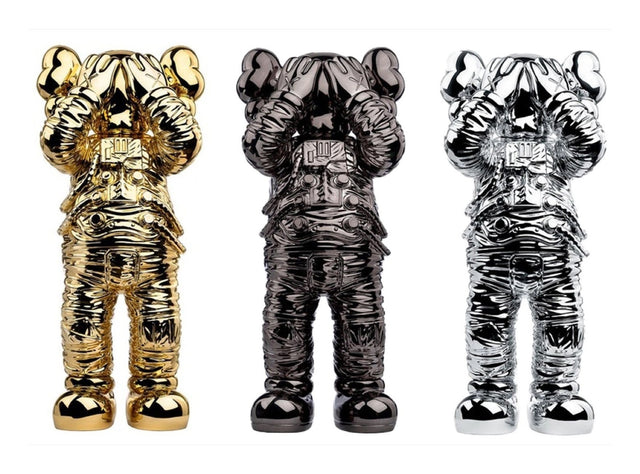
KAWS Holiday Space Set of 3 Gold Black Silver Companion Astronaut Figure Rare
$2,900.00 USD
-
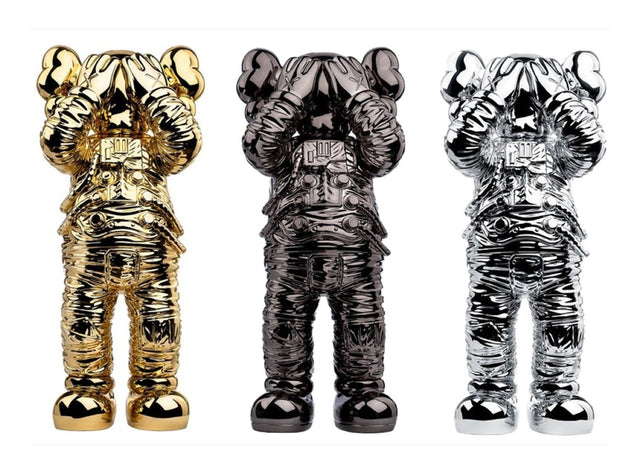
KAWS Holiday Space Set of 3 Gold Black Silver Companion Astronaut Figure
$2,900.00 USD
-
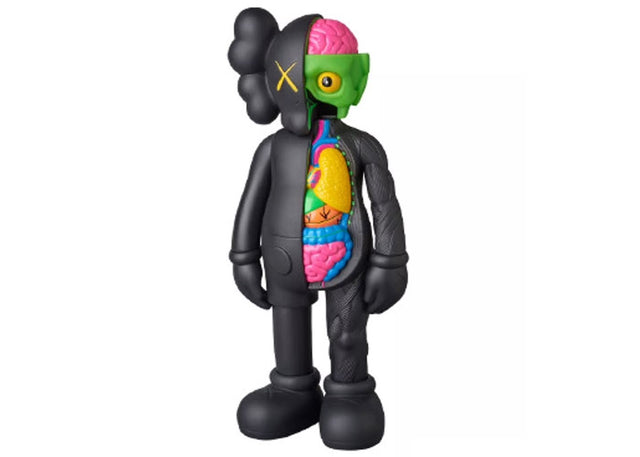
KAWS Companion Flayed Open Edition Black Medicom Toy Dissected Sealed New Figure
$599.00 USD
-
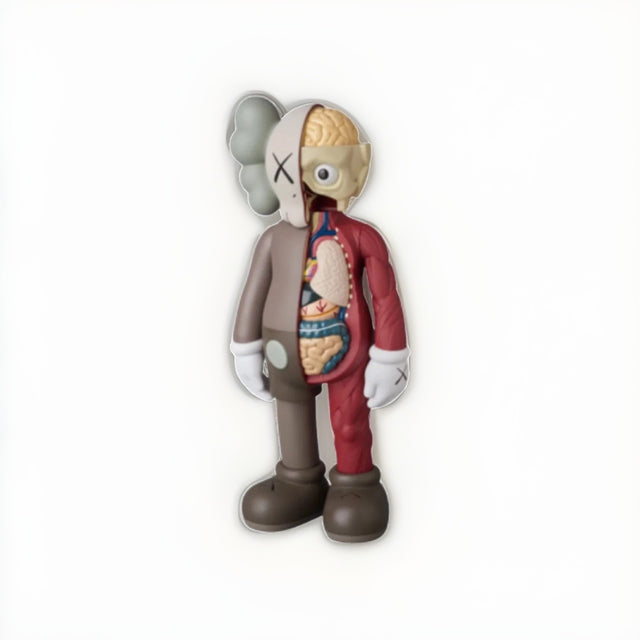
KAWS Companion Flayed Open Edition Brown Medicom Toy Dissected Sealed New Figure
$349.00 USD
-
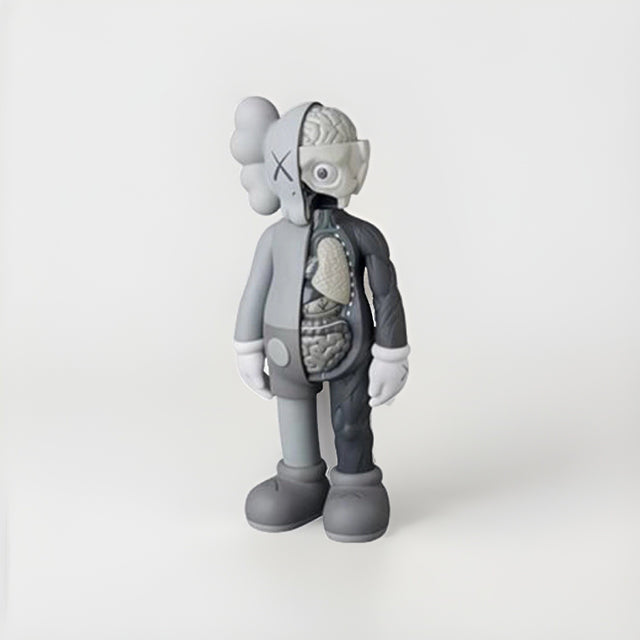
KAWS Companion Flayed Open Edition Grey Medicom Toy Dissected Sealed New Figure
$349.00 USD
Browse the collection for current listings.