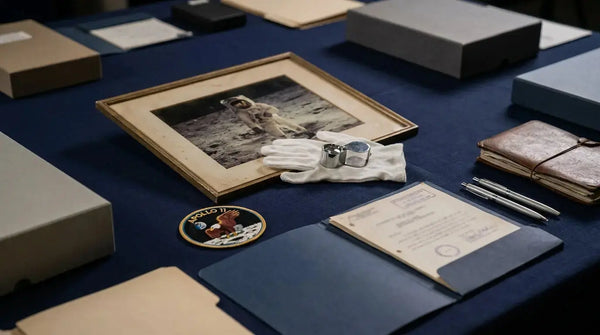
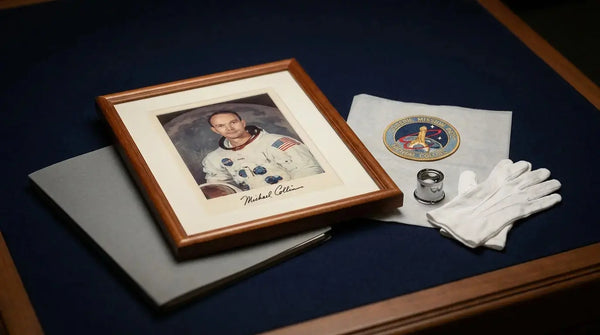
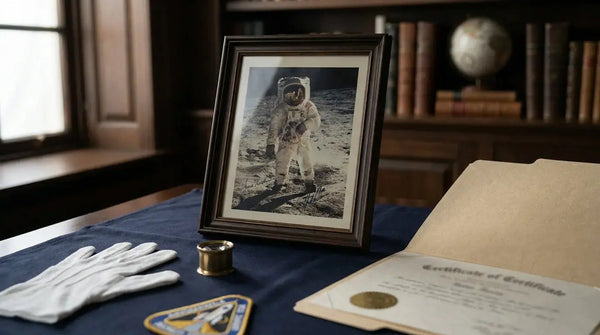
The global market for authenticated art and signed memorabilia exceeds $65 billion annually — yet industry analysts estimate that between 20% and 50% of works sold outside established auction channels are outright forgeries or misattributed pieces. If you have ever picked up a signed print at a gallery, purchased a sports signature online, or browsed estate sale street art, the odds are uncomfortably high that you have encountered a fake.
Gauntlet Gallery has reviewed more than 160,000 comparable sales across street art, limited-edition prints, and signed memorabilia, making it one of the most data-rich sources for fake-detection methodology in the authenticated collectibles space. Founded in 2012, our team has developed a rigorous, category-specific authentication framework that has protected buyers from millions of dollars in fraudulent transactions. This guide shares that framework in full.
The Scale of the Problem

The Association for Research into Crimes against Art (ARCA) estimates that forgeries and fraudulent attributions account for between $6 billion and $7 billion in annual losses worldwide. That number almost certainly understates reality, because private-sale fraud is severely underreported: buyers who discover they own a fake typically absorb the loss rather than invite public scrutiny of their acquisition judgment.
Three macro-trends have made 2024–2025 a particularly active period for forgery activity:
- Price corrections create distressed-seller opportunities. The Banksy print market shed 40–60% of its speculative premium between 2022 and 2024. As motivated sellers seek fast exits through private channels, buyers encounter transactions where authentication shortcuts are normalized.
- Signed memorabilia volume has exploded. The global sports and entertainment memorabilia market crossed $26 billion in 2023 (Deloitte estimate). Signatures are the single largest fraud subcategory by volume, driven by the ease of reproduction.
- COA fraud has industrialized. A certificate of authenticity is only as reliable as the organization issuing it. Forensic examiners at Professional Sports Authenticator (PSA), James Spence Authentication (JSA), and Beckett Authentication Services (BAS) now flag a growing volume of fake COAs that convincingly mimic legitimate certificate design — complete with holograms, barcodes, and embossed seals.
The good news: forgeries leave traces. Every counterfeit operation, from street-level print scams to sophisticated studio reproductions, produces detectable anomalies when examined against a database of verified authentic examples. Gauntlet Gallery's 160,000+ comparable sales database is built precisely to surface those anomalies.
Universal Red Flags for Fake Art
Before diving into category-specific tests, there are eight warning signs that apply across every segment — prints, paintings, signed photographs, memorabilia, and sports cards. If a piece triggers any of these flags, pause the transaction and obtain independent verification before proceeding.
1. Price Significantly Below Market
A signed Banksy screen-print (POW edition, Pest Control COA, iconic imagery) trades in the £60,000–£150,000 range on the authenticated secondary market. An offer at £8,000 is not a deal — it is a signal. Gauntlet Gallery's 160,000+ comparable sales database confirms that legitimate distressed sales rarely fall more than 25–30% below current median values. Anything further should trigger immediate skepticism. For signed sports memorabilia, PSA/JSA-authenticated jerseys from Hall of Fame athletes trade at $800–$8,500; items offered at $150 are almost never what they claim to be.
2. Provenance That Cannot Be Independently Verified
Provenance — the documented ownership history — is the backbone of authentication. A claim of "purchased directly from the artist's studio" or "acquired at the original gallery opening" is easy to fabricate and impossible to challenge without documentation. Authentic provenance includes dated receipts, gallery invoices, auction records, or correspondence traceable to a verifiable source. If the seller's only provenance claim is verbal, treat the work as unauthenticated regardless of accompanying paperwork.
3. COA from an Unknown or Self-Appointed Issuer
A certificate of authenticity means nothing without a recognized, independent issuing body with a searchable database. Any seller can print a "Certificate of Authenticity" and attach it to a forgery. The question is always: which organization issued it, and can you verify the certificate number in their database right now? If the COA references a body you cannot independently find and search, it is not a valid authentication document.
4. Ink, Paper, or Material Inconsistencies
Authentic limited-edition prints are produced on specific paper stocks using documented inks and printing processes. Banksy's POW-era screen-prints, for example, were printed on Somerset Velvet paper using specific Pantone-matched inks. Forgeries typically fail on paper weight, surface texture, and ink bleed characteristics. Under a loupe or UV light, legitimate prints often show consistent screen patterns; digital reproductions show different dot structures and may exhibit fluorescent brighteners not present in original paper stocks.
5. Edition Numbers That Do Not Match Published Records
For any work with a documented edition size, the number on the piece must match published records. If a "Banksy Girl With Balloon" claims to be from an edition of 300 when the authenticated edition is 150, the discrepancy alone is sufficient to question authenticity. Cross-reference edition sizes against auction house catalogues, the publishing gallery's records, or Pest Control's verification service.
6. Signatures That Look "Too Perfect"
Forgers often spend hours perfecting a signature, producing results that are paradoxically too consistent and too clean. Authentic signatures carry the organic variability of a person's natural handwriting — slight pressure changes, micro-tremors, and pen-path variations that are impossible to replicate exactly. PSA and JSA examiners specifically look for signature exemplars that lack this natural variability as a primary forgery indicator. Compare any signature against a minimum of five verified authentic exemplars before accepting it.
7. Unusual Urgency from the Seller
Legitimate sellers of high-value authenticated works welcome scrutiny; they know authentication protects their transaction as much as yours. A seller who pressures for a quick close, discourages independent appraisal, or frames a third-party verification request as an insult is exhibiting behavior that is structurally incompatible with authentic material. Walk away from any transaction where the seller is more invested in speed than documentation.
8. Missing or Inconsistent Blind Stamps, Gallery Stamps, and Edition Markings
Legitimate prints carry specific physical markers applied at the point of production: blind stamps (dry embossed impressions), publisher stamps, and hand-applied edition numbers. For Banksy prints, the Pictures on Walls (POW) blind stamp from the 2003–2017 era is a dry embossed impression — not inked. Forgeries frequently use inked reproductions of these marks, which are immediately visible under raking light. The absence of a stamp that should be present, or the presence of an inked stamp where a dry emboss is expected, is a significant red flag.
Category-Specific Authentication Tests

Street Art and Limited-Edition Prints
The Banksy market is the most heavily forged segment in street and contemporary art, owing to the artist's cultural cachet, documented edition sizes, and the accessibility of screen-print technology. The following tests apply specifically to Banksy and extend broadly across POW-era street art prints.
Pest Control Office verification is mandatory. Pest Control Office Ltd, established in 2008–2009, is the sole recognized Banksy authentication body. Every authentic Banksy work created for commercial sale carries a unique Pest Control reference number verifiable in the Pest Control database. There is no substitute, exception, or workaround. Buyers can use Pest Control's "Keeping It Real" pre-purchase verification service to confirm a work's status before committing funds.
POW blind stamp confirmation. Works from the 2003–2017 Pictures on Walls era carry a dry-embossed POW stamp. Examine this under raking light — a legitimate stamp will show clean compression marks with no ink. Any version of this stamp that has been inked, printed, or reproduced digitally is not original.
Paper and print consistency. Cross-reference the paper weight and surface texture against known authenticated examples. Forgeries of Banksy prints commonly use digital reproduction on inkjet paper that, under magnification, shows visible inkjet dot patterns rather than the screen-print mesh pattern of an original.
Signed Sports and Entertainment Memorabilia
The three recognized bodies for sports signatures are PSA, JSA, and BAS. Each maintains a searchable online database where any certificate number can be verified in real time. Before purchasing any signed sports item above $250, spend 60 seconds verifying the certification number on the issuing body's database. This single step eliminates the majority of signed-memorabilia fraud.
For space memorabilia, Zarelli Space Authentication is the recognized authority for astronaut-signed items and space-flown artifacts. Items in this category outside the Zarelli-authenticated chain should be treated as unverified regardless of accompanying documentation.
Exemplar comparison. The major authentication services maintain signature exemplar databases. For items submitted to private sale without certification, compare the signature against a minimum of five verified authentic exemplars from the same approximate time period. Athlete and celebrity signatures change meaningfully over time; a comparison must account for the signer's age and physical condition at the claimed signing date.
Fine Art Paintings and Works on Paper
Art Loss Register search is a baseline requirement. Any significant fine art purchase above $5,000 should include an Art Loss Register (ALR) search certificate confirming the work is not listed as stolen. The ALR maintains the world's largest database of stolen art and is accepted by major auction houses, insurers, and law enforcement bodies globally.
Catalogue raisonné cross-reference. For any artist with a published catalogue raisonné, the piece must appear — or have a clear scholarly explanation for its omission. Wildenstein Plattner Institute is the primary reference for French Impressionist and Post-Impressionist attributions. IFAR provides opinion letters for disputed or unresolved attributions.
Technical analysis for high-value works. For works above $50,000, technical analysis is warranted. This includes X-ray fluorescence (XRF) testing for period-appropriate pigments, infrared reflectography for underdrawing, and carbon dating where applicable. Modern forgers can replicate surface appearances convincingly; they cannot replicate the physical and chemical history of a 19th-century canvas.
Authentication Bodies by Category: The Complete Reference
| Category | Authentication Body | What They Authenticate | Verification Method |
|---|---|---|---|
| Banksy | Pest Control Office Ltd | All Banksy works created for commercial sale | Unique reference number; "Keeping It Real" pre-purchase check |
| Banksy (secondary marker) | Pictures on Walls (POW) Blind Stamp | Banksy prints from 2003–2017 | Physical examination for dry emboss (not Pest Control substitute) |
| Death NYC Prints | Death NYC Artist-Signed COA + Gold Seal | Death NYC limited editions | Artist-signed certificate with gold seal on authenticated editions |
| Sports Memorabilia | PSA (Professional Sports Authenticator) | Sports cards, signed sports memorabilia, vintage photographs | PSA registry lookup by certification number |
| Sports / Entertainment Signatures | JSA (James Spence Authentication) | Sports and entertainment signatures | JSA sticker certification number lookup |
| Sports Cards / Signed Items | BAS (Beckett Authentication Services) | Sports cards, signatures, game-used items | Beckett graded slab; online registry search |
| Space Memorabilia | Zarelli Space Authentication | Space-flown memorabilia, NASA and astronaut signatures | Zarelli chain of custody documentation |
| Fine Art (Stolen Works Check) | Art Loss Register (ALR) | Cross-database stolen art check | ALR search certificate |
| Fine Art (Attribution Disputes) | IFAR | Authentication research, unresolved attributions | Opinion letters; published case studies |
| KAWS / BE@RBRICK | OneCOA + NFC | KAWS and BE@RBRICK authenticated editions | NFC chip scan + OneCOA database verification |
| Warhol Works | TrueCOA | Andy Warhol authenticated works | TrueCOA certification and documentation chain |
| Music Memorabilia | Beckett + JSA + PSA | Signed albums, instruments, photographs | Multi-body verification chain |
How to Verify Any Certificate of Authenticity

A certificate of authenticity is a document, not a guarantee. Certificates can be forged, photocopied, transferred from authentic works to fakes, or issued by bodies that lack the expertise, database infrastructure, or independence to constitute meaningful authentication. The following four-step verification process, derived from Gauntlet Gallery's internal acquisition protocol, applies to any COA from any issuing body.
Step 1: Identify the Issuing Body and Confirm It Is Recognized
Write down the exact name of the organization that issued the COA. Search for it independently — not via links provided by the seller, but through your own search engine query. Confirm the organization has a verifiable public history, a searchable database of issued certificates, and recognition by major auction houses or industry bodies. If the issuing organization does not appear in independent searches, or if its only web presence is a recently created website with minimal history, reject the COA as unverifiable.
Names to watch for that do not constitute recognized authentication: generic titles such as "Art Authentication Institute," "Gallery Certified," "Artist Authentication Bureau," or any body that appears to be a one-person operation without independent verification infrastructure.
Step 2: Locate and Search the Certificate Number
Every legitimate COA from a recognized body carries a unique certificate or registration number. Navigate directly to the issuing body's official website (not a link from the COA itself) and search for this number in their database. For PSA, this takes approximately 30 seconds at psacard.com. For Pest Control verification, submit via the official Pest Control website. For JSA, use the JSA verification portal at jsa.net.
If the certificate number does not appear in the database, the COA is either fraudulent or the work has not been registered. In either case, the work is unauthenticated regardless of the physical quality of the certificate document.
Step 3: Verify the Description Matches the Physical Work
COA fraud frequently involves attaching a legitimate certificate from an authenticated work to an inauthentic piece. Examine every descriptor on the COA — title, medium, dimensions, edition number, signature placement, paper stock — and confirm each one matches the physical work in hand. A discrepancy in any single field is sufficient to invalidate the authentication relationship between the COA and the work.
Pay particular attention to edition numbers. A COA that reads "45/150" must match the handwritten edition number on the work itself. Mismatches, even minor ones such as "45/150" on the COA and "45/750" on the work, indicate a disconnect that warrants immediate investigation.
Step 4: Confirm Physical Security Features Are Present and Intact
Recognized authentication bodies use physical security features that are difficult to reproduce: tamper-evident holograms, embossed seals, UV-reactive inks, and serialized stickers with proprietary adhesive profiles. Examine these under normal light and UV light. Features that have been peeled and reapplied, show adhesive residue around their borders, or do not match the known security specifications of the issuing body are indicators of tampering.
For PSA-graded sports cards specifically, the slab itself is the primary authentication container. Any PSA card removed from its slab has been stripped of its authentication status. Verify that the slab is intact, the tamper-evident seal is unbroken, and the graded label matches the registry entry for that certification number.
Market Price Reference: What Authenticated Works Actually Trade For
Understanding price ranges is itself a form of authentication protection. If you know what a legitimate signed Banksy print trades for, a private-sale offer at 10% of that value is immediately actionable as a red flag. The following ranges are drawn from Gauntlet Gallery's 160,000+ comparable sales database, cross-referenced with auction results from Phillips, Sotheby's, Christie's, and Heritage Auctions through Q1–Q2 2025.
| Category | Item Type / Authentication | Condition | Observed Price Range |
|---|---|---|---|
| Banksy Screen-Prints | Unsigned POW edition (600–750 run), secondary imagery, Pest Control COA | VG–Fine, unframed | £8,000–£20,000 |
| Banksy Screen-Prints | Unsigned iconic imagery OR signed lesser image, Pest Control COA | Fine, unframed | £20,000–£60,000 |
| Banksy Screen-Prints | Signed iconic imagery (Girl With Balloon, Flower Thrower), Pest Control COA | Fine–Mint, unframed | £60,000–£150,000 |
| Banksy Screen-Prints | AP/PP signed iconics, rare colorways, unique works, Pest Control COA | Mint, full documentation | £150,000–£300,000+ |
| Banksy — Noted Transactions | Signed Napalm (ed. 150), Phillips March 2025 | Fine | £18,000 hammer / £22,860 with fees |
| Banksy — Noted Transactions | Signed Girl With Balloon (ed. 150) | Fine | £60,000–£285,831 (2024 New Zealand record) |
| Sports Signatures (PSA/JSA/BAS) | Signed 8x10 photograph, top-tier athlete | Near Mint (PSA 9) | $250–$2,500 |
| Sports Signatures (PSA/JSA/BAS) | Signed jersey, Hall of Fame player | VG–Excellent | $800–$8,500 |
| Sports Cards (PSA Graded) | Modern era rookie card, PSA 10 | Gem Mint | $150–$50,000+ (player dependent) |
| Entertainment Signatures (JSA) | Signed film poster, A-list talent | Fine | $400–$6,000 |
| Music Memorabilia (Beckett/JSA) | Signed album, major recording act | Excellent | $300–$5,000 |
Price ranges represent 5th–95th percentile of observed transactions through Q1–Q2 2025. Specific prices depend on condition, rarity, and current market demand. Gauntlet Gallery's 160,000+ comparable sales database provides real-time comparable data for active listings.
COA Fraud Patterns: How Fake Certificates Are Made

Understanding how fake COAs are constructed helps buyers identify them faster. The following fraud patterns are the most commonly observed in Gauntlet Gallery's transaction review history.
Pattern 1: The Transferred Certificate. A legitimate COA from an authenticated work is physically separated from that work and attached to a fake. This works because the COA itself is genuine — it will pass database verification. The fraud is detected by comparing the COA description against the physical work (Step 3 of the verification protocol above). Any discrepancy in dimension, edition number, signature placement, or medium invalidates the match.
Pattern 2: The Replica Certificate. High-resolution scanning and modern printing allow fraudsters to reproduce the visual appearance of legitimate COA documents, including holographic foil elements and embossed seals. These are detected by attempting database verification: the replicated certificate number will either not appear in the issuing body's database or will return results that do not match the work being sold.
Pattern 3: The Unrecognized Authority. The simplest fraud pattern involves creating a new authentication body with a professional-sounding name and issuing COAs from it. These certificates typically have attractive design, security-looking features, and authoritative language. They fail at Step 1 of the verification protocol: the issuing body will not appear in independent searches as a recognized authority, will not have a verifiable database, and will not be referenced by any major auction house.
Pattern 4: The Self-Certified COA. Artists occasionally issue their own certificates of authenticity. For the majority of artists, a self-certified COA carries no independent verification weight — it proves only that someone claiming to be the artist produced a document. Self-certified COAs are only meaningful for artists who have established documented systems for self-authentication with verifiable records. For all others, a self-certified COA is insufficient for major transactions.
Frequently Asked Questions
How do I know if a Banksy print is authentic?
The only recognized Banksy authentication body is Pest Control Office Ltd. Every authentic Banksy created for commercial sale carries a unique Pest Control reference number verifiable in the Pest Control database. Use Pest Control's "Keeping It Real" pre-purchase verification service before committing funds. No other authentication body constitutes recognized Banksy authentication.
What does a fake COA look like?
Fake COAs often look professional, with holograms, embossed seals, and authoritative language. The difference lies in verifiability. Always check the certificate number in the issuing body's public database. If the number does not appear, or the issuing body cannot be independently found as a recognized authority, the COA is not valid authentication documentation.
Which authentication service is best for sports memorabilia?
PSA, JSA, and BAS are the three recognized authorities. PSA is the standard for graded cards. JSA covers sports and entertainment signatures. BAS graded slabs are accepted at major auction houses. All three maintain searchable public databases. For space memorabilia, Zarelli Space Authentication is the recognized authority.
How much does an authenticated Banksy print cost?
Unsigned POW-era Banksy prints with Pest Control COA start at £8,000–£20,000 for secondary imagery. Signed iconic prints (Girl With Balloon, Flower Thrower) range from £60,000–£150,000. These ranges are drawn from Gauntlet Gallery's 160,000+ comparable sales database through Q1–Q2 2025.
The Gauntlet Gallery Commitment to Authentication
Founded in 2012, Gauntlet Gallery was built on a single premise: that buyers deserve to know exactly what they are purchasing, with documentation to match. Every work in our inventory undergoes authentication through the recognized body for its category — Pest Control for Banksy, Death NYC artist-signed COA with gold seal for Death NYC editions, OneCOA and NFC for KAWS and BE@RBRICK, TrueCOA for Warhol works, and Beckett/JSA/PSA for signed sports and music memorabilia.
Our 160,000+ comparable sales database is not just a pricing tool — it is an anomaly detection system. When a work's characteristics deviate from the documented pattern of authenticated examples in its category, we identify that deviation before a transaction proceeds. This is the practical value of data depth: it converts authentication from a judgment call into a cross-referenced finding.
The industry-wide estimate that 20–50% of works sold outside established channels are forgeries is not a reason for paralysis. It is a reason to buy from sellers with documented authentication protocols, searchable COA databases, and the track record to stand behind every transaction.
Browse Gauntlet Gallery's fully authenticated inventory — every piece documented with third-party authentication from the recognized body for its category. View all authenticated works.