Did the KAWS market crash? No. The KAWS market underwent a healthy correction between late 2021 and 2023, not a crash. Speculative buyers exited, limited figures corrected 20-30%, open editions stayed flat, and museum-grade paintings held value. By 2024-2025 the market stabilized on real collector demand.
The 2021 Peak: How KAWS Reached the Top
By late 2021, the KAWS secondary market had reached price levels that startled even longtime collectors. The convergence of pandemic-era stimulus, the NFT boom, and a generational wave of new buyers pushed the entire contemporary collectibles category to historic highs. KAWS - born Brian Donnelly in Jersey City, NJ in 1974 - sat at the absolute center of that wave.
The benchmark moment had already been set on April 1, 2019, when "The KAWS Album" sold for HKD 115.9 million (approximately USD 14.7 million) at Sotheby's Hong Kong, shattering pre-sale estimates. That single result reframed the market: KAWS was no longer a designer-toy artist with auction-house side appearances. He was a contemporary art principal. By late 2021, that institutional credibility combined with retail enthusiasm to lift every category of KAWS work - paintings, limited figures, signed prints, and even open editions - to elevated price bands.
What Drove the 2021 Peak
- Pandemic liquidity: Stimulus checks and concentrated household savings flowed into collectibles as an alternative asset class.
- NFT halo effect: The crypto and NFT boom legitimized digital-native collecting and pulled new buyers into adjacent physical categories.
- Auction-house validation: Phillips, Sotheby's, and Christie's normalized KAWS as a contemporary art category, not a sub-genre.
- Collaboration velocity: Dior, Uniqlo, and AllRightsReserved drops each introduced new buyer cohorts at progressively higher floor prices.
The 2022-2023 Correction: What Actually Happened
Beginning in the first half of 2022, the broader contemporary collectibles and NFT markets began cooling. Rising interest rates pulled liquidity out of speculative asset classes, the NFT market entered a multi-year drawdown, and the discretionary-spending environment tightened. KAWS was not immune - but the way the correction expressed itself across categories tells the real story.
This was not a uniform crash. It was a stratified repricing, with very different outcomes depending on edition size, scarcity, and category. Drawing on the Gauntlet Gallery 160,000+ comparable sales database, the correction broke down roughly as follows:
Category-by-Category Correction
| Category | 2021 Peak Behavior | 2022-2023 Correction | 2024-2025 Status |
|---|---|---|---|
| Major paintings (auction-grade) | Record-setting demand | Held value; selective consignment | Stable, institutionally validated |
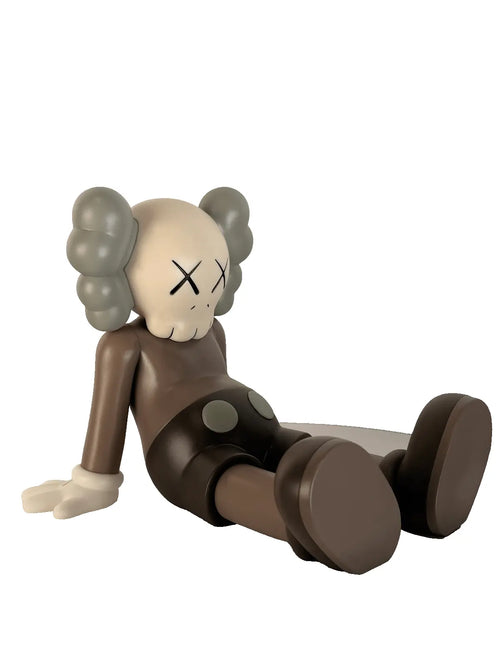
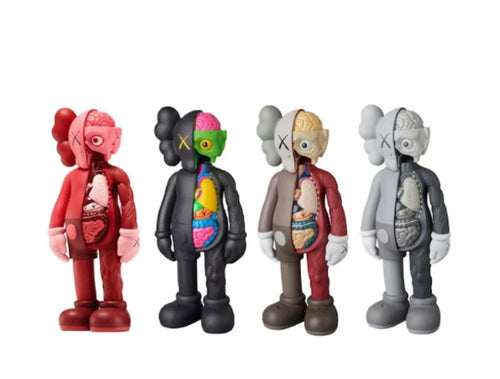
| Limited vinyl figures (Companion, BFF, Chum) | Sharp speculative run-up | Corrected approximately 20-30% | Stabilized on collector base |
| OriginalFake-era figures (pre-2013) | Already scarce, strong | Modest correction; supply-constrained | Appreciating on closed-edition status |
| Signed limited-edition prints | Elevated | Moderate correction | Firming on documented provenance |
| Open editions and mass-market plush | Flat - no scarcity premium | Stayed flat | Flat; not a secondary-market thesis |
Why Limited Figures Corrected Hardest
The limited Companion, BFF, and Chum figures absorbed the most price compression because they had attracted the largest share of speculative entrants in 2020-2021. When the marginal buyer exited, the marginal price reset. Importantly, the documented secondary market shows that the correction concentrated on figures purchased at peak retail-flip prices - not on long-held pieces acquired earlier in the cycle.
Why Major Paintings Held
Auction-grade KAWS paintings are owned by a different buyer profile: institutional collectors, established contemporary art collections, and high-net-worth buyers with multi-decade horizons. That audience does not transact on the same cycle as figure flippers, and supply at the top of the market is structurally constrained. The result was price stability through the correction window.
The Broader Context: Collectibles Cooled With Everything Else
The KAWS correction did not happen in isolation. The same window (2022-2023) saw drawdowns across:
- NFTs and crypto-adjacent collectibles
- Sneakers and streetwear secondary markets
- Trading cards and sports memorabilia
- Watches and other discretionary alternative assets
Against that backdrop, the KAWS correction was actually shallower and shorter than several peer categories. The reason: KAWS has an institutional ceiling that most collectible categories lack. When the speculative tier fell out, the contemporary art tier held the floor.
Stabilization Signals: 2024-Present
By 2024, the documented secondary market began showing clear stabilization signals. Hammer prices on authenticated limited figures firmed within a narrower band. Auction sell-through rates at the major houses recovered. Consignment volumes normalized, suggesting holders were no longer rushing to exit. And a new cohort of buyers - long-term collectors rather than flippers - became the marginal demand.
What Stabilization Looks Like in Practice
- Narrower bid-ask spreads on authenticated, documented pieces.
- Higher sell-through at established auction houses and verified secondary platforms.
- Premium for provenance: Pieces with intact COA, original packaging, and clear ownership history command meaningful premiums over undocumented examples.
- Compression on undocumented pieces: The counterfeit-aware buyer of 2025 will not pay 2021 prices for unverified work.
Forward Outlook
The KAWS market enters its next phase with a healthier structure than it had at peak. Speculative excess has been wrung out, the buyer base has matured, and the institutional tier - museum acquisitions, major auction placements, and credentialed collections - continues to expand. For collectors, three forward-looking dynamics matter most:
- Scarcity is permanent for closed editions. OriginalFake closed in 2013. Every authenticated piece from that era is now in a finite pool.
- Provenance is the entire investment thesis. The gap between documented and undocumented KAWS pieces will continue to widen.
- Institutional validation compounds. Each museum exhibition, each major auction placement, each curated collection adds to the floor.
For a deeper dive into specific KAWS categories, edition structures, and authentication standards, see our KAWS Collector Guide.
How Gauntlet Gallery Reads the Market
Gauntlet Gallery has operated in the contemporary art and collectibles market since 2012, and maintains one of the most granular KAWS comparable-sales datasets in the secondary market. Every piece we offer is authenticated against documented provenance, edition records, and our internal comparable framework. We do not chase peaks, and we do not capitulate in corrections. We price on documented secondary market evidence.
Browse authenticated KAWS pieces and our full contemporary collection at gauntlet.gallery/collections/all.