The $14.7M KAWS Sotheby's sale refers to the April 1, 2019 Sotheby's Hong Kong auction of The KAWS Album (2005), Brian Donnelly's Companion-figure reinterpretation of The Beatles' Sgt. Pepper's Lonely Hearts Club Band cover. It hammered at HK$115.97 million (approximately US$14.7 million), shattering the previous KAWS auction record of roughly US$2.5 million and resetting the artist's market overnight.
The Moment KAWS Became Blue-Chip
For more than a decade, Brian Donnelly — born 1974 in Jersey City, New Jersey — operated in a category collectors didn't quite know how to value. Was he a street artist who graduated from subway poster interventions? A toy designer who founded OriginalFake in 2006? A fine artist with credible gallery representation? On April 1, 2019, at Sotheby's Hong Kong's Contemporary Art Evening Sale, the market answered all three questions at once: he was a blue-chip contemporary artist whose canvas work belonged in conversations previously reserved for Basquiat, Murakami, and Richter.
The hammer fell on lot 1024, The KAWS Album, after a bidding war that pushed past every public estimate. The pre-sale estimate had hovered near US$1 million. The final price — HK$115.97 million, or roughly US$14.7 million with buyer's premium — represented a multiple of nearly 15x the high estimate and approximately 6x the previous KAWS auction record. The buyer was reported as a prominent Asian collector, consistent with the Asia-Pacific demand wave that has anchored KAWS's secondary market ever since.
What Sold: The KAWS Album (2005)
The work is a 101.6 x 101.6 cm acrylic-on-canvas painting executed in 2005. Compositionally, it is a direct reinterpretation of Peter Blake and Jann Haworth's iconic Sgt. Pepper album cover from 1967 — except every Beatle, every cultural icon, and every wax figure has been replaced with Donnelly's signature Companion character, complete with X-ed out eyes and skeletal hand iconography. It is simultaneously a pop-cultural homage, a fine-art deconstruction, and a generational signal that the visual language of toys, streetwear, and album art had earned a place at evening auction.
The Record in Context: A Single-Sale Market Reset
| Milestone | Approx. USD | Venue / Date | Significance |
|---|---|---|---|
| Prior KAWS auction record | ~$2.5M | Pre-April 2019 | Established mid-tier contemporary ceiling |
| Pre-sale estimate, The KAWS Album | ~$1.0M | Sotheby's HK, April 2019 | Conservative house valuation |
| Hammer + premium, The KAWS Album | ~$14.7M | Sotheby's HK, April 1, 2019 | ~15x high estimate; ~6x prior record |
| Documented secondary market, KAWS canvases post-2019 | Seven figures regularly | 2019–2024 | New floor for major paintings |
Why the Sale Mattered
1. It Closed the Gap Between Toy and Tate
Before April 2019, institutional curators and traditional collectors could plausibly dismiss KAWS as a designer-toy phenomenon with crossover appeal. After April 2019, that argument collapsed. An eight-figure evening-sale result at a top-three auction house is the threshold at which a living artist enters the working vocabulary of museum acquisition committees and major collection advisors.
2. It Re-Priced the Entire Catalogue
Record sales of this magnitude do not stay isolated. Within months of The KAWS Album, secondary-market activity on KAWS prints, signed editions, and vinyl Companion figures saw documented upward pressure. The record reset became a reference point for every consignor, every estate planner, and every dealer pricing inventory.
3. It Confirmed the Asia-Pacific Demand Thesis
The reported buyer profile — an Asian collector — was not an anomaly. It was confirmation of a structural shift. Hong Kong, Tokyo, Seoul, and Shanghai had become the gravitational center of the KAWS market, a dynamic that subsequent AllRightsReserved Hong Kong drops and Dior x KAWS collaborations would continue to reinforce.
4. It Legitimized the Companion as a Serious Subject
The Companion figure — Donnelly's cartoon-derived avatar with crossed-out eyes — had been dismissed by some critics as commercial iconography. The KAWS Album sale reframed the Companion as a vehicle for the same art-historical conversations associated with Warhol's Marilyn or Lichtenstein's Brushstrokes: a recognizable motif that carries cultural weight precisely because of its mass familiarity.
Market Implications for Collectors
The data tells a consistent story: Compare the exact KAWS release, colorway, pose, edition and condition using dated completed sales. Broad archive totals and another edition’s performance do not establish an item’s resale value.
- Canvas works from 2000–2010 have sustained the price level set in 2019, with multiple seven-figure results in subsequent years.
- Signed limited-edition prints saw documented secondary-market appreciation through 2020–2021, with edition-specific premiums tied to scarcity and condition.
- Vinyl Companion figures, particularly OriginalFake-era pieces from the now-closed 2006–2013 storefront, transitioned from toy-category to fine-art-adjacent valuation.
- Forgery pressure intensified — counterfeit prints and figures now appear within days of new releases, making provenance documentation non-negotiable.
What This Means If You're Buying or Selling KAWS Today
The 2019 record permanently changed the diligence bar for KAWS transactions. Whether you are evaluating a signed screenprint, a Companion figure, or considering consignment, three principles now apply:
- Provenance is the asset. Documented chain of custody from gallery or authorized retailer is the difference between a collectible and an investment.
- Edition data matters. Print number, year, and signature placement all carry pricing implications confirmed by secondary-market comparables.
- Comparable sales beat asking prices. The visible asking price on any single platform is less informative than the trailing twelve-month sale-through data across multiple venues.
For a deeper framework on building or evaluating a KAWS-focused collection, see our KAWS Collector Guide.
The Broader Significance
The $14.7M KAWS sale is now five years in the rearview, and the market has metabolized it. What began as a shock result has become the baseline. The cultural moment it represented — the formal recognition of a generation of artists whose work moved between street, toy, fashion, and fine art — is no longer contested. Donnelly is, in the working vocabulary of contemporary auction houses, a blue-chip name.
For collectors who entered KAWS before 2019, the record was vindication. For those entering after, it is the reference point against which every subsequent purchase is measured.
Explore authenticated KAWS works and contemporary collectibles at Gauntlet Gallery →
Shop KAWS
Explore current pieces available from the gallery.
-
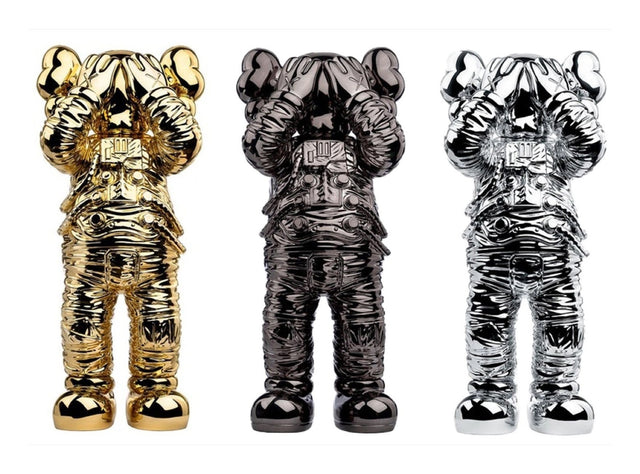
KAWS Holiday Space Set of 3 Gold Black Silver Companion Astronaut Figure Rare
$2,900.00 USD
-
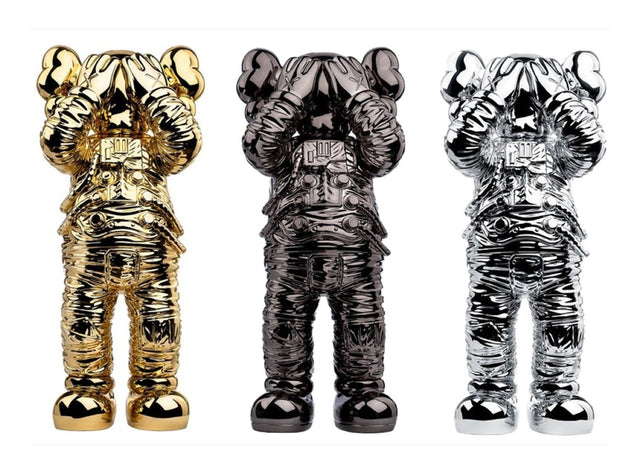
KAWS Holiday Space Set of 3 Gold Black Silver Companion Astronaut Figure
$2,900.00 USD
-
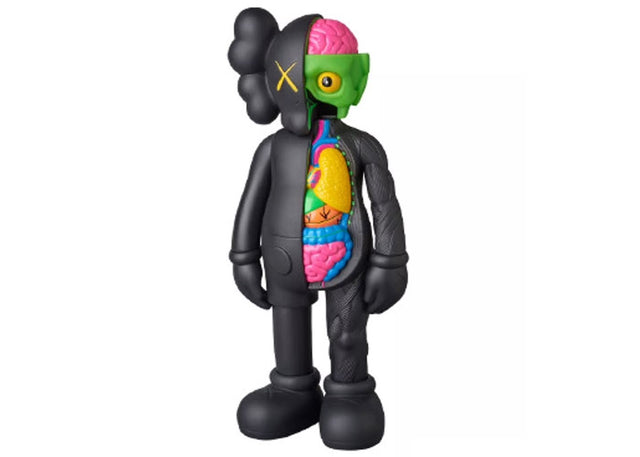
KAWS Companion Flayed Open Edition Black Medicom Toy Dissected Sealed New Figure
$599.00 USD
-
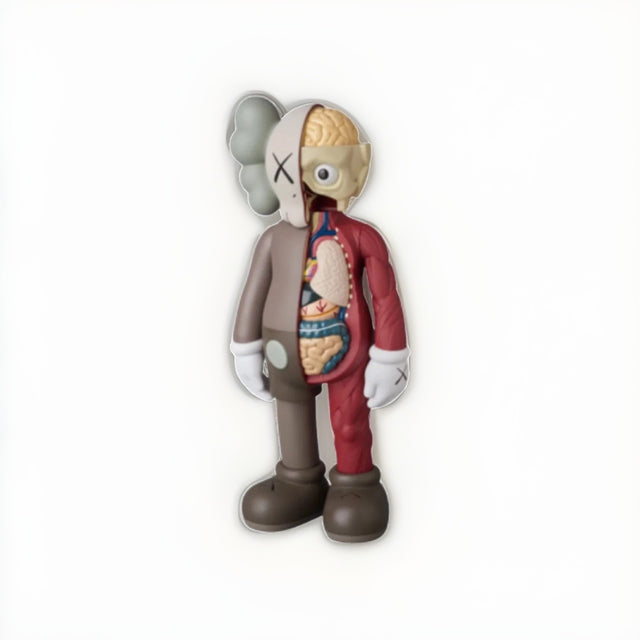
KAWS Companion Flayed Open Edition Brown Medicom Toy Dissected Sealed New Figure
$349.00 USD
-
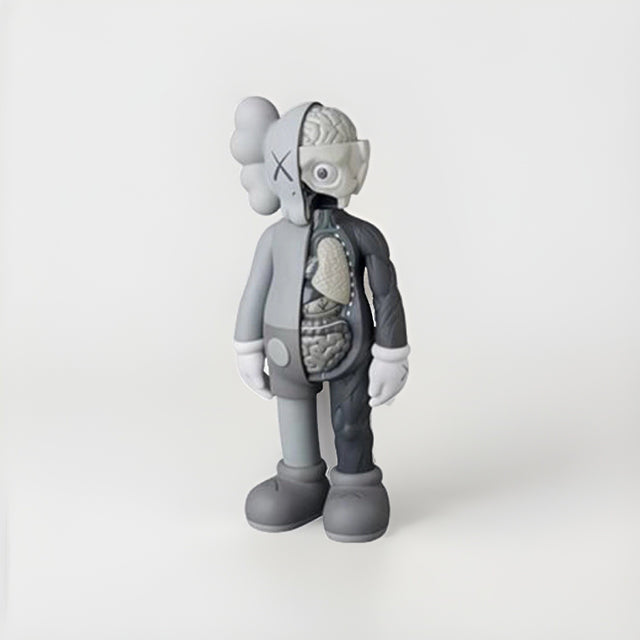
KAWS Companion Flayed Open Edition Grey Medicom Toy Dissected Sealed New Figure
$349.00 USD
Browse the collection for current listings.