How to Authenticate a Signed Beatles Album: The Complete Buyer Checklist

A signed Beatles album is one of the most coveted objects in the entire memorabilia market. Full group signatures — all four members — on a clean album cover represent a convergence of cultural weight and raw scarcity that almost nothing else can touch.
Which is exactly why the fakes are everywhere.
FBI Operation Bullpen, which ran from the late 1990s into the early 2000s, exposed a forgery network responsible for hundreds of millions of dollars in fraudulent sports and entertainment memorabilia. Beatles signatures were not the primary target of that specific operation, but the infrastructure it exposed — ghost signers, fake provenance chains, recycled authentication stickers — describes the exact ecosystem that surrounds Beatles paper to this day.
If you are buying a signed Beatles album without knowing what you are doing, you are not investing. You are gambling with the house having loaded the dice.
This checklist exists so you stop gambling.
Why Beatles Signatures Are Uniquely Difficult
Most signed memorabilia involves one or two living signers. You can cross-reference recent exemplars. You can call the venue. You can track a signing event.
Beatles signatures present a completely different problem set.
John Lennon was killed in 1980. George Harrison died in 2001. That means two of the four required signatures for a full group piece can never be obtained again through legitimate means. Every authentic full-group signed album already exists. The supply is permanently closed.
Permanent scarcity plus extreme demand is the exact formula that funds professional forgery operations.
The second complication is evolution. Each Beatle's signature changed dramatically across the 1960s, the solo years, and later life. John Lennon's signature from 1963 looks nothing like his signature from 1969. Paul McCartney's autograph from a backstage signing in Hamburg looks nothing like his current controlled signing. George Harrison's handwriting shifted noticeably over decades. Ringo Starr's remains the most consistent of the four, but even his shows period variation.
How many buyers actually know what a 1963 Lennon looks like versus a 1966 Lennon?
Most don't. And forgers know that.
The Specialist Tier: Who Actually Knows Beatles Signatures

General authentication — a standard PSA/DNA or JSA sticker without specialist involvement — is not sufficient for a high-value Beatles piece. The Beatles are a specialist category. Treat them that way.
Frank Caiazzo
Frank Caiazzo is the most widely cited independent Beatles autograph specialist in the world. His book The Beatles Autographs remains the field reference. A Caiazzo letter of opinion is not a guarantee — no authentication is — but it is the closest thing the Beatles market has to a specialist imprimatur at the academic level. If a high-value piece does not have Caiazzo involvement or a comparable specialist opinion, that is a gap in the provenance chain that needs to be explained.
Roger Epperson / BAS REAL
Roger Epperson is widely regarded as the premier music autograph authenticator operating within the major third-party authentication framework. He operates through Beckett Authentication Services under the REAL (Roger Epperson Authenticated Letters) designation. A BAS REAL cert is the music memorabilia equivalent of a top-tier specialist letter. It carries significantly more weight than a standard BAS submission because Epperson's specific expertise in period rock and pop autographs — including the Beatles — is embedded in that designation.
If a Beatles piece comes back BAS but without the REAL designation, ask who reviewed it. The standard Beckett process cycles submissions through a broader examiner pool. For a piece of this value, you want the specialist's eyes on it, not the generalist's.
JSA (James Spence Authentication)
JSA is a legitimate and widely respected house, but understand the internal distinction. JSA issues two primary products: the JSA Sticker (basic) and the JSA Full Letter of Authenticity (LOA). For a Beatles album, you want the Full LOA, not the basic sticker. The Full LOA indicates a more thorough examination process and creates a paper record that is reviewable, transferable, and meaningful to future buyers. A sticker alone on a five-figure Beatles piece is insufficient documentation.
PSA/DNA
PSA is the dominant third-party authenticator by volume. Their Beatles authentication is credible, but PSA itself has issued verification warnings noting that their stickers have been counterfeited. If a PSA cert is part of your provenance package, verify it directly through PSA's online certification-verification portal before relying on it. A sticker that looks real is not the same as a cert that is real. This is not a knock on PSA — it is a known market condition they have documented themselves.
When was the last time you verified a PSA cert number online instead of just looking at the sticker?
The Complete Buyer Checklist
Work through this in order. Every item matters. If you skip steps because you trust the seller or because the piece looks right, you are doing exactly what forgers rely on.
-
Identify the album and period.
- What is the album? Please Please Me, Meet the Beatles, Abbey Road? Each era has a signature profile.
- Is the signing claimed to be a specific year or event? Nail down the claimed period before evaluating signatures.
- Is the pressing period-accurate? A 1963 UK Parlophone pressing signed in 1963 is a coherent claim. A 1977 Capitol reissue signed in 1963 is not.
-
Map the claimed signatures against known exemplars.
- Pull reference material from Caiazzo's book and from legitimate auction house archives (Christie's, Heritage, Sotheby's have documented Beatles pieces in their historical sale records).
- Compare letterform construction, pen pressure, proportional relationships, and the specific period characteristics for each of the four signatures.
- Do not compare against images pulled from a Google search. Those are unverified and frequently include known fakes circulating on collector forums.
-
Examine the medium and ink.
- What pen type was used? Ballpoint, felt-tip, fountain pen, Sharpie? Cross-reference against what was commonly available and used in the claimed signing period.
- Sharpie markers were not in wide use until the late 1960s. A claimed early-period signing in thick Sharpie is a flag.
- Examine ink oxidation and aging. Freshly applied ink on a vintage album cover has a different appearance than ink that has aged with the paper stock for decades. This requires physical examination — photographs alone will not tell you.
- UV examination can reveal ink inconsistencies invisible to the naked eye. Any reputable authenticator will run this.
-
Evaluate the album cover condition relative to the claimed signing context.
- Backstage signings in 1963-1966 happened quickly, often on whatever a fan could shove in front of the band. Covers from that period tend to show handling wear consistent with the era.
- A pristine, unplayed album cover with signatures is not impossible, but it warrants scrutiny. Was it purchased specifically to be signed? That is a legitimate scenario, but it needs to fit the provenance story.
- Artificially aged covers exist. Forgers distress covers to match claimed period signatures.
-
Demand the full provenance chain.
- Who owned this piece and when? The chain should connect the original signing context to the current seller with as few gaps as possible.
- Documentation can include photographs from the signing event, fan club letters, newspaper clippings, estate documents, auction house records.
- A provenance chain that begins with "purchased at a market in the 1980s" and has no further documentation is not a chain. It is a story.
- Seller claims about provenance are not provenance. Paper documentation is provenance.
-
Obtain specialist authentication — minimum BAS REAL or JSA Full LOA.
- If the piece does not already carry this, factor the cost of obtaining it into your purchase decision.
- Do not accept a seller's refusal to allow third-party authentication before purchase on a significant piece. That refusal is itself disqualifying.
- If a Caiazzo letter exists, verify it. His letters have specific identifying characteristics. Contact his office if necessary.
-
Verify all existing certifications independently.
- PSA: Use the PSA certification-verification portal at their official site. Enter the cert number. Confirm the item description matches what you are holding.
- JSA: JSA cert numbers are verifiable through their online lookup.
- BAS: Beckett certification numbers are verifiable through their registry.
- A cert that cannot be verified in the issuer's own database should be treated as fraudulent until proven otherwise.
-
Evaluate the seller.
- Established auction houses with specific music memorabilia track records (Heritage Auctions, Christie's, Bonhams) carry institutional accountability. That is not a guarantee, but it is a meaningful check on outright fraud.
- Private party sellers and online marketplace listings require significantly more due diligence. The absence of institutional accountability is not automatically suspicious, but it changes your risk calculation.
- Ask the seller direct, specific questions. How did they acquire it? Can they provide documentation? How long have they held it? Vague answers deserve follow-up.
-
Get the paperwork.
- Full LOA or specialist letter, not just a sticker.
- All provenance documentation physically in hand, not promised post-sale.
- Sales receipt from the current seller with full item description.
- Any prior auction records, exhibition records, or publication history the piece may have.
-
For major acquisitions, consider independent forensic review.
- For pieces at the high end of the market, forensic ink dating and paper analysis through a qualified document examiner adds a layer that stylistic authentication alone cannot provide.
- This is not standard practice for mid-tier acquisitions, but for a significant piece, the cost is small relative to the purchase price and the risk.
Signature-by-Signature: What to Know for Each Beatle

John Lennon
Lennon's early-period signatures from the touring years tend to be fluid, quickly executed, and show the characteristics of someone signing fast under pressure. The "J" formation and the looping of the "Lennon" component are highly period-specific. His signatures from the late 1960s and 1970s are more deliberate, often stylistically distinct from the Beatlemania-era versions. Period consistency is critical.
Lennon forgeries are the most common of the four, for obvious reasons. His signatures command the highest premium and can never be newly authenticated through living comparison.
Paul McCartney
McCartney is still signing, which creates both an opportunity and a complication. Recent McCartney signatures are abundant and well-documented. But early-period signatures — the 1963-1966 touring years — have distinct characteristics that diverge from his current hand. Forgers sometimes blend periods or use his current signing style applied to vintage material. Period accuracy matters here as much as with Lennon.
McCartney controlled signings have occurred, meaning recent authenticated exemplars exist in quantity. Use them only as a reference for recent pieces, not as a comparison baseline for vintage work.
George Harrison
Harrison's signature evolved significantly from his teens through his death in 2001. The early touring signatures are notably different from his mid-period and later work. His "G" formation and the handling of "Harrison" changed in ways that are well-documented in specialist literature. Harrison forgeries often fail on the specifics of letterform construction in the claimed period.
Ringo Starr
Ringo is still living and still signs, frequently at his Peace and Love birthday events and through controlled channels. His signature is the most consistent of the four across his career, which makes period forgery slightly harder but does not eliminate it. Current Ringo exemplars are the most readily available of any living Beatle for reference comparison.
The Full Group Piece vs. Individual Signatures
A piece signed by all four carries exponentially more value than individual signatures combined. That premium is justified by scarcity. It also multiplies the forgery incentive.
When evaluating a full group piece, authenticate each signature individually and then examine the compositional logic of how they appear together. Authentic group signings tend to show natural spatial relationships — each signer worked in sequence with the others in the space available. Forged compilations, where signatures are added to a piece over time from different sources, or where a forger has replicated all four, often show inconsistencies in relative scale, ink density, and placement logic.
Does the placement of the signatures on this cover make sense for how four people would actually sign it in sequence?
That is a question worth sitting with.
Albums vs. Other Beatles Signed Items

Albums are the most iconic format, but Beatles signatures appear on a range of items: photographs, programmes, contracts, personal correspondence, and fan items. The authentication principles are the same, but the reference pools differ by format.
Signed contracts and correspondence carry additional layers of provenance complexity and often require document examiner involvement beyond standard autograph authentication. If you are considering a piece of paper claiming to be a signed Beatles business document, that is a specialist engagement from the start.
Programmes from specific tours can be cross-referenced against known tour documentation, setlists, and contemporary newspaper accounts. That cross-referencing is part of the provenance work.
The Market Context: What Authentic Beatles Pieces Actually Look Like
Legitimate authenticated Beatles signed albums with strong provenance and specialist authentication trade at premium levels at major auction houses. The price range is wide depending on which album, which members signed, what condition the cover is in, what the provenance chain looks like, and what authentication is attached.
What that means practically: if you are looking at a claimed full-group signed album at a price that seems unusually accessible relative to comparable pieces at Heritage or Christie's, that gap needs to be explained. Price alone is not authentication, but a dramatic pricing anomaly is a flag.
The market for authentic pieces is strong. The market for fraudulent pieces is also strong, because demand exceeds supply and buyers are often motivated more by desire than due diligence.
Red Flags: Walk Away Immediately If You See These
- Seller refuses third-party authentication before purchase. No legitimate seller of a significant piece declines this. The refusal is the answer.
- Authentication is a sticker only, no accompanying letter or documentation. On a high-value Beatles piece, this is inadequate. Stickers migrate. Stickers get counterfeited. A letter creates a documented, verifiable record.
- PSA/DNA sticker that returns no result or a mismatched description in PSA's own verification portal. This is a counterfeit cert. Full stop.
- Provenance that begins with a vague private purchase and has no documentation. "My grandfather bought it" is a story. It is not provenance.
- Pricing significantly below comparable authenticated pieces at established auction houses. The Beatles market is efficient at the top. A dramatic discount without explanation is a flag, not a deal.
- Signatures that are consistent across the group in pen weight, ink color, and apparent execution speed. Authentic group signings show individual variation. One person signing four different ways leaves forensic traces.
- Album pressing that is inconsistent with the claimed signing period. A reissue pressing is not impossible to have been signed in an earlier era, but the burden of proof is on the seller to explain it.
- A "Caiazzo letter" or other specialist letter that cannot be verified with the issuing party. Letters can be forged too. If the documentation seems too perfect or cannot be verified through the issuer, that is a problem.
- Seller pressure to close quickly. Urgency is a sales tactic and a manipulation tactic. Legitimate pieces do not expire. Take the time you need.
- Online marketplace listings with no physical examination option. A signed Beatles album is not a commodity item. If you cannot arrange physical examination by a qualified eye, you are buying blind.
Bottom Line
A fully authenticated signed Beatles album with clean provenance is one of the legitimate trophies of rock and roll collecting. It is also one of the most forged items in the entire memorabilia market.
Those two things are not in tension. They are directly related.
The checklist above is not bureaucratic caution. It is the actual process that separates buyers who own what they think they own from buyers who own expensive paper with ink on it.
BAS REAL with Roger Epperson, JSA Full LOA, Frank Caiazzo specialist opinion, independent cert verification, documented provenance chain, period-accurate signature comparison. These are not optional add-ons for particularly nervous buyers. They are the floor of due diligence for a category where the fake-to-genuine ratio in the open market is not comforting.
Do the work before you write the check. The secondary market does not offer refunds on faith.
FAQ: Signed Beatles Albums
Q: Is a JSA sticker sufficient authentication for a signed Beatles album?
A JSA sticker is the basic tier of JSA authentication. For a signed Beatles album at any significant price point, you want the JSA Full Letter of Authenticity, not just the sticker. The Full LOA represents a more thorough examination, creates a documented paper record, and carries significantly more weight with future buyers and major auction houses. The sticker alone is not adequate documentation for a serious acquisition.
Q: What makes BAS REAL different from a standard Beckett submission?
REAL stands for Roger Epperson Authenticated Letters. It is a specialist designation within Beckett Authentication Services indicating that Roger Epperson — the leading music autograph specialist operating within a major authentication house — has personally reviewed the piece. Standard BAS submissions go through a broader examiner pool. For a Beatles signature, Epperson's specific expertise in period British rock autographs is exactly the specialist knowledge the category requires. If your BAS cert does not carry the REAL designation, ask who specifically reviewed it.
Q: Can I trust a Frank Caiazzo letter on its own without other authentication?
A Caiazzo letter carries significant weight as a specialist opinion — he is the most cited Beatles autograph authority in the field. However, for a high-value acquisition, specialist opinion and third-party authentication are complementary, not interchangeable. Best practice is both: a Caiazzo letter alongside BAS REAL or JSA Full LOA. Also verify any Caiazzo documentation directly with his office. Letters can be forged, and his name carries enough value in this market to make that a real risk.
Q: How do I verify a PSA/DNA cert on a Beatles piece?
Go directly to PSA's official certification-verification portal and enter the cert number. Confirm that the database entry matches the item you are examining — the description, the signer names, and the cert number should all align. PSA has issued warnings about counterfeited stickers in the marketplace. A sticker that looks authentic is not the same as a cert that is verified. This two-minute step is non-negotiable on any significant purchase.
Q: Are full group signed Beatles albums ever legitimately available at private sale?
Yes. Estate sales, long-held private collections, and direct collector-to-collector transactions all produce legitimate pieces. Private sale is not inherently suspect. What matters is whether the piece can be authenticated and documented to the same standard as if it were going through a major auction house. If a private seller resists that standard, that resistance is your answer. A legitimate piece can withstand the scrutiny. A questionable one cannot.
Q: John Lennon and George Harrison are both deceased. Does that make authentication easier or harder?
Harder, in some ways. Living signers provide ongoing exemplars for comparison. With both Lennon and Harrison, the reference pool is fixed and historical. This places even greater weight on specialist expertise, because the analysis is entirely comparative — there is no possibility of obtaining a fresh exemplar for confirmation. It also means the forgery incentive is permanent and undiminished, since no new authentic signatures of either will ever enter the market. Period-specific comparison against well-documented exemplars is the only tool available.
Q: What album should I look for if I want the most historically significant signed piece?
This is a personal preference question with market implications. UK first pressings of landmark albums — early Parlophone issues, the original Abbey Road or Sgt. Pepper's pressings — carry both historical and collector significance. The album matters less than the authenticity and condition of what you are buying. A solidly authenticated, well-provenanced piece on a less iconic album is a better acquisition than a questionable piece on the most famous record in the catalog. Let authentication drive the decision. Prestige chasing without due diligence is how the forgery market survives.
Q: Should I buy from an online auction platform without seeing the piece in person?
For anything of significant value, physical examination should be a condition of purchase, not a courtesy request. Photographs do not reveal ink aging, paper condition, UV examination results, or the tactile characteristics of the signing. If a seller will not facilitate physical examination or will not allow a qualified authenticator to inspect the piece before purchase, you should walk away. The Beatles signed album market is too targeted by sophisticated forgery operations to make a significant commitment based on photographs alone. The inconvenience of in-person examination is the cheapest insurance you can buy.
Shop Music memorabilia
Explore current pieces available from the gallery.
-
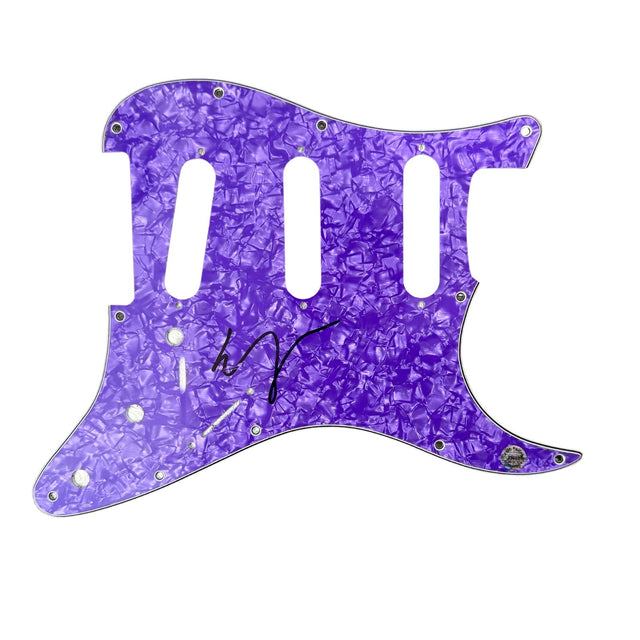
Vampire Weekend Ezra Koenig Signed Guitar Pickguard Autograph Hologram COA
$100.00 USD
-
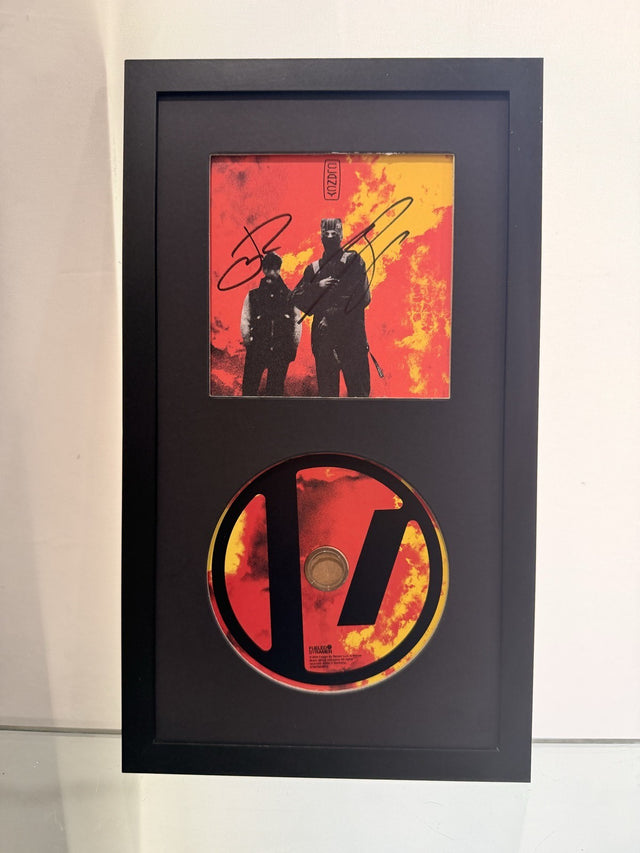
Twenty One Pilots Signed Clancy CD Framed Display Tyler Joseph Josh Dun Auto
$199.00 USD
-
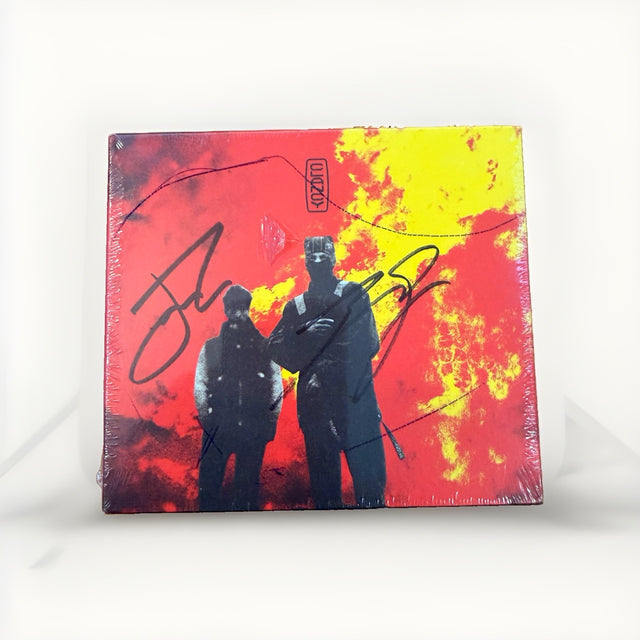
Twenty One Pilots Clancy Signed CD Tyler Joseph Josh Dun Sealed Unopened 2024
$189.00 USD
-
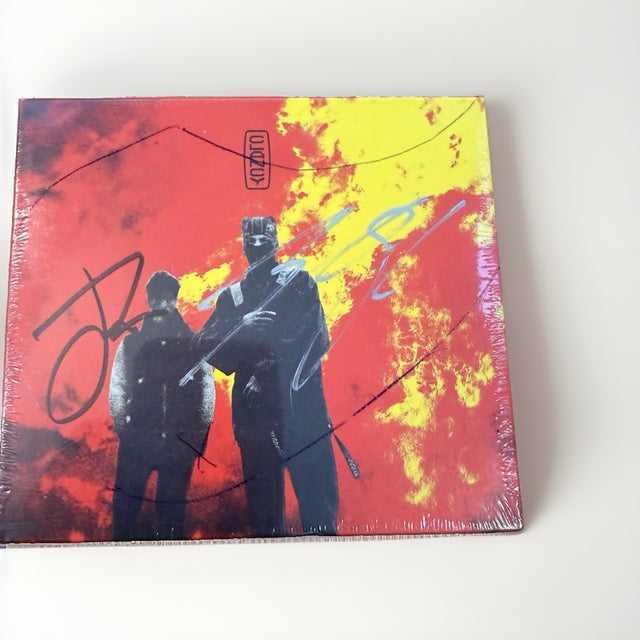
Twenty One Pilots Clancy Signed CD Sealed Tyler Joseph Josh Dun Silver Autograph
$189.00 USD
-
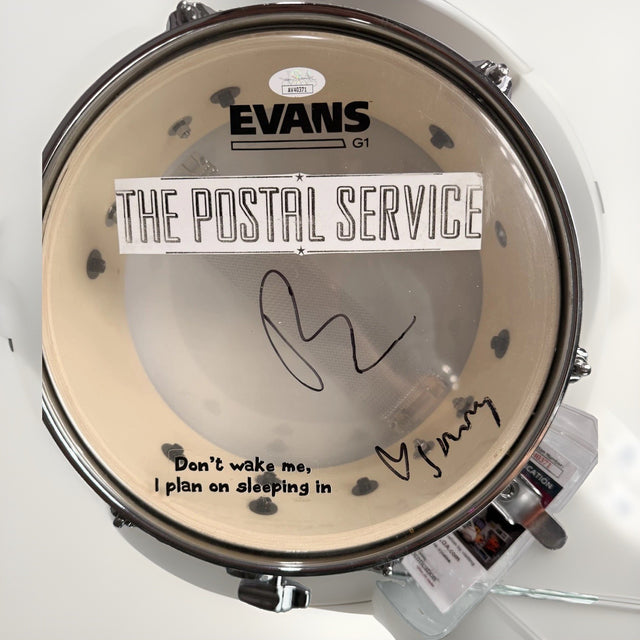
The Postal Service Dual Signed Evans M-80 Drumhead JSA A40371
$499.00 USD
-
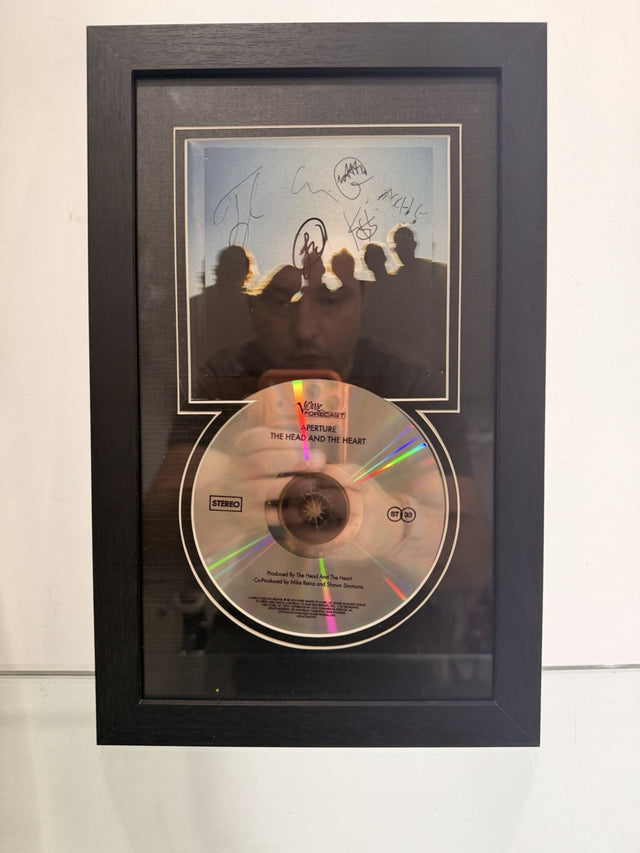
The Head and the Heart Band Signed Framed 'aperture' CD COVER ALBUM
$65.00 USD
Browse the collection for current listings.