The Walled Off Hotel: Are Banksy's Bethlehem Souvenirs Worth Buying?
Few corners of the Banksy market generate as many questions as the souvenirs, shop items, and box sets that came out of The Walled Off Hotel in Bethlehem. They are affordable by Banksy standards, they carry an unforgettable backstory, and they look like a smart way into a notoriously expensive artist. They are also one of the most misunderstood categories in street-art collecting.
If you have found a "Walled Off Hotel" print, mug, mini wall section, or boxed kit on eBay or at a regional auction and you are wondering whether it is the real thing, whether it is signed, and whether it is worth what the seller is asking, this guide is written for you. We will walk through what the hotel actually is, what it sold, how to tell hand-finished from mass-produced, how these objects trade, and where buyers most often get burned.
A note before we start: at Gauntlet Gallery we have been buying and selling street-pop editions since 2012, and our house rule is that education comes before the sale. Nothing below is a promise about future value. It is a framework for understanding what you are looking at so you can decide for yourself.
What Is The Walled Off Hotel?

The Walled Off Hotel opened in 2017 in Bethlehem, in the occupied West Bank, directly facing the separation wall that divides Israeli and Palestinian territory. It was conceived and decorated by Banksy as a working boutique hotel and, simultaneously, as a piece of political art. The marketing line — that it had "the worst view in the world" — was literal: many rooms looked out onto the towering grey concrete barrier just a few metres away.
The project was far more than a publicity stunt. It functioned as a genuine hotel with bookable rooms, a piano bar, and a museum exhibit explaining the history of the wall and the region. It also housed a gallery showing work by Palestinian artists and a gift shop. That gift shop, and the on-site art it sold, is the source of nearly everything collectors now refer to as "Walled Off Hotel souvenirs."
It is important to understand the spirit of the place. Banksy designed it as commentary, and the merchandise was part of that commentary — playful, ironic, and deliberately tangled up with the tourist economy of a conflict zone. That context matters when you assess these objects, because the line between "art," "souvenir," and "novelty" was intentionally blurred by the artist himself.
The Walled Off Hotel was a hotel, a museum, a gallery, and a gift shop at once. The souvenirs were never meant to be tidy. That ambiguity is exactly why the market for them is so easy to misread.
What Did the Hotel and Shop Actually Sell?
The hotel and its shop offered a wide spread of items at very different price points and very different levels of artistic significance. Lumping them all together as "Banksy souvenirs" is the first mistake buyers make. Broadly, the categories break down like this:
Genuine artworks and editions
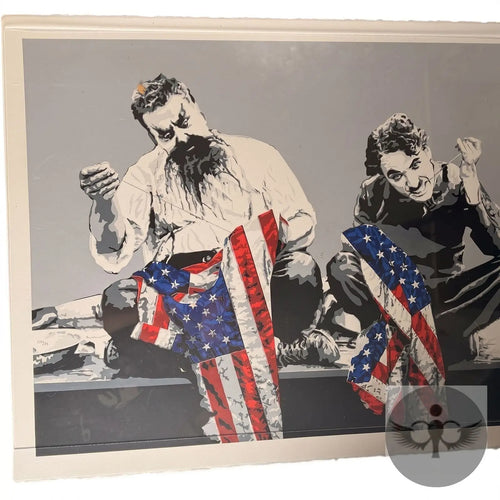
- Wall sections and "souvenir" wall pieces — small cast or painted segments evoking the separation wall, sometimes hand-finished, sometimes incorporating found materials. These are the items most likely to carry real collector weight.
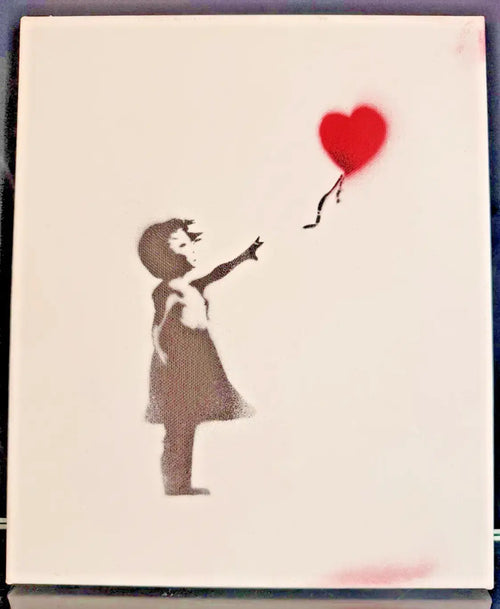
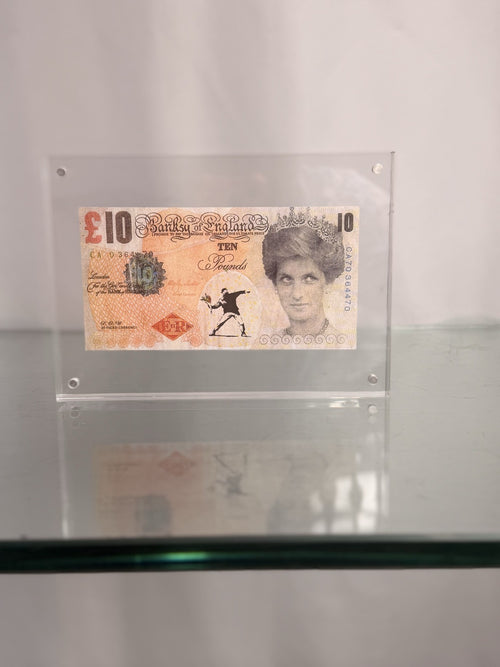
- Limited prints and screenprints tied to the hotel's imagery and to Banksy's broader catalogue, some of which were sold or distributed in connection with the project.
- Defaced or customised objects where an everyday item was altered by hand, blurring the line between merchandise and artwork.
Designed souvenirs and novelties
- Mugs, tote bags, postcards, keyrings, and stationery carrying hotel branding and Banksy imagery.
- Boxed kits and "make your own" sets, including the well-known souvenir wall-building and stencil-themed kits that came packaged as gift-shop products.
- Printed ephemera — receipts, room cards, leaflets, exhibition booklets, and other paper items that tourists kept.
The crucial point is that the hotel was a retail environment. Many objects were produced in significant quantities to be bought by visitors and carried home. Some were individually hand-touched; most were not. A keyring from the gift shop and a hand-finished wall section are both "from The Walled Off Hotel," but they are not remotely the same thing in market terms, and an honest seller will draw that distinction for you.
The Box Sets and Souvenir Kits: What to Know

The boxed souvenir kits are one of the most actively traded slices of this market, partly because they are visually distinctive and partly because they are easy to ship. They typically present as a packaged product — a box, printed graphics, and components inside that nod to the wall, stencilling, or the hotel's iconography.
Collectors are drawn to them for understandable reasons:
- They are intact, self-contained objects with strong design and obvious provenance signalling.
- They photograph well and display well, which supports demand.
- They were genuinely sold at the hotel, so a complete, unopened example carries a clear story.
That said, a few realities should temper expectations. These were produced as retail souvenirs, which means quantities were not tiny. Condition matters enormously because the packaging is part of the appeal: a crushed corner, sun-faded graphics, missing components, or a torn seal can sharply reduce desirability. And because they are physical products that travelled home in suitcases, surviving examples vary widely in state.
Most box sets and kits are unsigned. That is normal and not a defect — they were never intended to be signed editions. But it does mean the value case rests on the object itself, its condition, and its completeness, rather than on a signature or a Pest Control certificate. Treat a box set as a designed souvenir with a great story, not as a signed limited edition, and you will price it correctly in your own mind.
Signed vs Unsigned: What That Really Means Here
This is where buyers most often get confused, so it deserves a clear-eyed explanation. In the Banksy world, "signed" usually refers to the artist's signed editions — typically screenprints, often numbered, frequently accompanied by authentication from Pest Control. The Walled Off Hotel material mostly does not fit that mould.
The reality with hotel souvenirs
- The overwhelming majority of hotel shop items are unsigned. Mugs, totes, kits, postcards, and most wall pieces left the shop without a hand signature, and that is entirely consistent with what they are.
- A claimed "signature" on a souvenir should raise your alertness, not your excitement. Because signed Banksy material commands far more than unsigned, a signature is exactly the thing a bad actor would add. Treat any signed claim on hotel merchandise as something to verify rigorously, not assume.
- Hand-finishing is not the same as signing. Some wall sections were hand-painted or individually finished. That hand-work can add interest, but it is a different attribute from a signature and should be described accurately by the seller.
With Walled Off Hotel souvenirs, an unexpected signature is a reason to slow down, not speed up. The signature is the single easiest thing for a forger to fake and the single most profitable lie to tell.
The honest framing is this: most of these objects are collected and valued as unsigned souvenirs and small works. If you specifically want a signed Banksy, the hotel shop is generally not where that category lives, and you should be deeply sceptical of anyone telling you otherwise. For a fuller treatment of why signatures move Banksy values so dramatically across his catalogue, our editorial library covers that in detail; here, the practical message is simpler — assume unsigned, and demand extraordinary evidence for any signed claim.
Provenance and Authentication: The Honest Picture
Authentication is the heart of any Banksy purchase, and Walled Off Hotel items present a genuinely tricky case. Let us separate the two bodies of evidence: official authentication and supporting provenance.
Pest Control is the authority
Pest Control is Banksy's official authentication body, and it is the only entity whose word constitutes authentication of a Banksy work. No gallery, no dealer, no auction house, and no certificate from any third party can substitute for it. If a work is the kind of piece Pest Control authenticates, then a Pest Control certificate is the gold standard, and its absence is a material fact you must weigh.
Here is the complication specific to hotel souvenirs: Pest Control's authentication process has historically focused on Banksy artworks, and it does not necessarily authenticate every mug, keyring, or gift-shop novelty that passed through the hotel. That creates a grey zone. Some hotel-associated works may be authenticatable; many mass-produced souvenirs sit outside the scope of formal authentication entirely. This is not a loophole to exploit — it is a limitation to respect.
What supporting provenance looks like
For souvenirs that fall outside formal authentication, provenance becomes the practical evidence base. Strong supporting provenance might include:
- A dated original purchase receipt from the hotel or its shop.
- Photographs of the item in situ at the hotel, ideally with the buyer.
- An unbroken ownership chain from a named original purchaser, with contemporaneous documentation.
- Consistent physical characteristics — materials, printing, packaging — that match known examples from the same period.
None of this is bulletproof. Receipts can be reproduced; photos can be misattributed; stories can be embellished. The goal is not certainty — it is a coherent, corroborated picture where the documentation, the object, and the seller's account all agree. When they do not agree, walk away.
How Do These Items Trade?

Walled Off Hotel material trades across a wide spectrum, and understanding the landscape helps you judge whether an asking price is sensible. We will speak in ranges and behaviour rather than precise figures, because specific prices move constantly and you should always check current comparable sales (comps) before committing.
The spectrum
- Low-cost ephemera and novelties — postcards, keyrings, leaflets, room cards. These trade modestly. Their appeal is sentimental and completist; condition and authenticity still matter, but the stakes per item are small.
- Mid-tier souvenirs and box sets — mugs, totes, and the boxed kits. These can command more meaningful sums, especially complete, unopened, well-preserved examples. This is the busiest and most contested part of the market, and also where the most misdescription occurs.
- Wall sections and hand-finished works — the items most likely to be treated as genuine small artworks. These can reach materially higher levels, particularly with strong provenance, but they also attract the most sophisticated fakes.
Where they change hands
- Major auction houses occasionally handle the more significant hotel-associated pieces, bringing cataloguing and some provenance scrutiny — though always read the lot's authenticity language carefully.
- Specialist street-art dealers and galleries (such as Gauntlet Gallery) offer curation and disclosure, typically at firmer prices reflecting that diligence.
- Open marketplaces like eBay carry the widest range and the widest risk. There is genuine material here, but also the highest concentration of misdescribed, reproduced, and over-claimed items.
A practical note on reading the market: many collectors value the strong backstory and the political weight of these objects, and well-documented examples have historically attracted steady interest. That said, past demand does not guarantee future value, condition-sensitive souvenirs can be illiquid, and a great story does not make a damaged or doubtful object a good buy. Check comps for the specific object and condition you are considering, not for "Walled Off Hotel" as a vague category.
Buyer Cautions: Reproductions, Misdescription, and Provenance Traps
This is the section to read twice. The combination of a famous artist, an irresistible story, a wide range of mass-produced objects, and a fuzzy authentication boundary makes Walled Off Hotel souvenirs a happy hunting ground for misdescription and outright fakery.
The most common problems
- Outright reproductions. Because some items were printed souvenirs, they are comparatively easy to copy. Reproduced prints, fake kits, and counterfeit packaging circulate. Be especially wary of "too clean," suspiciously plentiful examples of objects that should be scarce.
- Provenance inflation. A genuine gift-shop novelty gets re-described as a "rare Banksy artwork." The object may be real; the framing is a lie designed to multiply the price.
- Fabricated signatures and certificates. As noted, a signature is the highest-value, easiest-to-fake addition. Home-printed "certificates of authenticity" mean nothing on their own.
- Conflation of categories. Sellers blur the line between a mass souvenir and a hand-finished piece, hoping you will pay artwork prices for retail merchandise.
- Borrowed-image listings. The photos show a pristine example; the item shipped is something else. Always insist on actual photographs of the actual item, including flaws.
A practical due-diligence checklist
- Identify the exact object and category before discussing price. Is it ephemera, a souvenir, a kit, or a claimed artwork?
- Ask whether Pest Control authentication exists or applies. If it applies and is absent, weigh that heavily. If it does not apply, understand you are relying on provenance alone.
- Demand original photographs of the specific item, all sides, packaging, and any defects.
- Request provenance documentation — receipts, in-situ photos, ownership history — and check it for internal consistency and dates.
- Treat any signature as a claim to be proven, not a feature to be celebrated.
- Compare against current comps for the identical object and condition, not the category in general.
- Buy from sellers who disclose freely. A seller who volunteers the limitations of authentication is more trustworthy than one who insists everything is certain.
- When in doubt, pass. There will always be another example. There is no such thing as a "last chance" you must seize on incomplete information.
The single most protective habit you can build is this: separate the story from the object. The story sells; the object is what you actually own. Verify the object.
So, Are They Worth Buying?

The honest answer is: it depends entirely on what you are buying, why, and at what price — and on how well you have verified it. Let us be direct about the different buyer profiles.
If you are buying for love of the object and the story
For many collectors, a genuine, well-documented Walled Off Hotel souvenir is a deeply rewarding thing to own. It connects to a singular moment in Banksy's practice and to a serious political statement. If you buy a real example in good condition at a fair, comps-checked price, and you love it, that is a sound reason to buy — independent of any future resale.
If you are buying primarily hoping it grows in value
Tread carefully and adjust your expectations. These are largely unsigned, often mass-produced, condition-sensitive objects in a market with significant fake and misdescription risk. Some examples have historically held collector interest, but past performance does not guarantee future results, liquidity can be thin, and the difference between a fairly priced piece and an over-claimed one is enormous. Do not let a great backstory substitute for diligence.
If you are using the hotel as an "affordable" entry to Banksy
It can be a legitimate entry point — but only if you go in clear-eyed. "Affordable Banksy" is precisely the phrase that attracts predatory listings. The cheapest route into Banksy is also the easiest to get wrong. Knowledge, not budget, is what protects you here.
Questions Buyers Ask
Are Walled Off Hotel souvenirs authenticated by Pest Control?
Pest Control is Banksy's official authentication body and the only authority on Banksy works, but its process has historically focused on artworks rather than every gift-shop novelty. Some hotel-associated pieces may be within scope; many mass-produced souvenirs are not. Where Pest Control applies, its certificate is the standard and its absence is significant. Where it does not apply, you are relying on provenance, and no dealer certificate replaces Pest Control.
Are the box sets and kits signed by Banksy?
Almost always no. The boxed souvenir kits were sold as designed retail products and were generally not signed editions. That is normal and not a defect. If a seller claims a kit is hand-signed, treat that as a high-risk claim to verify rigorously, because a signature is the easiest and most profitable thing for a bad actor to fake.
How can I spot a reproduction or fake?
Identify the exact object first, then demand original photographs of all sides and any flaws, request dated provenance such as purchase receipts or in-situ photos, and compare materials and printing against known genuine examples. Be suspicious of suspiciously plentiful, "too clean" items, home-printed certificates, and listings that use borrowed stock photos. When the story and the object do not line up, walk away.
What is a fair price for these items?
Prices span a wide spectrum, from modest sums for postcards and keyrings to materially higher figures for hand-finished wall sections with strong provenance. Rather than trusting a category average, check current comparable sales for the identical object in the same condition. Condition and completeness drive value heavily, especially for box sets where the packaging is part of the appeal.
Is a dealer or gallery certificate of authenticity enough?
No. A dealer or gallery COA, a condition report, or a receipt is second-layer supporting evidence only. It can corroborate a piece's story, but it never replaces Pest Control where Pest Control authentication applies. Any seller who presents their own certificate as settling authenticity should be treated with caution rather than trust.
Will a Walled Off Hotel souvenir go up in value?
No one can promise that, and you should be wary of anyone who does. Many collectors value these objects for their story and their condition, and well-documented examples have historically drawn steady interest, but past performance does not guarantee future results. Buy because you have verified the object and you want to own it, not on the assumption of future gains.
How Gauntlet Gallery Approaches This
Gauntlet Gallery was founded in 2012 in San Francisco on a collectors-first principle: transparency and education before the transaction. When we look at Walled Off Hotel material, we apply the same discipline we apply to any Banksy piece. We identify exactly what the object is rather than what its story implies. We treat Pest Control as the authority and describe any supporting documentation honestly as second-layer evidence. We disclose condition candidly, we never inflate a souvenir into an artwork, and we never frame a purchase as a guaranteed financial outcome.
We would rather lose a sale than oversell a piece. That means if an item's authentication is uncertain, we tell you so plainly, and we help you weigh it against current comps so you can decide with clear eyes. Our job is to make you a more informed collector, whether or not you buy from us.
Thinking about a Banksy piece? Browse our curated Banksy collection to see how we document and describe street-pop works, or contact our team with questions about a specific Walled Off Hotel item you are weighing. No pressure, no hard sell — just a straight read on what you are looking at.
If you want to go deeper on why the artist's signature moves Banksy values so dramatically, our editorial post on signed versus unsigned Banksy prints is a useful companion to this guide.