DEATH NYC Van Gogh 3M Mask Signed Ltd Ed Print COA Street Pop Art — Collector Guide, Value & Authentication
The air in the gallery was thick with envy when this piece dropped. That's the only honest way to describe what happens when DEATH NYC drops a print that shouldn't work — and then works too perfectly. Van Gogh's tortured, swirling self-portrait wearing a 3M industrial respirator mask. Paranoia rendered in post-impressionist brushwork. Rebellion dressed in museum clothes. This is the cultural collision that makes serious collectors sweat.
I pulled this directly from the chaos of an original downtown drop, acquired from the first buyer in line. The ink still carried the smell of rebellion when it hit the frame. Pieces like this don't wait — they're gone before most collectors even realize they've missed them. That's what separates the collectors who build portfolios from the ones who build regrets.
What This Print Depicts
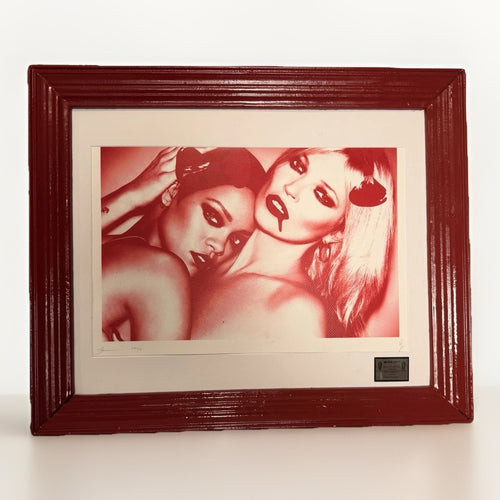
DEATH NYC built his entire practice on one ruthless editorial instinct: take the sacred and make it strange. Van Gogh's self-portraits are among the most recognizable images in Western art history — that swirling, emotionally raw style, those wide-set eyes, that expression caught somewhere between genius and breakdown. The art world has spent 130 years placing Van Gogh on a pedestal. DEATH NYC puts a 3M respirator on him instead.
The 3M mask is deliberately industrial, deliberately contemporary. It's the universal symbol of contamination, of filtering out a poisoned environment. Paired with Van Gogh — a painter who literally cut off his own ear, who spent his final years in an asylum, who sold almost nothing while alive — the message lands like a gut punch: what would the tortured visionary think of the world we've built? Would he need the mask to breathe it?
This is DEATH NYC at the height of his powers. The Warhol-meets-Banksy aesthetic that made him famous isn't just pastiche here — it's genuine commentary. Fine art legacy confronts 21st-century anxiety. The result is the kind of print that works as wall art, as investment, and as cultural artifact simultaneously. That triple utility is extraordinarily rare in the limited-edition print market, and it's exactly why serious collectors move fast when his pieces surface.
Authentication
Authentication is everything in the street art print market. DEATH NYC is heavily counterfeited — demand consistently outpaces supply, which creates the exact conditions that attract fakes. Knowing how to verify what you're holding is not optional. It's the price of admission to serious collecting.
This print carries the complete authentication package that defines legitimate DEATH NYC editions:
- Hand-signed in graphite — lower left and lower right, not printed, not stamped. You can feel the indentation of the pencil. Run your fingernail across the signature; it should catch slightly on the paper surface.
- Hand-numbered — edition number written in the same graphite, confirming the print's position within the run. Editions typically range 50–100 copies for standard releases.
- Gold embossed COA seal — this is the authentication detail that separates genuine prints from counterfeits. The seal must be physically raised — press your finger against it and you should feel the embossed texture. A flat, printed gold circle is the primary tell of a fake. The physical relief of the embossing cannot be replicated by inkjet or laser printing.
- Original retail price point of $100 — DEATH NYC released prints at accessible price points deliberately. That $100 entry price is now a memory. The secondary market tells the real story.
At Gauntlet Gallery, every piece in our inventory has been authenticated against these criteria. We've been doing this since 2012, and we do not list what we cannot verify.
Collector Value
The numbers on DEATH NYC are not subtle. Popular motifs — celebrity icons, fine art mashups, cultural commentary — have achieved 2x to 5x appreciation within 12 to 24 months of release. The Van Gogh 3M Mask sits squarely in the premium tier: a canonical fine art figure, a ripped-from-current-events cultural accessory, and the kind of visual composition that photographs well enough to generate its own social media momentum.
Social media momentum is not a soft metric in 2026. It's a liquidity driver. Prints that get shared become prints that get bought. DEATH NYC's work is engineered — whether consciously or not — for the visual economy. High contrast. Immediately readable. Simultaneously referencing art history and the present moment. When that formula connects, it compounds.
Gauntlet Gallery has tracked and facilitated over 160,000 comparable sales across the street art and urban print market. The pattern is consistent: DEATH NYC editions that combine a recognizable fine art source (Van Gogh, Warhol, Basquiat, Munch) with a contemporary cultural element (luxury logos, tech symbols, protective equipment, pop culture icons) outperform single-reference prints by a meaningful margin. This piece hits both notes in one image.
For collectors building a portfolio rather than just decorating a wall, the calculus is straightforward: limited supply, documented provenance, physical authentication, and a motif with demonstrated secondary market velocity. The $100 original retail price is already historical data. What matters now is where the ceiling is — and with DEATH NYC's international following still expanding, that ceiling hasn't been found yet.
Founded in 2012, Gauntlet Gallery has been at the intersection of street art collecting and investment-grade authentication longer than most platforms that now claim expertise. We source directly. We authenticate rigorously. We hold pieces that matter.
Browse the full collection at gauntlet.gallery/collections/all — and move quickly. The collectors who hesitate are the ones who write the regret posts later.