Death NYC Authentication: The Gold Seal Standard Explained

Most collectors never see a fake Death NYC. They just see a great price on a print they've wanted for months, a COA that looks convincing, and a seller with decent feedback.
Then they find out.
Death NYC sits in an unusual position in the street art market. The work is everywhere — pop-culture mashups on gallery paper, canvas editions, limited drops that sell out fast and circulate freely on the secondary market. High demand, accessible price points, and a globally distributed collector base. That combination is exactly what forgers look for.
The artist has responded with one of the most clearly defined authentication systems in the contemporary street art category. It's not complicated. But you have to know what it requires, because half the market is getting it wrong.
This is the full breakdown.
Who Is Death NYC?
Death NYC is a pseudonymous New York-based street artist who built a following through wheat-paste interventions before transitioning into a serious limited-edition print market. The work is recognizable: iconic imagery — Mickey Mouse, Marilyn Monroe, cultural touchstones — rendered through a lens that's equal parts reverence and provocation.
The prints move. Drop days create genuine secondary market velocity. That speed is part of the appeal and part of the problem.
Unlike artists who maintain deliberate obscurity around their output, Death NYC has invested in a structured release and authentication process. Official drops are documented. Editions are numbered. And authentication has a specific, non-negotiable protocol that the studio enforces.
When that system works, it's clean. When it's ignored — or faked — the collector pays the price.
The Two-Part Standard: What "Authenticated" Actually Means

Here's the canon, stated plainly.
A Death NYC work is authenticated when it carries both of the following:
- An artist-signed Certificate of Authenticity (COA) issued directly by the Death NYC studio
- The studio gold seal affixed to the COA — not a sticker, not a stamp, the embossed or foil gold seal specific to Death NYC studio documentation
Both. Required. Non-negotiable.
This is not a situation where one suffices. A signed COA without the gold seal is incomplete. A gold seal on a COA that isn't signed is worthless. The authentication standard is the pairing of both elements together, on the same document, issued by the studio.
Why does this matter so much?
Because the secondary market is full of pieces carrying only one of the two. Sellers present them as authenticated. Buyers accept them. And the standard erodes every time that transaction completes without scrutiny.
Breaking Down the COA
What the Studio Issues
The Death NYC studio COA is a physical document. It accompanies original studio releases and is not issued retroactively for works acquired through unauthorized channels.
The COA will typically reference the specific edition — edition number, total edition size, title, medium, and dimensions. The artist's signature appears directly on the document. This isn't a printed facsimile of a signature. It's hand-signed.
The gold seal is an integral part of the document — present on genuine studio COAs as an additional verification element. Think of it as a secondary security layer that the studio built into the process specifically because the market was generating convincing-looking COA copies.
What the COA Is Not
The COA is not a third-party certificate. Death NYC authentication does not run through PSA/DNA, JSA, Beckett (BAS), or any other third-party authentication house for primary release verification.
This is a meaningful distinction. For music memorabilia, the smart collector insists on Beckett (BAS) — ideally with a Roger Epperson REAL evaluation for music-specific material — or JSA, understanding the difference between a JSA Basic stamp and a full JSA Letter of Authenticity. For space memorabilia, you're looking at BAS or PSA plus a Zarelli specialist letter.
Death NYC doesn't operate that way. The authentication is studio-originated, not third-party validated at the source. That places more weight on the integrity of the studio document itself, which is precisely why the two-part standard — signed COA plus gold seal — exists as a system rather than a single-point verification.
What happens when you rely on a third-party opinion of a Death NYC COA instead of the studio standard?
You get an opinion. Not authentication.
Understanding the Gold Seal
Purpose and Function
The gold seal is a physical security element. Its purpose is to make the COA harder to replicate convincingly without access to the actual studio materials.
Sophisticated forgers can reproduce a letterhead. They can copy a layout, approximate a font, even source paper with similar weight and finish. Replicating an embossed or foil seal to the standard of the original requires either direct access to studio materials or significant specialist capability — both of which raise the cost and complexity of forgery substantially.
That's the point. Not that it's impossible to fake. Nothing is impossible to fake if the reward is sufficient. The point is that the system creates meaningful friction.
Placement and Integrity
The gold seal appears on the COA itself. Not on the artwork. Not on the packaging. On the certificate.
When examining a piece, check:
- The seal is present on the COA document
- The seal shows appropriate physical characteristics — embossing, foil texture, dimensional quality that a printed reproduction won't replicate
- The seal has not been transferred from another document — look for signs of edge lifting, adhesive residue inconsistency, or color variation suggesting removal and reapplication
- The seal sits in correct relationship to the signed content — it's integrated into the document, not applied as an afterthought
Any seal that looks flat, looks printed, or looks like it was applied after the fact deserves serious scrutiny.
Edition Numbers and Drop Provenance

The COA and gold seal are the authentication standard. But smart collectors don't stop there.
Death NYC prints are released in documented limited editions. The edition number on the piece and on the COA should align. The total edition size should be verifiable against what the studio released. These are cross-reference points that add depth to your confidence in a piece.
Studio Drop Records
Official Death NYC releases are trackable. The studio maintains records of official drops, and reputable galleries that work with Death NYC — including authorized secondary market dealers — can verify whether a specific edition number falls within a genuine release.
This is similar to how savvy Shepard Fairey collectors cross-reference against Obey Giant drop records and edition documentation, even though Fairey issues no artist COA — relying instead on signature verification, edition numbering, and provenance chain. The principle is the same: the edition record provides context that strengthens or undermines the authentication.
Does a work with a legitimate edition number automatically authenticate?
No. Edition numbers can be fabricated. A real edition number on a fake piece is a common intermediate-tier forgery approach. The number gives you a cross-reference point. The COA and gold seal give you the authentication. You need both.
Provenance Chain
Where did the piece originate? Who sold it first? Is there documentation of the chain from studio release through to the current seller?
A print that moved directly from an official drop to a single collector to your hands is in a different provenance category than a print that has passed through six owners with partial documentation at each step.
This doesn't mean multi-owner works are suspect. It means the documentation at each transfer point matters. Every gap in the chain is a place where a substitution could have occurred.
How the Market Gets This Wrong
The Single-Element Trap
The most common error — by volume — is accepting one element of the two-part standard as sufficient.
Sellers will present a signed piece without a COA and suggest the signature alone is sufficient authentication. It isn't. Sellers will present a COA without the gold seal and explain that the seal "fell off" or "wasn't included in later editions." Verify that claim directly with the studio before accepting it.
Sometimes these are honest errors by sellers who genuinely don't know the standard. Sometimes they aren't. Either way, the collector bears the risk.
The Photo COA Problem
Online listings — particularly on auction platforms and marketplace sites — frequently show photographs of COAs rather than the physical document. A photograph of a COA with a gold seal tells you very little.
A printed photograph can replicate what a genuine seal looks like. It cannot replicate the physical characteristics of the seal itself. Always, always insist on in-person examination of the COA before purchase, or work with a trusted intermediary who has done that examination.
The FBI's Operation Bullpen, which dismantled a massive sports memorabilia forgery network, demonstrated clearly how convincing COA photographs can be. Forgers in that operation produced elaborate supporting documentation — certificates, letters, photographs — that looked authoritative. The physical artifacts didn't hold up to direct scrutiny. The lesson applies across categories.
The "Studio-Authenticated" Language Problem
Watch for listings that use phrases like "studio-authenticated," "authenticated by Death NYC," or "comes with authentication" without specifying the two-part standard explicitly.
These phrases can mean anything from full compliance with the signed COA plus gold seal standard, to a COA that's missing the seal, to a third-party opinion that the signature looks genuine, to nothing verifiable at all.
When you see authentication language, your response should always be: authenticated how, specifically?
Ask the seller to confirm, in writing: Does the COA bear the artist's hand signature? Does the COA carry the studio gold seal? If the answer to either question is anything other than an unqualified yes, you're not looking at a fully authenticated piece by the studio standard.
Comparing Authentication Models Across Street Art
It helps to understand where Death NYC's system sits relative to other artists in the street art category. The authentication landscape is not uniform.
| Artist | Authentication Method | Key Notes |
|---|---|---|
| Death NYC | Artist-signed COA + studio gold seal (both required) | Studio-originated; no third-party substitute |
| Banksy | Pest Control certificate only | No COA from artist; Pest Control is the sole legitimate body |
| Shepard Fairey | No artist COA; signature + edition number + Obey Giant provenance | Authentication via record-cross-reference and provenance chain |
| KAWS / BE@RBRICK | Original packaging + hologram + Medicom release record | Era-specific documentation requirements |
| Warhol | Provenance, publisher and catalogue research; any TrueCOA record is item-specific documentation, not a current Board opinion | Board dissolution created ongoing market complexity |
The Death NYC standard is arguably more tractable than several of these. The requirement is specific, the elements are defined, and the standard comes directly from the studio. You don't have to navigate a dissolved authentication board or an artist who issues no COA at all.
What you do have to do is apply the standard correctly and refuse to accept shortcuts.
Working With Dealers and Resellers

What to Ask
Whether you're buying from a gallery, a secondary market platform, or a private seller, the questions are the same:
-
Is the physical COA included with the piece?
- Not a photograph. The physical document.
-
Is the COA hand-signed by the artist?
- Not printed, not a facsimile. Hand-signed.
-
Does the COA carry the studio gold seal?
- Physically present, not photographed.
-
Does the edition number on the COA match the number on the piece?
- Both should align with the stated edition size.
-
Can the provenance chain be documented from studio release?
- Ask for whatever documentation exists at each transfer point.
-
Has the dealer examined the physical COA in person?
- If they're brokering, find out if they've actually seen the document or are relying on photographs and seller representations.
Reputable Dealers and Red Flags in the Trade
A reputable dealer will answer these questions without hesitation. They'll have examined the physical COA. They'll confirm both elements of the standard. They may also be able to cross-reference the edition number against their own records of official releases.
A dealer who deflects, who suggests the standard is flexible, or who can only provide photographs of the COA is giving you information. Take it seriously.
Storage, Handling, and COA Integrity Over Time
Authentication doesn't end at purchase. The long-term integrity of the COA is part of the value of the piece.
The physical COA should be stored separately from the artwork — ideally in archival-quality materials — but kept with the documentation set that accompanies the work on any future sale.
The gold seal is a physical element. Physical elements can degrade. Store COAs flat, away from humidity and direct light. Do not fold. Do not laminate — lamination destroys the tactile authentication characteristics of the seal and makes future verification harder.
If you purchase a piece and the COA shows signs of storage damage, document the current condition photographically before any handling. This protects you in future transactions and provides a record if questions arise later.
What happens to value if the COA is lost?
It drops. Significantly. The COA and gold seal are not supplementary to the value of a Death NYC piece — they are part of the authenticated asset. A print without its COA is, in the market's practical terms, an unverified print. Price accordingly when buying. Protect accordingly when owning.
Red Flags
Before you commit to any Death NYC purchase, run through this list. Any single item here warrants pausing the transaction until resolved.
- COA is available only as a photograph. Physical examination is mandatory. Full stop.
- Gold seal is absent, damaged, or described as "not included with this edition." Verify this directly with the studio. Do not accept the seller's explanation without independent confirmation.
- COA is not hand-signed. A printed signature is not an artist signature. A facsimile is not authentication.
- Edition number on piece and COA don't match. This is an immediate stop. Document mismatch is a serious red flag regardless of how the seller explains it.
- Seller cites third-party authentication (PSA, JSA, Beckett) as substitute for studio COA. These services are not part of the Death NYC authentication standard. A third-party opinion is not a studio COA.
- Price is dramatically below market for the edition. Underpricing is one of the oldest signals in the forgery market. If the price seems too good, it usually is.
- Provenance chain has significant gaps. Especially if the gaps occur early — at the point closest to the original studio release — where a substitution would be most consequential.
- Seller is unfamiliar with the two-part standard. Not automatically disqualifying, but any seller presenting Death NYC works for sale should know the authentication requirement. Ignorance is a risk signal.
- Gold seal shows flat, printed characteristics rather than physical dimensionality. The seal should have tactile presence. If it looks and feels like inkjet on paper, it probably is.
- COA shows signs of tampering. Edge lifting on the seal, inconsistent paper condition, any indication that the document has been altered or reassembled from components.
Bottom Line
Death NYC has built a clear authentication system. That clarity is a gift to collectors — but only if collectors actually use it.
The standard is not ambiguous. Artist-signed COA. Studio gold seal. Both elements. On the same physical document. Present at the time of purchase and verified by direct examination.
The secondary market works against clarity. Speed, convenience, partial information, and the optimism that comes with wanting a piece to be genuine — all of these create pressure to accept less than the standard requires.
Don't.
A Death NYC print without a compliant COA is not an authenticated Death NYC print. It may be genuine. It may be a very good fake. Without the studio standard applied correctly, you cannot know — and neither can the next buyer you might sell to.
Buy the standard. Verify the standard. Maintain the documentation. That's how the market stays honest and how your collection retains its integrity over time.
FAQ: Death NYC Authentication
Q: Can a Death NYC piece be authenticated without the original COA if the signature can be verified?
No. The Death NYC authentication standard requires both the artist-signed COA and the studio gold seal. A verified signature on the artwork alone does not constitute full authentication by the studio standard. Works missing the COA should be priced and treated as unverified pieces.
Q: What if a seller says the gold seal "wasn't included" with certain editions?
Verify this directly with the Death NYC studio before accepting it. Do not rely on the seller's representation. If the studio confirms that specific editions were issued without the gold seal, get that confirmation in writing and include it with the piece's provenance documentation. If the studio doesn't confirm it, the claim doesn't hold.
Q: Are Death NYC works authenticated by PSA, JSA, or Beckett valid?
Third-party authentication services are not part of the Death NYC authentication standard. A PSA, JSA, or Beckett opinion may tell you something about whether a signature appears genuine, but it does not substitute for a studio-issued COA with the gold seal. These services are appropriate for other categories — music memorabilia, sports items — but they are not the relevant standard here.
Q: How do I verify the edition number on a Death NYC piece?
The edition number on the artwork should match the edition number on the COA. Both should fall within the stated edition size for that release. Reputable dealers and authorized galleries that have handled official Death NYC drops can often cross-reference edition numbers against their records. The studio itself is the ultimate reference point for any edition verification question.
Q: I'm buying a Death NYC print online. What's the minimum I should require before completing the transaction?
Physical in-person examination of both the artwork and the COA before payment, or purchase through a trusted intermediary who has completed that examination. Photographs are not sufficient for verifying the gold seal's physical characteristics. If in-person examination is not possible before payment, ensure the transaction terms allow for full return after physical inspection confirms compliance with the two-part standard.
Q: Does the COA need to be stored with the artwork?
They should be stored in the same collection — ideally together as a documentation set — but the COA itself should be stored in archival-quality flat storage to protect the physical characteristics of the gold seal and the document integrity. Never laminate. Never fold. The COA is part of the authenticated asset and should be treated accordingly.
Q: What happens to a Death NYC print's value if the COA is lost or damaged?
Value drops substantially. The COA and gold seal are not supplementary — they are part of the authenticated asset. A print without a compliant COA trades at a meaningful discount to fully documented pieces, because the next buyer faces the same authentication uncertainty you would have faced buying it incomplete. Protect the documentation with the same care you give the artwork.
Q: How does Death NYC's authentication compare to Banksy's Pest Control system?
They're structurally different. Banksy authentication runs entirely through Pest Control, an independent body — there is no artist-signed COA from Banksy directly. Death NYC authentication is studio-originated, with the artist directly signing the COA and the studio applying the gold seal. Both are clear, specific standards — the key in both cases is knowing exactly what the standard requires and refusing to accept substitutes. Gauntlet Gallery does not claim Pest Control authentication on any work we handle.
Frequently Asked Questions
How is a Death NYC print authenticated?
Death NYC prints are authenticated by the artist's own certificate of authenticity accompanied by an embossed gold seal. Verify that both are present and consistent with the edition.
What does the Death NYC gold seal mean?
The gold seal is Death NYC's authentication mark, issued with the artist's COA. It should match the print's edition details and show consistent embossing.
How do I tell if a Death NYC print is real?
Confirm the artist COA and gold seal, check the edition numbering and signature, and insist on provenance. Be cautious of prints missing the seal or documentation.
Where can I buy authenticated Death NYC prints online?
Compare the exact image, edition, medium and presentation with dated completed sales, distinguishing hand-sprayed originals from editioned prints. Future resale value is uncertain.
Shop Death NYC
Explore current pieces available from the gallery.
-

Death NYC — Kate Moss Rihanna Red Drip 2020 A/P Artist Proof Framed
$91.88 USD
-
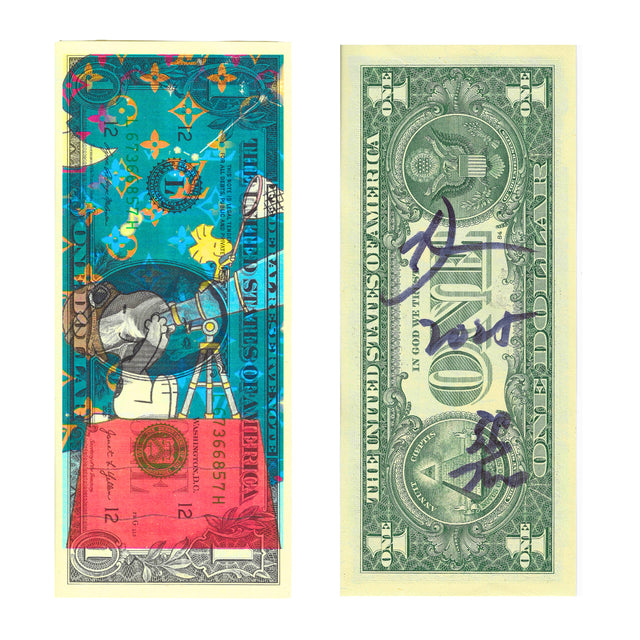
Death NYC Snoopy Woodstock Telescope LV Dollar Bill Art Signed Numbered COA
$55.00 USD
-
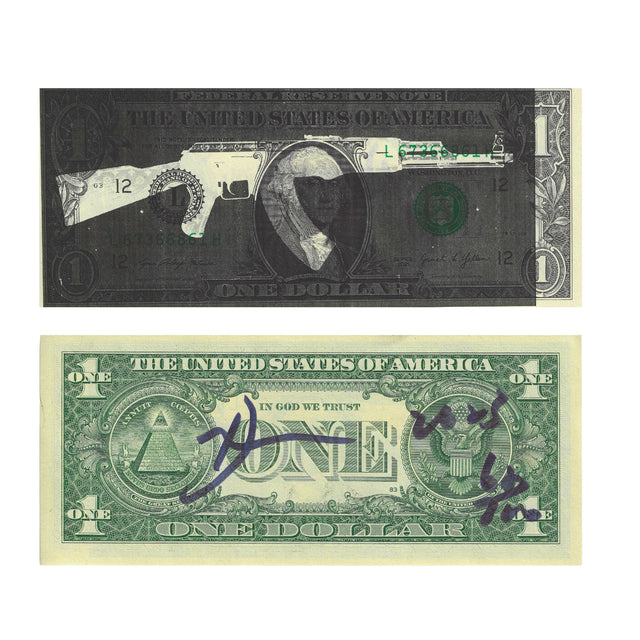
Death NYC Gun Dollar Bill Art Signed Numbered COA Black White Pop Street Art
$50.00 USD
-
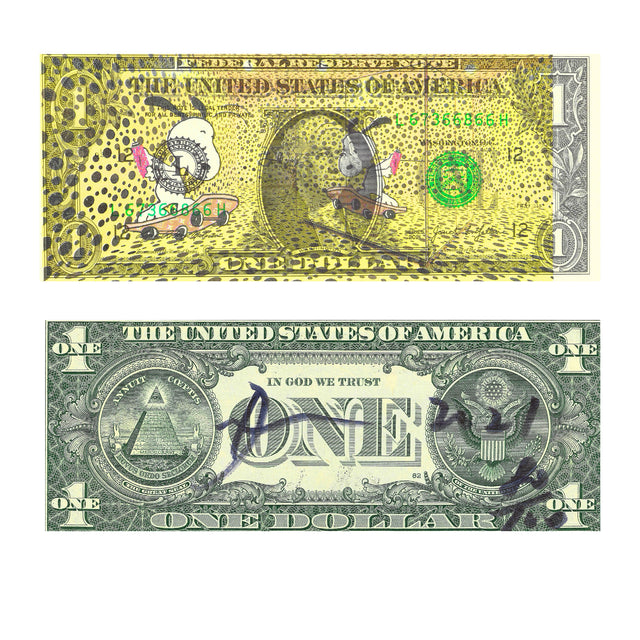
Death NYC Snoopy Skateboard Dollar Bill Art Signed Numbered COA Pop Street Art
$75.00 USD
-
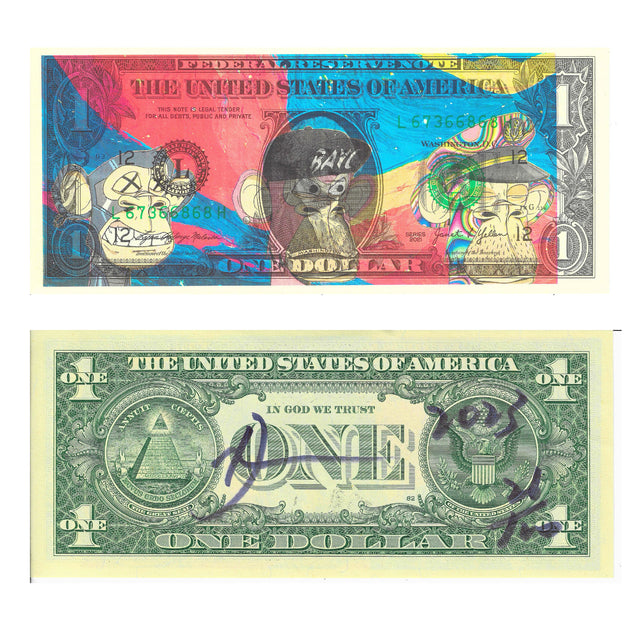
Death NYC Bored Ape Dollar Bill Art Signed Numbered COA Pop Street Art
$40.00 USD
-
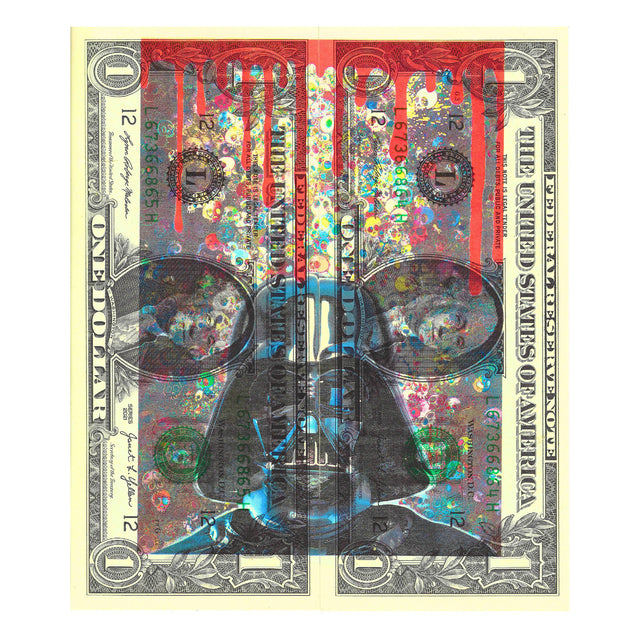
Death NYC Darth Vader Star Wars Dollar Bill Art Signed Two Bills COA Unframed
$100.00 USD
Browse the collection for current listings.