

Gauntlet Gallery — Banksy Prints
Flag (Gold On Formica)
Work Summary & Collector Notes
A monochrome screen print rendering Banksy's "Flag," in which a cluster of youths hoists an American flag atop a wrecked, burned-out car, staged in the exact pyramidal composition of Joe Rosenthal's 1945 Iwo Jima flag-raising photograph. Set against a pale full-moon disc on a deep navy ground and here printed on gold-toned Formica board, it is one of Banksy's sharpest single-image collisions of patriotic war iconography and urban riot.
Collector notes: Edition label was not stated, and total quantity was not documented in the saved record. Edition-specific signature, numbering, and stamp details were not stated in the saved release record. Verify signing and numbering against a documented example of this edition.
Why It Matters
"Flag" takes the most reproduced victory image in American history and relocates it to a torched car in a stripped, looted street, swapping the marines of Iwo Jima for anonymous kids. The substitution turns a monument to wartime triumph into a comment on its aftermath: occupation, civil unrest, and the hollowness of planting a flag over rubble. Produced in the mid-2000s against the backdrop of the Iraq and Afghanistan wars, it sits squarely within Banksy's anti-war and anti-establishment program, using appropriated mass-media imagery to puncture national myth-making. The Gold On Formica treatment pushes it further from "print on paper" toward object, a material gesture typical of Banksy's interest in disrupting fine-art conventions.
Collector Perspective
"Flag" is a recognized and well-collected Banksy image, but this is a variant edition: a screen print on gold-toned Formica rather than the standard paper editions, and the edition size here is not documented. Formica and other unusual-substrate versions of "Flag" exist in small numbers and trade less frequently than the paper signed/unsigned runs, so condition (Formica is prone to edge wear and surface marks) and verifiable provenance matter a great deal. As an image, "Flag" has strong, consistent demand; as a specific substrate variant, pricing is thinner and more example-dependent, so treat any quoted figure as item-specific rather than a fixed market rate.
Historical Context
The composition directly references Joe Rosenthal's "Raising the Flag on Iwo Jima" (February 1945), perhaps the most iconic war photograph ever taken and the basis for the USMC War Memorial. Banksy first developed the "Flag" image in the mid-2000s, the period of the Iraq War and intense debate over American military intervention; this Gold On Formica version is dated 2008, within his Art-World Era as his work moved from street walls into galleries, auction houses, and editioned objects. By staging the heroic flag-raising on a destroyed car in an emptied street, the print reframes the WWII memory as a scene of contemporary occupation and looting rather than liberation.
Documented Release Details
- Object type
- Editioned screenprint
- Release date
- 2008
- Release-date note
- Catalog-listed release year from the saved secondary record; primary release-page confirmation remains pending.
- Medium and materials
- Screen Print.
- Edition details
- Edition label was not stated, and total quantity was not documented in the saved record.
- Signature and marks
- Edition-specific signature, numbering, and stamp details were not stated in the saved release record. Verify signing and numbering against a documented example of this edition.
Documented History and Meaning
History note: This page treats Banksy's broader career as background context, not proof that this specific edition belongs to any single exhibition or event. Release-level facts here come from a saved secondary catalog record.
Meaning / interpretation: Read as documented context rather than stated intent: The composition directly references Joe Rosenthal's "Raising the Flag on Iwo Jima" (February 1945), perhaps the most iconic war photograph ever taken and the basis for the USMC War Memorial. This is an interpretive reading of the release context, not a statement of the artist's intent for this specific work. This interpretive note follows the cited artist or publisher context.
Release context: The saved catalog lists 2008.
Authentication, Presentation and Provenance
- Original presentation
- Original packaging or presentation was not documented in the release sources reviewed.
- Authentication note
- Compare the support, dimensions, edition number, and signature against a documented example of this edition. Gauntlet Gallery does not authenticate works purchased from third parties.
- Provenance note
- Edition origin is attributed in the saved record to the release source named in the saved record. That does not establish the ownership history of an individual copy: retain the original invoice, reseller or gallery paperwork, labels, correspondence, and condition photographs.
Sources and Verification
Verification status: Secondary catalog snapshot; artist-level context added
- Banksy — Wikipedia · reference encyclopedia · Accessed 2026-07-13 · General artist-level biographical and career reference.
- Banksy (Q133600) — Wikidata · reference knowledge base · Accessed 2026-07-13 · Structured identifier used for the artist across catalog metadata.
FAQ
What does this print depict?
A group of young figures raising an American flag on top of a wrecked, overturned car, arranged in the same pyramidal pose as the famous 1945 Iwo Jima flag-raising photograph, set against a large pale moon disc on a dark ground.
What is it referencing?
Joe Rosenthal's 1945 photograph 'Raising the Flag on Iwo Jima.' Banksy transplants that wartime victory image onto a scene of urban wreckage to comment on war, occupation, and its aftermath.
What is the medium?
A screen print. This particular version, 'Flag (Gold On Formica),' is printed on gold-toned Formica board rather than standard paper, making it a substrate variant of the image.
How large is the edition?
The edition size for this Gold On Formica version is not documented in our records. Banksy's 'Flag' image exists in several forms, including standard paper signed and unsigned editions; this Formica variant is a smaller, less common production.
Is it signed?
The title does not specify signed or unsigned, so this must be confirmed example by example.
Who is Banksy?
Banksy is an anonymous England-based street artist who emerged from Bristol in the early 1990s, known for fast stencil work, dark humor, and anti-war, anti-capitalist, anti-establishment imagery, with many prints originally published through Pictures on Walls.
Related Banksy Works


Shop Banksy at Gauntlet Gallery
Live listings with authentication, provenance and documentation.
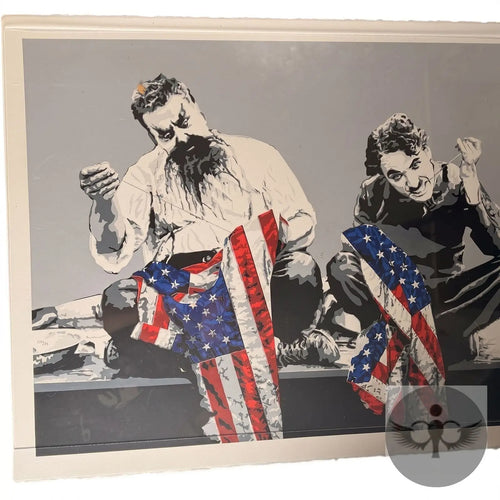
Mr. Brainwash 2018 "Recovery Plan" Signed Screenprint of Chaplin with USA Flag
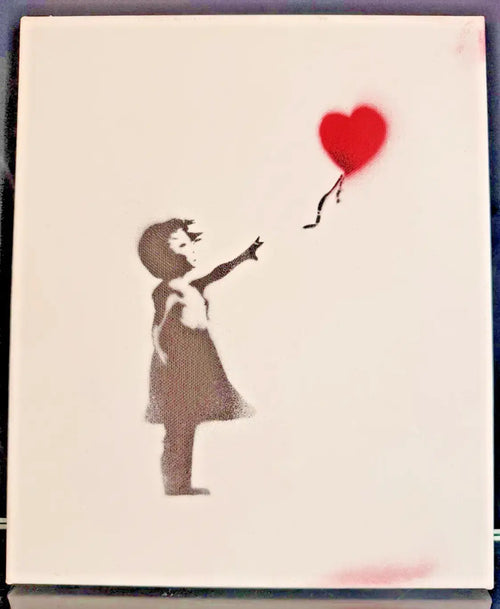
Banksy Girl with Balloon Dismaland 2/12 Signed Stencil Canvas 2015 Ticket
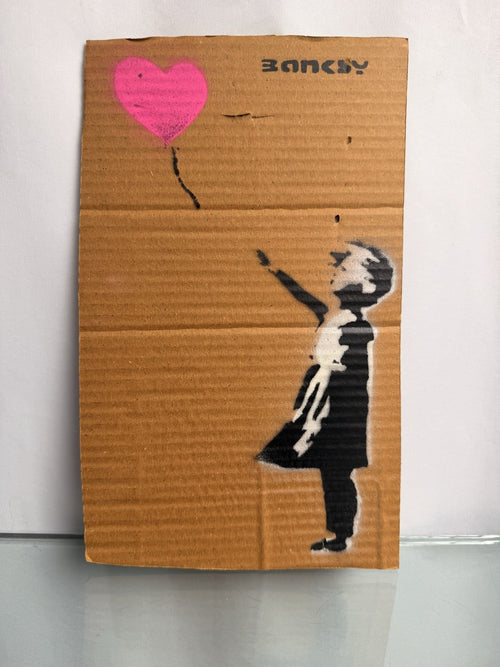
WMMS Signed Original Stencil Spray Art on Cardboard Banksy Dismaland Style 3/3
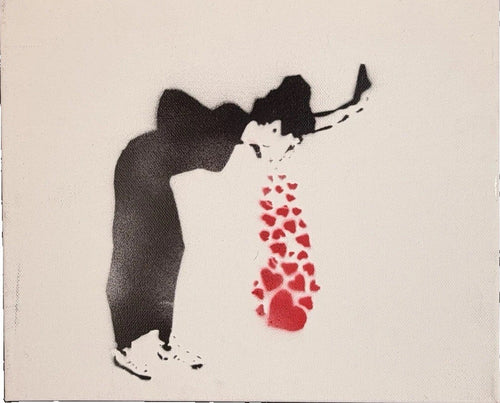
Banksy Dismaland Achieve Greatness 1/10 Signed Stencil Canvas 2015 Ticket
Be first when new Banksy pieces drop
You're on the list ✓ — first look at every new Banksy arrival.
Shop Banksy & Dismaland
Explore current pieces available from the gallery.

Browse the collection for current listings.