

Gauntlet Gallery — Banksy Prints
Love Is In The Air (Unsigned)
Work Summary & Collector Notes
Love Is In The Air (also known as the Flower Thrower) shows a masked male protester in a baseball cap and bandana, captured mid-throw in the classic riot-stance with his arm cocked back — but instead of a Molotov cocktail or a rock, his hand grips a bright bouquet of flowers. Rendered in Banksy's signature stark red-and-black stencil palette, it is one of the most recognizable images in his entire body of work and a defining example of his peace-through-subversion message.
Collector notes: Edition; saved release record states an edition size of 51. Edition-specific signature, numbering, and stamp details were not stated in the saved release record. Verify signing and numbering against a documented example of this edition.
Why It Matters
The image takes the visual language of street conflict — the hooded thrower frozen in the pose of someone hurling a petrol bomb at police — and replaces the weapon with a bunch of flowers, turning an emblem of violence into an emblem of hope and protest. First painted as a mural on a wall in the West Bank near Bethlehem, it became Banksy's most enduring anti-war statement and one of the most reproduced protest images of the 21st century. The single substitution does all the work: it is instantly legible, emotionally disarming, and politically pointed, which is exactly why it has been adopted globally as shorthand for non-violent resistance.
Collector Perspective
As one of Banksy's most iconic and sought-after compositions, even the unsigned Flower Thrower carries strong recognition and liquidity, but buyers should treat authentication and provenance documentation as essential and expect a meaningful discount relative to a signed example. Condition (the red ink is prone to fading and the white margins to handling marks) materially affects value.
Historical Context
Created in 2003 during Banksy's Stencil Boom Era, Love Is In The Air originated as a stencilled mural on the Israeli-controlled side of the West Bank, part of the same period in which Banksy was working on the separation barrier and developing his Bethlehem imagery. The print edition followed through Pictures on Walls, the artist-run publisher behind most of Banksy's early prints. The work sits squarely within his anti-war, anti-establishment output of the early 2000s, and the masked thrower with bouquet has since been endlessly referenced, parodied, and merchandised — including being chosen as the cover image for Banksy's own catalogue of works.
Documented Release Details
- Object type
- Editioned screenprint
- Release date
- 2003
- Release-date note
- Catalog-listed release year from the saved secondary record; primary release-page confirmation remains pending.
- Medium and materials
- Screen Print.
- Edition details
- Edition; saved release record states an edition size of 51.
- Signature and marks
- Edition-specific signature, numbering, and stamp details were not stated in the saved release record. Verify signing and numbering against a documented example of this edition.
Documented History and Meaning
History note: This page treats Banksy's broader career as background context, not proof that this specific edition belongs to any single exhibition or event. Release-level facts here come from a saved secondary catalog record.
Meaning / interpretation: Read as documented context rather than stated intent: Created in 2003 during Banksy's Stencil Boom Era, Love Is In The Air originated as a stencilled mural on the Israeli-controlled side of the West Bank, part of the same period in which Banksy was working on the separation barrier and developing his Bethlehem imagery. This is an interpretive reading of the release context, not a statement of the artist's intent for this specific work. This interpretive note follows the cited artist or publisher context.
Release context: The saved catalog lists 2003.
Authentication, Presentation and Provenance
- Original presentation
- Original packaging or presentation was not documented in the release sources reviewed.
- Authentication note
- Compare the support, dimensions, edition number, and signature against a documented example of this edition. Gauntlet Gallery does not authenticate works purchased from third parties.
- Provenance note
- Edition origin is attributed in the saved record to the release source named in the saved record. That does not establish the ownership history of an individual copy: retain the original invoice, reseller or gallery paperwork, labels, correspondence, and condition photographs.
Sources and Verification
Verification status: Secondary catalog snapshot; artist-level context added
- Banksy — Wikipedia · reference encyclopedia · Accessed 2026-07-13 · General artist-level biographical and career reference.
- Banksy (Q133600) — Wikidata · reference knowledge base · Accessed 2026-07-13 · Structured identifier used for the artist across catalog metadata.
FAQ
What does Love Is In The Air depict?
A masked protester in a cap and bandana, frozen in the classic riot pose of hurling a Molotov cocktail — but his throwing hand holds a colorful bunch of flowers instead of a weapon. It is also widely known as the Flower Thrower.
How large is the edition?
This unsigned edition is limited to 51 impressions. There is also a separate signed edition, which is the more sought-after and higher-priced of the two.
Is this print signed by Banksy?
No. This is the unsigned variant. It does not carry Banksy's hand signature, which places it below the signed edition in value and collector demand even though the image is identical.
What medium is it?
It is a screen print (silkscreen), produced in 2003 and published through Pictures on Walls, the artist-run press behind most early Banksy editions.
Who is Banksy?
Banksy is an anonymous England-based street artist who emerged from Bristol in the early 1990s, known for fast stencil work, dark humour, and anti-war, anti-capitalist and anti-establishment imagery.
Related Banksy Works


Shop Banksy at Gauntlet Gallery
Live listings with authentication, provenance and documentation.
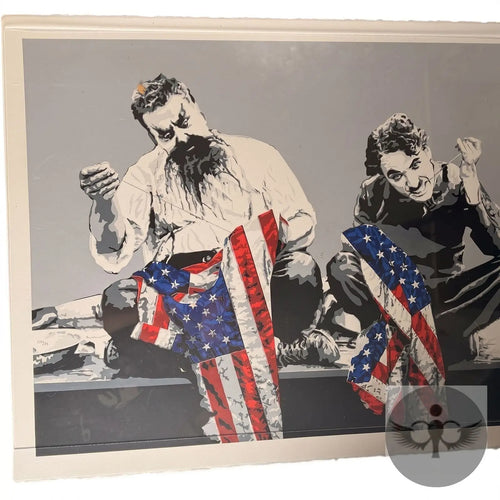
Mr. Brainwash 2018 "Recovery Plan" Signed Screenprint of Chaplin with USA Flag
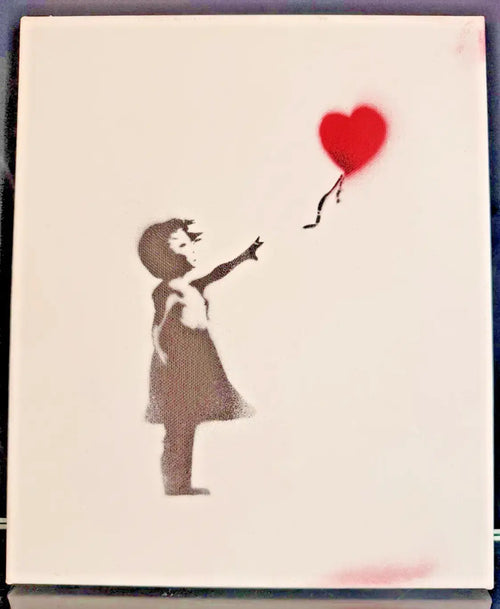
Banksy Girl with Balloon Dismaland 2/12 Signed Stencil Canvas 2015 Ticket
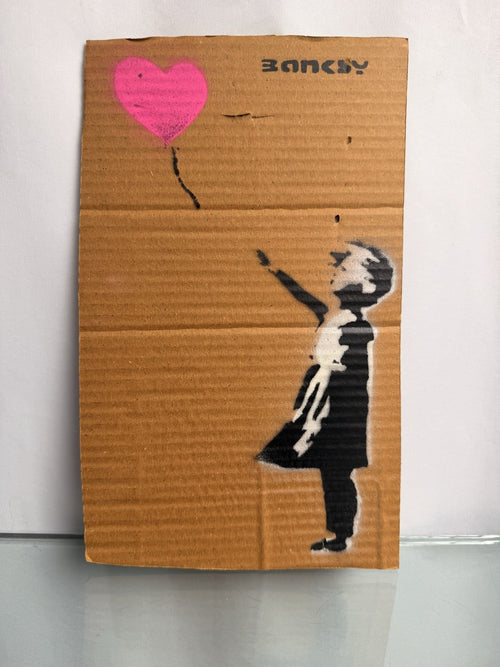
WMMS Signed Original Stencil Spray Art on Cardboard Banksy Dismaland Style 3/3
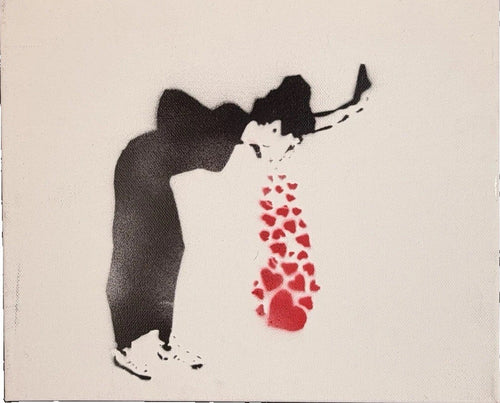
Banksy Dismaland Achieve Greatness 1/10 Signed Stencil Canvas 2015 Ticket
Be first when new Banksy pieces drop
You're on the list ✓ — first look at every new Banksy arrival.
Shop Banksy & Dismaland
Explore current pieces available from the gallery.

Browse the collection for current listings.