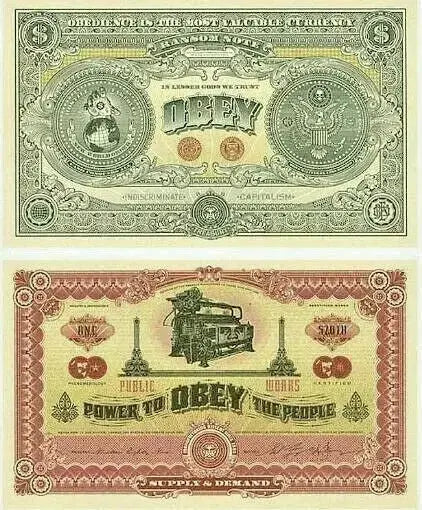
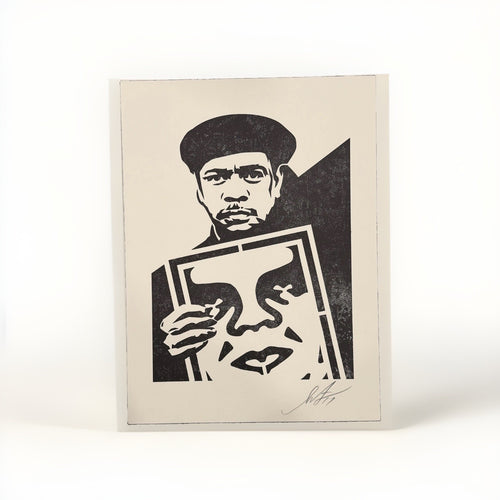
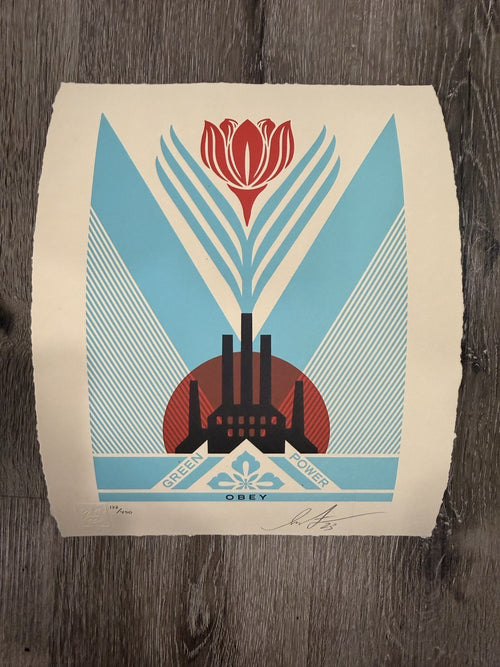
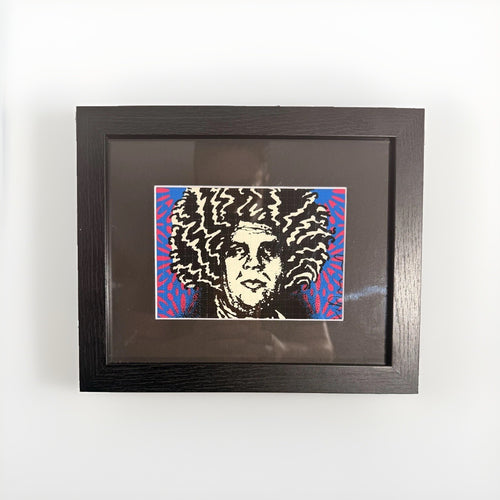
A Shepard Fairey screen print has a physically raised ink texture you can feel with your fingertip — a giclee does not. That tactile difference is the fastest authentication test you have, and it maps directly to value: a screen print edition of 450 for a mid-tier Fairey image trades at $400–$1,200 on the secondary market; a giclee of the same image rarely clears $150. Knowing which you are holding — or buying — is the single most important skill in this market.
This guide covers the three printing methods used in the Fairey market, three hands-on tests to distinguish them, and the misrepresentation tactics that cost collectors thousands of dollars each year. See our full Shepard Fairey Collector Guide for edition records, authentication standards, and market comps going back to 2012.
The Three Print Types — and What They Mean for Value
Screen Print: Investment Grade
Screen printing forces ink through a woven mesh stencil, depositing a physical layer of pigment onto the paper surface. Each color in a Fairey design requires a separate pass through a separate screen. The result is dimensional — ink sits on top of the paper rather than being absorbed into it. Under a 10x loupe, you see solid, sharply defined color fields with clean edges. Where two colors overlap, you can often see the build-up of stacked ink layers.
This is the format Fairey uses for his official editioned releases through his Obey Giant Art store and through gallery partnerships. Screen prints are signed, numbered, and documented. They are the only format that appears at auction with meaningful hammer prices and the only format that generates secondary market comparables tracked by Gauntlet Gallery's 160,000+ comparable sales database.
Post-2008, Fairey standardized most screen print editions at exactly 450 signed-and-numbered prints. Smaller editions of 200–300 appear for HP (hand-pulled on specialty substrates) and HPM (hand-painted multiples) variants, which command significant premiums over standard editions of the same image.
Giclee: Decorative, Not Collectible
Giclee (pronounced zhee-KLAY) is high-resolution inkjet printing on fine art paper or canvas. The quality is genuinely impressive — color accuracy is excellent, resolution is high, and archival papers extend print life. None of that translates into collectible value in Fairey's market.
Giclees are completely flat. The ink soaks into the paper surface rather than sitting on top of it. Under magnification, you will see the characteristic inkjet dot pattern: a fine grid of color dots in cyan, magenta, yellow, and black. The dot spacing is much finer than an offset lithograph but the pattern is present and identifiable.
Fairey does not use giclees for his primary editioned releases. Some are produced by authorized licensees for decorative product lines; many more circulate on secondary markets without clear provenance. A giclee of a Fairey image has decorative value. It has essentially no investment value and will not appreciate in line with his screen print catalog.
Offset Lithograph: Commercial Reproduction
Offset lithography is commercial printing — the same process used for magazines, posters, and books. Metal plates transfer ink to a rubber blanket, which then offsets onto paper. It is fast, cheap, and produces no collectible value in Fairey's market.
Offset reproductions are everywhere. They include magazine tear-outs featuring Fairey imagery, pages from poster books, and unauthorized commercial posters. The visual quality varies from excellent to poor, but print quality is irrelevant to collectible value: an offset lithograph of a Fairey image is worth the paper it is printed on regardless of how attractive it looks.
Under a 10x loupe, offset lithographs show a classic 4-color CMYK halftone pattern: rows of colored dots arranged at regular rosette patterns. This is visually distinct from both screen print (solid color) and giclee (fine inkjet dots).
Print Type Comparison at a Glance
| Feature | Screen Print | Giclee | Offset Lithograph |
|---|---|---|---|
| Ink texture | Raised, dimensional — feel the layers | Flat, absorbed into paper | Flat, slightly glossy |
| Under 10x loupe | Solid color blocks, clean edges | Fine inkjet dot grid | CMYK rosette halftone pattern |
| Typical edition size | 450 (standard); 200–300 (HP/HPM) | Open or large run | Unlimited commercial run |
| Signed & numbered | Yes — pencil, lower margin | Rarely in a formal edition | No |
| Secondary market value (mid-tier image) | $400–$1,200+ | $50–$150 | $10–$40 |
| Appears at auction | Yes | Rarely | No |
| Collectible investment grade | Yes | No | No |
Three Tests to Tell Them Apart
Test 1: The Fingertip Texture Test
Lightly drag your fingertip across a color-dense area of the print — not the white margin, but through heavy ink coverage. On a screen print you will feel a subtle but distinct raised texture. In areas where multiple colors overlap (a shadow on a face, a layered background), the texture is more pronounced. This is physical ink deposited in layers.
A giclee feels completely smooth — like touching the paper itself, because the ink has been absorbed into the substrate. An offset lithograph may feel faintly tacky or slightly raised in the direction of the press impression, but it lacks the distinct color-layer dimensionality of a screen print.
This test works best on older prints (pre-2015) where ink has fully cured. On very recent screen prints, the texture is still present but subtler. If you are uncertain, proceed to Test 2.
Test 2: The Loupe Test
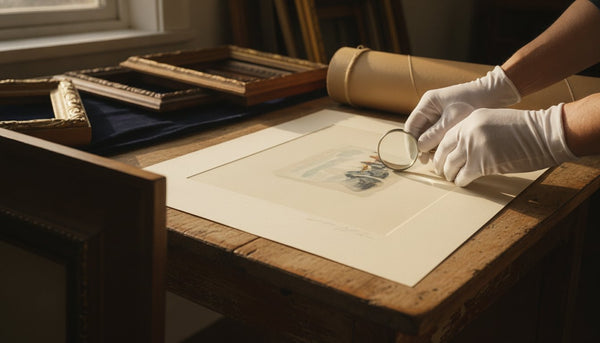
A 10x loupe (jeweler's loupe) costs $15–$25 and is essential equipment for any serious print collector. Examine a color-to-color boundary — where, for example, red meets black in a Fairey design.
- Screen print: The boundary is crisp. Colors are solid blocks — no dot pattern visible. The edge where colors meet may show slight ink spread but the fields themselves are uniform.
- Giclee: Fine, regular inkjet dots visible throughout. Dots are very small and tightly spaced — you need good lighting and the full 10x to see them clearly — but they are present in every color field.
- Offset lithograph: Classic rosette halftone pattern. Groups of colored dots arranged in angled rows that form a subtle flower-like rosette pattern. Visible at 10x in any color area.
Test 3: The Documentation Test
A genuine Fairey screen print edition ships with a certificate of authenticity or is traceable to a documented release. The Obey Giant Art archive records edition titles, print dates, edition sizes, and substrate details for releases going back to the early 2000s. If a seller cannot identify the specific edition by title and year — and cannot connect it to an archival record — that is a red flag regardless of what the print looks like.
Pencil signatures in the lower margin are standard for Fairey screen prints. Lower left: edition number over total (e.g., "127/450"). Lower right: Fairey's signature. Some editions include a thumbprint stamp. No signature format is foolproof — Fairey signatures are among the most forged in the street art market — but absence of a signature on a claimed screen print edition is disqualifying.
Why Sellers Misrepresent Print Types
The price differential between a screen print and a giclee of the same Fairey image can be $800–$1,000. That spread creates a straightforward incentive for misrepresentation. The tactics range from accidental ignorance to deliberate fraud.
Vocabulary obfuscation: Terms like "fine art print," "limited edition print," "art print," and "archival print" do not specify printing method. These phrases are used on listings for giclees, offset reproductions, and everything in between. None of these terms means screen print. If a listing does not use the words "screen print" or "serigraph" explicitly, assume it is not one until proven otherwise.
Fake edition numbering: It is trivial to pencil a number like "127/450" on any piece of paper. Edition numbering on a giclee or offset reproduction does not make it a screen print. Numbering is only meaningful when paired with documentation linking the specific print to a verifiable Fairey release record.
Image selection: Forgers and misrepresentation sellers prefer Fairey's most recognizable images — HOPE, Andre the Giant Has a Posse, Obey Propaganda — because buyers are less likely to research specific edition histories for famous images they recognize on sight.
Platform-specific risk: Gauntlet Gallery's review of market listings estimates that approximately 30% of Fairey prints offered on general secondary markets misrepresent print type, provenance, or both. eBay and Etsy carry the highest misrepresentation rates. Specialist art print platforms and auction houses with condition reporting carry lower rates but are not immune.
What to Demand Before Buying
Before purchasing any Fairey print described as a screen print edition:
- Edition title and release year — match against Obey Giant Art archive records
- High-resolution margin photos — showing edition number, signature, and any thumbprint
- Close-up surface photo — sufficient to assess texture; ask for a photo of ink layers under raking light
- Provenance chain — original purchase receipt, prior auction record, or gallery documentation
- Substrate and size confirmation — documented editions have specific paper types and exact dimensions
A reputable seller will provide all five without hesitation. Resistance to any of these requests is a meaningful warning signal.
Gauntlet Gallery has specialized in authenticated Fairey editions since 2012. Every print we offer is cross-referenced against Gauntlet Gallery's 160,000+ comparable sales database and verified against documented release records before listing.
Browse our current authenticated Shepard Fairey screen print inventory →