The KAWS Modern Art Oxford 2010 exhibition was the first major UK solo museum show of Brian Donnelly (KAWS), running March through May 2010 at Modern Art Oxford and curated by Michael Stanley. It featured paintings, drawings, and large-scale sculpture, signaling KAWS's transition from designer-toy figure to internationally exhibited contemporary artist.
Why the Oxford Exhibition Mattered
Before March 2010, KAWS, born Brian Donnelly in 1974 in Jersey City, New Jersey, was widely recognized for vinyl figures, OriginalFake apparel out of Tokyo, and a graffiti-inflected studio practice that traced back to his late-1990s bus-shelter interventions. He had been exhibited in commercial galleries on both sides of the Atlantic, but no European public institution had given him a dedicated solo platform of this scale. Modern Art Oxford changed that.
The institution had a long history of presenting early or definitive solo surveys of artists later recognized as pivotal — among them Yoko Ono, Tracey Emin, and Rachel Whiteread. Inviting KAWS placed him explicitly inside that lineage and reframed his practice as museum-grade contemporary art rather than collectible product. For UK and European collectors, it was the first opportunity to engage with his paintings and sculpture in an institutional context.
Curator: Michael Stanley
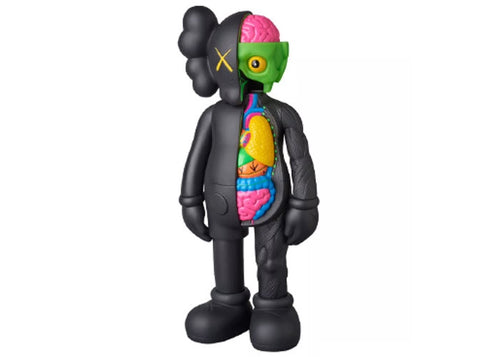
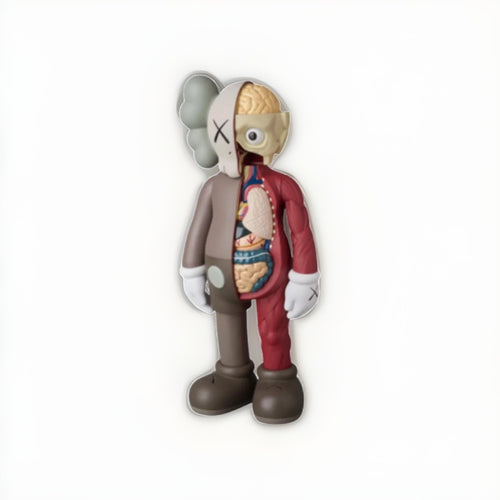
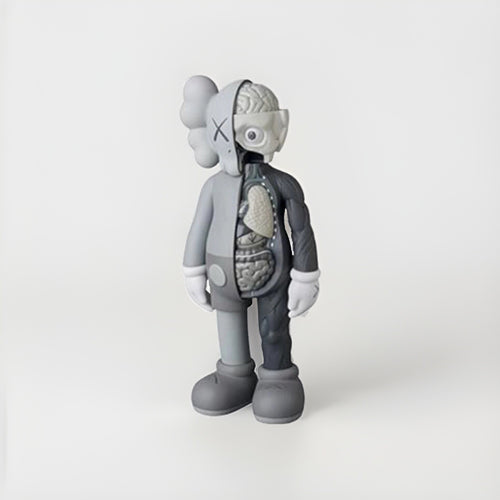
The exhibition was curated by Michael Stanley, then Director of Modern Art Oxford. Stanley was known for championing artists whose practices crossed boundaries between design, popular culture, and fine art, and his curatorial framing positioned KAWS's Companion, Chum, and Accomplice characters as serious sculptural inquiries into figuration, mortality, and consumer iconography rather than novelty product.
What Was on View
The show drew from across KAWS's practice — large-scale canvases, works on paper, and sculpture — with the monumental Passing Through Companion as a central anchor. Visitors moved between intimate drawings and gallery-filling sculpture, a juxtaposition that emphasized how the same vocabulary scaled from page to monument.
Passing Through: A Monument in Motion
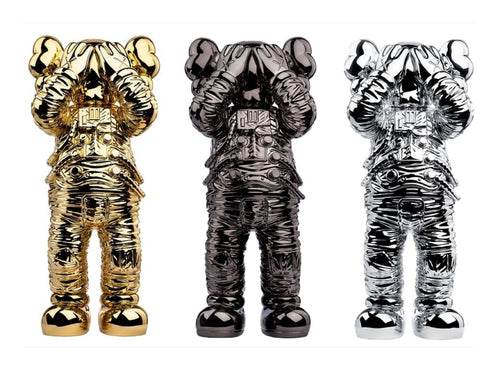
The Passing Through Companion — a seated Companion figure with head buried in its hands and crossbones over its eyes — became one of the most recognizable images of the exhibition. The same sculpture was simultaneously installed at Brooklyn Bridge Park in New York during 2010 as part of the Public Art Fund program, creating a transatlantic dialogue that reinforced KAWS's emergence as an artist with a serious public-sculpture practice. The dual presentation, Oxford and New York, was a turning point that publicly recoded him from designer-toy figure to museum-exhibited sculptor.
Exhibition Quick Facts
| Detail | Information |
|---|---|
| Exhibition Title | KAWS |
| Venue | Modern Art Oxford, UK |
| Dates | March – May 2010 |
| Curator | Michael Stanley |
| Significance | First major UK solo museum exhibition |
| Key Work | Passing Through (monumental Companion sculpture) |
| Concurrent Installation | Passing Through, Brooklyn Bridge Park, NYC (Public Art Fund) |
| Artist Born | Brian Donnelly, 1974, Jersey City, NJ |
| Mediums Shown | Paintings, drawings, large-scale sculpture |
From Designer Toys to Museum Walls
The Oxford show is most often cited by collectors and curators as the moment KAWS's market re-categorized itself. Up to that point, his secondary market revolved primarily around vinyl figures, prints, and OriginalFake drops — collectible categories with active but capped pricing. After Oxford, his paintings and unique sculptures began entering institutional and blue-chip private collections at a different velocity.
The Trajectory From Oxford to $14.7M
The arc that followed is now part of contemporary-art history. The KAWS Album — a 2005 painting reinterpreting Sgt. Pepper's Lonely Hearts Club Band with Simpsons-derived heads — sold at Sotheby's Hong Kong in April 2019 for approximately US$14.7 million, shattering his auction record and placing him decisively in the upper tier of the living-artist market. The Oxford exhibition is consistently named in academic and auction catalog essays as the institutional credentialing moment that made that later valuation possible.
Why Oxford Still Matters for KAWS Collectors
For collectors today, the Modern Art Oxford 2010 exhibition is more than a biographical footnote. It is the institutional reference point most often cited in provenance research and authentication context for KAWS works produced in the 2008–2012 period. Works exhibited or referenced in connection with Oxford carry a documented institutional history that materially affects long-term value in the documented secondary market.
- Provenance anchor: Pieces with documented inclusion in or proximity to the Oxford exhibition carry a measurable premium.
- Catalog as evidence: The Modern Art Oxford catalog remains a primary reference document for period attributions.
- Sculptural language fixed: The Passing Through motif debuted at this scale during the Oxford / Brooklyn Bridge Park moment, and later editions, prints, and figures referencing the pose all trace back to it.
Connecting Exhibition History to Today's Market
Gauntlet Gallery — founded in 2012 — has tracked KAWS comparable sales since the artist's institutional ascent and now maintains records across more than 160,000 comparable contemporary and street-art transactions. That dataset shows a clear pattern: the documented secondary market for KAWS works with strong exhibition lineage consistently outperforms otherwise comparable pieces without institutional history. For a fuller breakdown of how to read KAWS provenance, pricing, and authentication signals, see our KAWS collector guide.
The Bigger Picture: Oxford as Institutional Inflection
The Modern Art Oxford 2010 exhibition is best understood not as a single show but as the moment a generation of artists working between street art, design, and gallery practice — KAWS, Banksy, Shepard Fairey, Takashi Murakami — were given full institutional treatment in the United Kingdom. KAWS was the most explicit bridge between toy-collecting culture and museum collecting culture, and Oxford was the bridge's first formal span.
For curators, the show validated a thesis that figuration drawn from cartoons and consumer iconography could carry the same weight as traditional sculpture. For collectors, it announced that a market previously dismissed as “designer toy” was about to be re-priced as contemporary art.
Build a Collection With Documented History
Gauntlet Gallery applies the same provenance and exhibition-lineage rigor to every contemporary work we offer. Whether you are building a focused KAWS holding or a broader contemporary collection grounded in documented secondary-market data, start with vetted inventory.
Browse the full Gauntlet Gallery collection →
Frequently Asked Questions
When did KAWS exhibit at Modern Art Oxford?
The KAWS solo exhibition ran from March through May 2010 at Modern Art Oxford in the United Kingdom. It was his first major UK solo museum exhibition.
Who curated the KAWS Modern Art Oxford exhibition?
The exhibition was curated by Michael Stanley, then Director of Modern Art Oxford. Stanley championed the show as a serious institutional treatment of KAWS's painting and sculpture practice.
What was Passing Through and how is it connected to the Oxford show?
Passing Through is a monumental seated Companion sculpture with its head buried in its hands. It was central to the Oxford exhibition and was simultaneously installed at Brooklyn Bridge Park in New York in 2010 as part of the Public Art Fund program.
Why is the Oxford exhibition important to KAWS collectors?
It is widely regarded as the institutional moment that re-categorized KAWS from designer-toy artist to museum-shown contemporary artist in Europe. Documented exhibition lineage from this period materially affects long-term resale value in the documented secondary market.
How does Oxford connect to KAWS's record auction price?
The institutional credibility built in 2010 helped make later blue-chip valuations possible. In April 2019, The KAWS Album sold at Sotheby's Hong Kong for approximately US$14.7 million, setting his auction record and confirming the trajectory Oxford had publicly signaled nine years earlier.