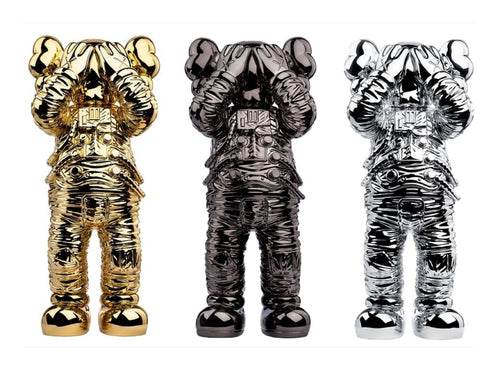
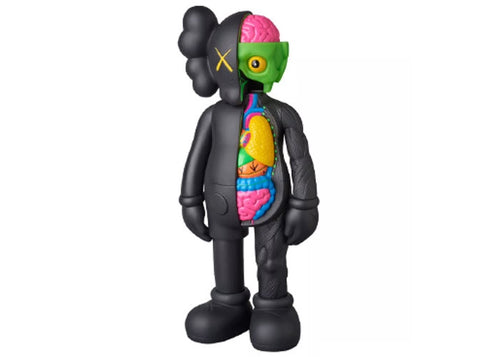
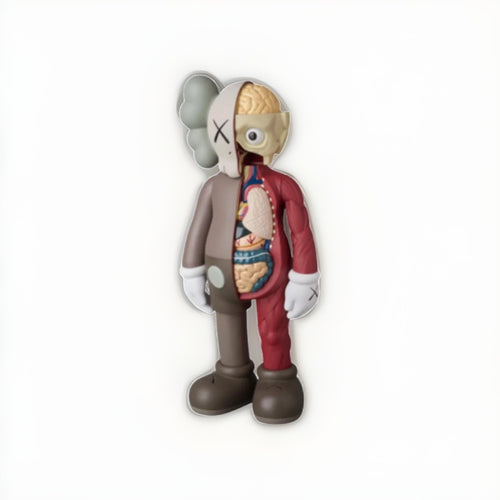
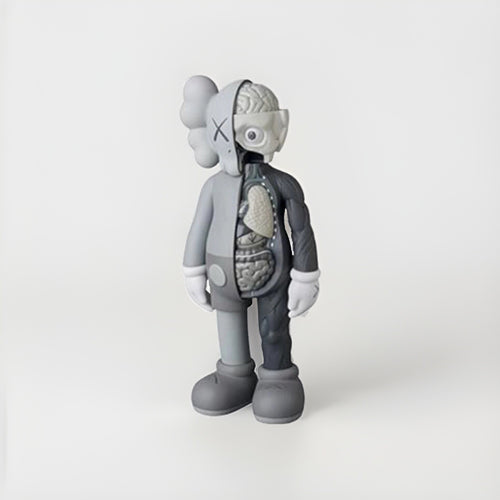
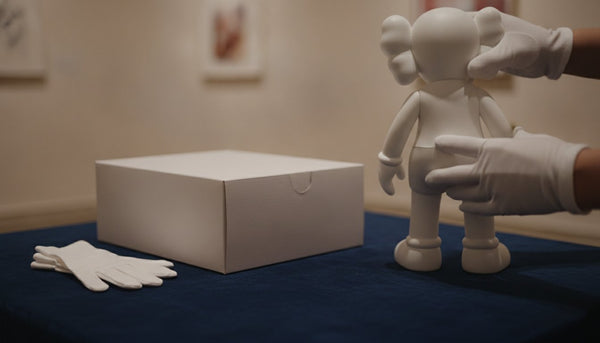
The original 1999 KAWS Companion is a brown vinyl figure released through Bounty Hunter Tokyo in an edition of 500 pieces. Designed by Brian Donnelly under the KAWS name, it was the first commercial vinyl figure issued by the artist and is widely regarded as the founding artifact of contemporary designer-toy collecting.
For collectors, dealers, and institutional buyers tracking blue-chip designer toys, no object carries more historical weight than the original 1999 KAWS Companion in brown. It is the piece that converted KAWS from a graffiti-rooted illustrator into a globally collected three-dimensional artist, and it remains the single most important reference point in the entire Companion lineage. Gauntlet Gallery, founded in 2012, has tracked this market continuously and references it against our 160,000+ comparable sales database to advise serious collectors.
The Drop That Started Everything: 1999 Bounty Hunter Tokyo
In 1999, Brian Donnelly (born 1974 in Jersey City, New Jersey) partnered with Hikaru Iwanaga’s Bounty Hunter, the Harajuku-based streetwear and toy label, to produce his first commercial vinyl figure. The result was the Companion: an approximately 11-inch Mickey-Mouse-derived character with KAWS’ signature crossed-out eyes, skull-and-crossbones skull, and gloved hands posed in a contemplative downward gaze.
Three colorways were released that year — Brown, Black, and Grey. Each was issued in a documented edition of 500 pieces and retailed at approximately $300 through Bounty Hunter’s Tokyo storefront and a small number of allied boutiques. The Brown variant is universally treated as the “OG” reference piece, with Black and Grey occupying parallel but secondary positions in the canon.
Why Bounty Hunter Mattered
Bounty Hunter was not a toy company in the conventional sense. It was a tastemaker label embedded in the late-1990s Ura-Harajuku scene alongside A Bathing Ape, Neighborhood, and Undercover. Distribution was deliberately narrow: Tokyo storefront sales, a handful of international stockists, and word-of-mouth across an emerging cross-Pacific streetwear community. That distribution chain is exactly why surviving 1999 Brown Companions are scarce — most were sold to early adopters who either kept them sealed or wore them out through display.
1999 Companion: Production and Market Reference
| Attribute | 1999 KAWS Companion (Original) |
|---|---|
| Release Year | 1999 |
| Producer / Distributor | Bounty Hunter Tokyo |
| Artist | KAWS (Brian Donnelly, b. 1974, Jersey City NJ) |
| Material | Painted vinyl |
| Height | Approx. 11 inches |
| Colorways | Brown, Black, Grey |
| Edition Size (per colorway) | 500 pieces |
| Original Retail | ~$300 USD |
| Documented Secondary Market (Brown) | Mid five figures to low six figures, depending on condition and provenance |
| Packaging | Printed cardboard box with Bounty Hunter and KAWS branding |
| Authentication | No COA issued at release; authentication relies on physical and provenance markers |
Pricing in the documented secondary market has moved upward consistently across the past decade, with the Brown variant in sealed, unopened condition occupying the top of the original-trio hierarchy. Gauntlet Gallery’s 160,000+ comparable sales database tracks results clustering in the mid five figures for well-kept examples, with exceptional sealed pieces backed by strong provenance achieving materially higher results at major auction.
Why the 1999 Brown Companion Matters
It Is the Founding Artifact of Designer Toy Collecting
Before 1999, vinyl art toys existed — Michael Lau’s Gardener series and early Bounty Hunter figures had already established the format in Tokyo. What the KAWS Companion did differently was bind a fine-art sensibility, a recognizable graphic language, and a Disney-derived silhouette into a single object that read simultaneously as toy, sculpture, and cultural statement. Every later milestone — the OriginalFake era, the Dior collaboration, Uniqlo BFF drops, and the $14.7 million sale of The KAWS Album at Sotheby’s Hong Kong in April 2019 — traces its lineage to this single 1999 release.
Finite, Closed, Appreciating Supply
The 1999 edition is permanently closed. There are 500 Brown examples in existence, with normal attrition from damage, loss, and unsealed wear steadily reducing the practical float. Combined with continuous demand from new entrants into the KAWS market, the supply-demand structure is a textbook scarcity case.
Authenticating a 1999 KAWS Companion
The 1999 Companion was released before formal authentication infrastructure existed in the designer-toy market. There are no COAs, no holograms, and no NFC chips on the original release. Authentication is a function of physical inspection and provenance documentation. Reissues, bootlegs, and later editions exist, and counterfeit pressure on KAWS works generally is among the highest of any living artist.
What to Examine
- Vinyl quality and weight. Original 1999 production has a specific vinyl density, paint depth, and finish that differs from later reissues and from bootleg recasts.
- Paint registration. Eye crosses, skull markings, and glove lines on authentic pieces show consistent registration. Bootlegs typically show drift or blurring.
- Foot and base stamping. Period-correct copyright and production stampings on the underside are essential reference markers.
- Original Bounty Hunter box. Sealed-box examples with intact Bounty Hunter and KAWS print graphics on the original cardboard are the gold standard.
- Provenance chain. Receipts, prior auction records, and chain-of-custody documentation materially affect valuation.
How 1999 Originals Differ from Reissues
KAWS and Medicom Toy later produced Companion variants in many colorways across multiple decades. None of those later releases — regardless of edition size or colorway — are the 1999 Bounty Hunter original. A piece is only an original 1999 Companion if it was produced and distributed through the original Bounty Hunter Tokyo chain in that year. Buyers should be skeptical of any seller who conflates later reissues with the 1999 release, and should require explicit, documented evidence of period production.
Where the 1999 Companion Sits in the Broader KAWS Market
KAWS’ overall market exceeds $200 million in annual auction and resale volume across vinyl figures, signed limited-edition prints, plush figures, inflatables, and fashion collaborations. The market is anchored by institutional validation at Phillips, Sotheby’s, Christie’s, Heritage Auctions, and Bonhams. The 1999 Brown Companion sits at the very top of the historical hierarchy — it is the piece other Companions are measured against. For deeper context on the broader Companion and BFF ecosystem, see our KAWS Collector Guide.
Buyer Guidance From Gauntlet Gallery
For collectors evaluating a 1999 Companion acquisition, three principles apply:
- Pay for provenance, not just the object. A 1999 Brown Companion with verifiable chain of custody is materially more valuable — and materially safer — than one without.
- Sealed box, when available, is the institutional standard. Unopened examples with intact Bounty Hunter packaging command the top of the documented secondary market.
- Use a comparable-sales database. Pricing this piece without reference to actual completed sales is guesswork. Gauntlet Gallery’s 160,000+ comparable sales database is built for precisely this purpose.
Founded in 2012, Gauntlet Gallery has catalogued 160,000+ comparable sales across street art, designer toys, and contemporary collectibles. If you are considering buying, selling, or authenticating a 1999 KAWS Companion or any other KAWS work, browse current inventory at gauntlet.gallery/collections/all or contact Gauntlet Gallery directly for a provenance review.