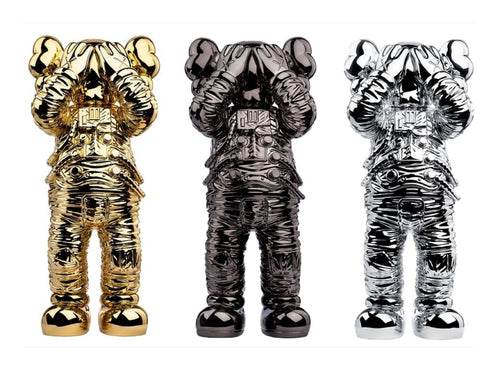
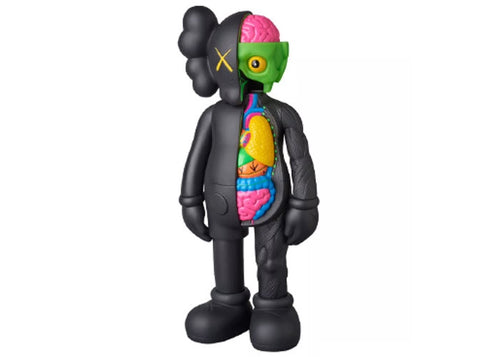
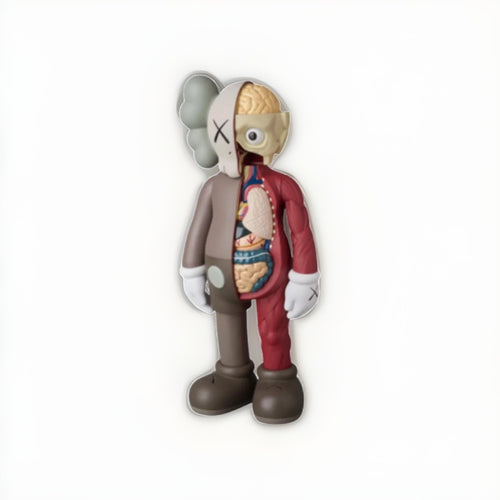
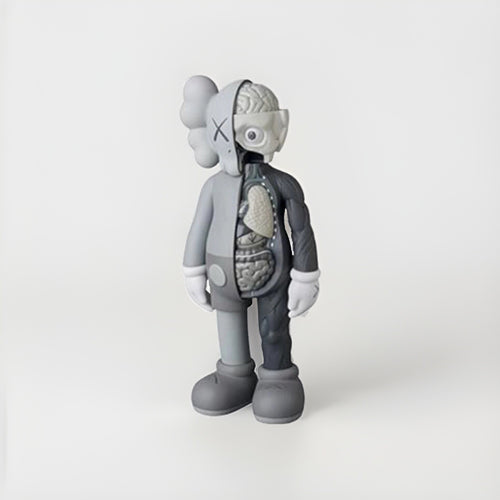
Which KAWS COMPANION colorways are worth the most? Original Brown COMPANION leads on long-run appreciation, followed by Grey, White, and Black — the four "core" colorways that anchor the secondary market. Special edition and collaboration colorways can spike higher at release, but standard colorways have the deepest liquidity and most reliable resale.
KAWS — born Brian Donnelly in 1974 — has redefined how collectors think about colorway value. Since the first COMPANION figure dropped in 1999, Donnelly has released the silhouette in dozens of finishes, scales, and material variations. A $14.7 million sale at Sotheby's Hong Kong in 2019 cemented his place at the top of the contemporary collectibles market. But not every colorway appreciates equally. This guide breaks down which COMPANION finishes carry the most value — and how to evaluate any new release.
Gauntlet Gallery has been authenticating and tracking designer art since 2012, with 160,000+ comparable sales documented across KAWS, Banksy, Shepard Fairey, and the broader street art market. The data below reflects that catalog.
The Four Core COMPANION Colorways
Before considering special releases, every serious KAWS collector should understand the four standard colorways that form the foundation of the market: Brown, Grey, White, and Black. These are the colorways with the deepest sale histories, the most consistent buyer demand, and the clearest authentication baselines.
Original Brown COMPANION — The Anchor
The Original Brown COMPANION is the first colorway and the most historically important. Released in early Open Edition and OriginalFake runs, Brown carries founding-era significance that no later colorway can replicate. Brown commands the highest historical demand, and at the 11" and Open Edition scales it sets the price ceiling for the standard four.
For collectors building a long-term position, Original Brown is the safest bet on continued appreciation. It has weathered every market cycle since 2002.
Grey COMPANION — The Gallery Aesthetic
Grey COMPANION trades like a gallery piece. The neutral tone photographs cleanly against white walls, sits comfortably alongside fine-art prints, and appeals to the design-led collector who wants KAWS in a residential or institutional space. Grey has strong secondary market liquidity — listings clear quickly and price spreads stay tight.
White COMPANION — The Clean Slate
White COMPANION sits next to Grey on the aesthetic spectrum. It is the most "neutral" of the four, and has become the default display piece for interior designers and lifestyle collectors. White lacks Brown's historical weight, but its broader buyer pool keeps prices supported.
Black COMPANION — The Graphic Performer
Black COMPANION delivers the boldest graphic statement of the core four. The high-contrast silhouette photographs beautifully, dominates a room, and appeals to a streetwear-adjacent collector base that overlaps with sneakers, BE@RBRICK, and contemporary apparel collecting. Black has performed consistently across every release window, and rarely sees the discounting that affects collaboration colorways.
Core Colorway Demand Profile
| Colorway | Historical Demand | Secondary Liquidity | Best For |
|---|---|---|---|
| Original Brown | Highest | Deep | Long-term appreciation, anchor position |
| Grey | High | Deep | Gallery and residential display |
| White | High | Deep | Interior design and lifestyle collectors |
| Black | High | Deep | Bold graphic statement, streetwear crossover |
Special and Collaboration Colorways
Beyond the core four, KAWS has released dozens of seasonal, holiday, and collaboration colorways — Dissected variants, Flayed editions, Resting Place releases, BFF figures, holiday inflatables tied to specific cities, and partnerships with Dior, Uniqlo, the Brooklyn Museum, and the National Gallery of Victoria.
These special colorways follow a different value pattern than the core four:
- Initial premium. Special colorways often command 2–5x retail at release, driven by drop-day demand and limited runs.
- Volatile mid-term. Prices can compress 30–50% in the 6–18 months after release as drop-day flippers exit positions.
- Liquidity gap. Specials trade less frequently than the core four, so individual sales can swing the comp set.
- Long-tail upside. The strongest specials — Dissected Brown, OriginalFake Chum, museum editions — eventually appreciate beyond the standard core, but the timeline is years not months.
For most collectors, the right strategy is to anchor with core colorways and add select specials when authentication and provenance are airtight.
How to Assess Colorway Rarity for Any Release
When evaluating a new KAWS release or a secondary market piece, work through this checklist:
- Edition size. Open Edition versus numbered run. Numbered editions under 500 carry significantly more upside.
- Scale. 11" is the standard collector size. 4" miniatures, 16" mid-size, and 4ft+ large-scale figures each have distinct markets.
- Distribution channel. OriginalFake, AllRightsReserved, Medicom Toy, museum stores, and brand collaborations each carry different provenance weight.
- Drop context. City-specific releases, tour exclusives, and museum editions tend to outperform generic open editions over the long run.
- Condition and packaging. Mint-in-box with original outer shipper commands a measurable premium. Display-worn pieces with no box can lose 20–40% of value.
- Authentication chain. Hologram sticker, foot-stamp markings, and documented release records are the gold standard for modern KAWS authentication.
Limited editions with strong provenance routinely show 5–20x retail appreciation over a 5–10 year horizon. The variance is wide, but the floor on authenticated core colorways has been remarkably stable.
Authentication: Why It Decides Value
KAWS counterfeits appear within 72 hours of every major drop. Open marketplaces carry a fake rate estimated at 40–60%. A colorway analysis is meaningless without authentication.
Every KAWS piece sold through Gauntlet Gallery passes through a two-layer chain: physical verification at the figure level — hologram, foot stamp, paint quality — and TrueCOA blockchain certification that ties the specific piece to its provenance, sale history, and physical condition. It is an authentication standard built specifically for the designer-toy and collectible-art category.
For a deeper view on how we authenticate, value, and source KAWS pieces, read our full KAWS Collector Guide.
Building a KAWS Position
If you are building a KAWS position from scratch, the playbook is straightforward:
- Start with one core colorway at the 11" scale — Brown if you want the anchor, Black if you want graphic impact.
- Add a second core colorway in a contrasting tone for display variety and risk diversification.
- Add one special or collaboration colorway only when the authentication chain is complete and the provenance is documented.
- Hold for a minimum 3–5 year horizon to capture meaningful appreciation.
The KAWS market rewards patience, authentication, and discipline. Colorway selection is the lever that decides long-term return.
Ready to start or expand your KAWS collection?
Every piece in our inventory comes with TrueCOA blockchain authentication. Browse our current KAWS catalog and the broader Gauntlet Gallery collection: Shop all available works.