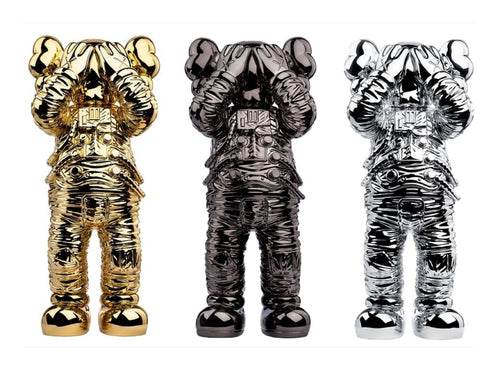
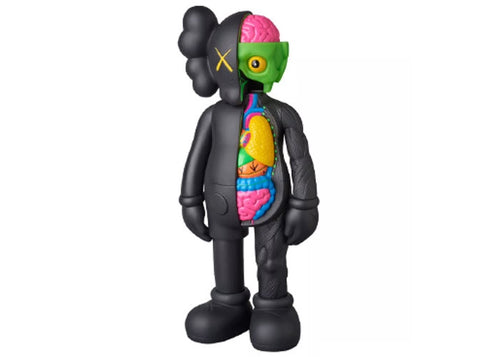
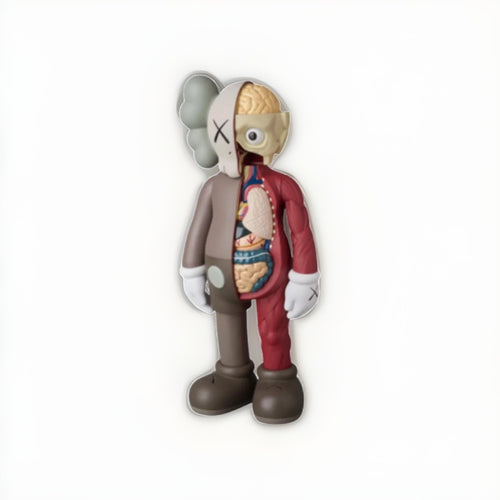
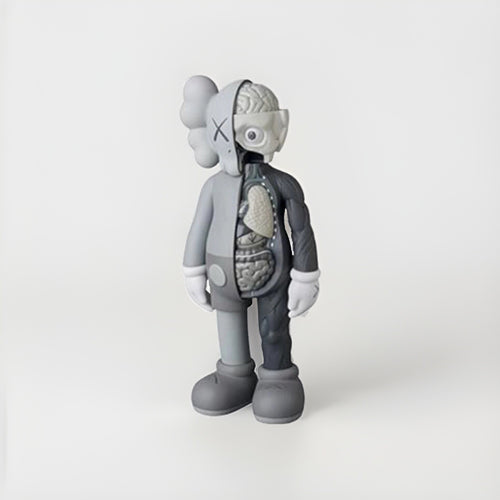
Building a KAWS collection comes down to discipline: skip open editions priced as collectibles, focus on authenticated limited COMPANIONs with original packaging, and prioritize two strong pieces over ten weak ones. At Gauntlet Gallery, we have catalogued 160,000+ comparable sales and consistently see authenticated limiteds appreciate 5-20x retail while open editions stagnate near issue price.
KAWS — Brian Donnelly, born 1974 — crossed from street art into the contemporary canon when The KAWS Album sold for $14.7 million at Sotheby’s Hong Kong in 2019. The downstream effect on his collectibles market has been profound: limited COMPANIONs that retailed at $200–$400 now trade between $2,000 and $25,000, while open editions still hover near issue price a decade later. The difference is not luck. It is edition size, authentication, and condition.
This guide breaks down a three-tier collecting strategy, identifies what to avoid at each level, and explains why the cheapest piece in the room is almost never the smartest buy.
The Three-Tier KAWS Collecting Framework
Most collectors fail by spreading thin across dozens of open editions hoping volume creates value. It does not. KAWS market data shows appreciation is concentrated almost entirely in limited, authenticated, packaged examples. Here is how we structure entry, mid, and investment tiers at Gauntlet Gallery.
| Tier | Budget | Target Pieces | Appreciation Profile |
|---|---|---|---|
| Tier 1 — Entry | $175 – $500 | Open editions, Uniqlo collabs, MoMA store releases | Flat to modest; learning capital |
| Tier 2 — Collector | $500 – $3,000 | Limited COMPANION original colorways, BFF figures, authenticated with original box | 3–8x retail over 5–10 years |
| Tier 3 — Investment | $3,000 – $15,000+ | Limited 28″ COMPANIONs, signed prints, collaboration pieces | 5–20x retail; auction-tracked |
Tier 1: Entry ($175 – $500)
Open editions are the on-ramp. A Uniqlo UT capsule plush, a MoMA Design Store vinyl, or a Brooklyn Museum exclusive teaches you what KAWS quality feels like in hand: box weight, paint registration, the font on the foot stamp, the texture of an authentic Medicom production run. Buy here to learn, not to flip.
What to avoid in Tier 1: paying secondary-market premiums on pieces that are still available retail, or that flooded the resale market the week of release. If you see the same open-edition figure listed by fifty sellers on a marketplace, the price floor will not hold.
Tier 2: Collector ($500 – $3,000)
This is where the KAWS market gets serious. Limited COMPANION original colorways — black, grey, brown, and the early pink and burgundy variants — are the most liquid mid-tier asset in the category. The criteria are non-negotiable: original packaging present, no yellowing on white surfaces, no paint chipping at the X eyes or knuckles, and verifiable provenance.
A Tier 2 piece without its original box loses 30–50% of value immediately. A Tier 2 piece without authentication loses everything.
Tier 3: Investment ($3,000 – $15,000+)
The 28″ COMPANION figures, signed and numbered prints, and high-profile collaborations (Dior, sacai, Peanuts) live here. These pieces are tracked at Phillips, Sotheby’s, and Heritage. Edition sizes are public, and condition grading is forensic. A signed print with a faint corner crease can lose four figures of value compared to a museum-grade example.
Authentication: The Entire Investment Thesis
KAWS has one of the highest counterfeit rates of any living artist. Industry estimates put fakes at 40–60% on open marketplaces, and counterfeit versions of new drops appear within 72 hours. Without authentication, you do not own a KAWS — you own an unverifiable object.
Every limited KAWS figure that passes through Gauntlet Gallery is verified through our TrueCOA system, a tamper-proof blockchain certificate of authenticity. Look up the record online, and the certificate, provenance chain, and edition data load instantly. This is the standard collectors should demand on every piece above $500.
For deeper authentication frameworks across street art and designer toys, see our KAWS Collector Guide.
What to Avoid at Every Tier
- Open editions at secondary premium. If the piece is still available retail, do not pay 2x on the resale market.
- Missing authentication on anything above $500. No verifiable certificate, no purchase.
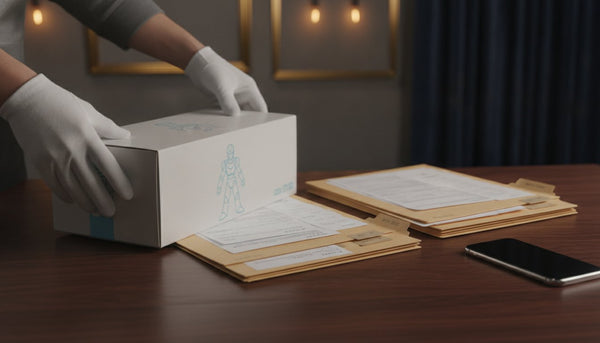
- No original packaging at collector or investment prices. Box, inner tray, and any included papers must be present.
- Yellowed white surfaces. UV damage is permanent and slashes value.
- “Display only” excuses. Display-only often means paint loss the seller does not want to photograph.
- Quantity over quality. Two authenticated Tier 2 COMPANIONs will outperform ten Tier 1 open editions over any meaningful holding period.
The Allocation Most Collectors Should Use
For a first-year $5,000 budget, our recommended split:
- 10% Tier 1 ($500): one or two open editions to learn the brand in hand.
- 70% Tier 2 ($3,500): one or two authenticated limited COMPANIONs or BFF figures with original boxes.
- 20% Tier 3 reserve ($1,000): deployed when an auction-grade opportunity surfaces — not spent for the sake of spending.
This is the discipline that compounds. Limited editions in our 160,000+ comparable sales dataset show 5–20x retail appreciation potential over a 3–7 year hold — provided authentication and condition are preserved.
Why Gauntlet Gallery
Founded in 2012, Gauntlet Gallery has catalogued 160,000+ comparable sales across street art, designer toys, and contemporary collectibles. Every KAWS piece in our inventory is authenticated, packaged, condition-graded, and backed by our TrueCOA blockchain certificate system. We do not list anything we would not buy ourselves.
Browse the Gauntlet Gallery Collection →
Frequently Asked Questions
How much should I budget to start a KAWS collection?
Tier 1 entry collecting starts at $175–$500 with open editions. To begin building real collector value, plan for at least one Tier 2 authenticated COMPANION in the $500–$3,000 range within your first year.
Do open-edition KAWS figures appreciate?
Most do not. Open editions typically trade flat or below retail on the secondary market because supply remains elevated. Appreciation in the KAWS market is concentrated in limited, authenticated, packaged examples.
What authentication should a KAWS purchase include?
For any figure priced above $500, demand a verifiable certificate of authenticity such as TrueCOA, alongside original packaging and documented provenance. This is the Gauntlet Gallery standard and the only reliable defense against the 40–60% counterfeit rate on open marketplaces.
Is it better to own one expensive KAWS or several cheaper ones?
Two strong authenticated limiteds outperform ten open editions over a 5–10 year horizon. Concentration in Tier 2 and Tier 3 pieces beats diversification across Tier 1 every time in the KAWS market.