

Gauntlet Gallery — Takashi Murakami Print Index
My Next Smiley
Work Summary & Collector Notes
"My Next Smiley" is a 2020 silkscreen by Takashi Murakami, issued in an edition of 100 through his Kaikai Kiki gallery Tonari no Zingaro. Measuring 50 x 50 cm on the sheet, with a 44 x 44 cm image, the print centers a beaming character titled "Tonari no Smiley-Kun No.1." It distills Murakami's Superflat vocabulary — flat color, graphic outline, relentless cheer — into a single, self-contained emblem of manufactured happiness.
Collector notes: First Edition; saved release record states an edition size of 100. Edition-specific signature, numbering, and stamp details were not stated in the saved release record. Verify signing and numbering against a documented example of this edition.
Why It Matters
The smiley is one of the most loaded symbols in contemporary art, and Murakami reclaims it here as a Kaikai Kiki character rather than a borrowed icon. Tied to his own gallery imprint ("Smiley-Kun No.1"), the print signals a house-built mascot with room to expand. For collectors, it condenses Murakami's flatness-and-affect thesis into an accessible square format at a tight edition of 100.
Collector Perspective
At 50 x 50 cm and edition of 100, this sits in the approachable tier of Murakami's silkscreen output — small enough to hang anywhere, scarce enough to matter. The square format and single-character composition make it visually clean and easy to frame. As always with Murakami, condition is everything: sharp corners, unfaded flat color, and an intact sheet drive desirability. The "No.1" designation may appeal to completists tracking Smiley-Kun variants.
Historical Context
By 2020 Murakami had spent two decades building the Superflat framework, folding anime, otaku culture, and traditional Nihonga into a globally legible pop language. Tonari no Zingaro, his gallery in Nakano Broadway, Tokyo, functions as a laboratory for character-driven editions. "Smiley-Kun" extends a lineage that runs through his flowers, DOB, and jellyfish eyes — recurring mascots that treat the character itself as the artwork's true medium.
Documented Release Details
- Object type
- Editioned screenprint
- Release date
- 2020
- Release-date note
- Catalog-listed release year from the saved secondary record; primary release-page confirmation remains pending.
- Medium and materials
- Screen Print; catalog dimensions 50 x 50 cm; Silkscreen.
- Edition details
- First Edition; saved release record states an edition size of 100.
- Signature and marks
- Edition-specific signature, numbering, and stamp details were not stated in the saved release record. Verify signing and numbering against a documented example of this edition.
Documented History and Meaning
History note: This page treats Takashi Murakami's broader career as background context, not proof that this specific edition belongs to any single exhibition or event. Release-level facts here come from a saved secondary catalog record.
Meaning / interpretation: Read as documented context rather than stated intent: By 2020 Murakami had spent two decades building the Superflat framework, folding anime, otaku culture, and traditional Nihonga into a globally legible pop language. This is an interpretive reading of the release context, not a statement of the artist's intent for this specific work. This interpretive note follows the cited artist or publisher context.
Release context: The saved catalog lists 2020 and attributes the edition to Tonari No Zingaro.
Authentication, Presentation and Provenance
- Original presentation
- Original packaging or presentation was not documented in the release sources reviewed.
- Authentication note
- Compare the support, dimensions, edition number, and signature against a documented example of this edition. Gauntlet Gallery does not authenticate works purchased from third parties.
- Provenance note
- Edition origin is attributed in the saved record to Tonari No Zingaro. That does not establish the ownership history of an individual copy: retain the original invoice, reseller or gallery paperwork, labels, correspondence, and condition photographs.
Sources and Verification
Verification status: Secondary catalog snapshot; artist-level context added
- Saved release record — Art Collectorz · secondary catalog snapshot · Accessed 2026-07-13 · Starting record for title, year, edition, dimensions, medium, and release description. Primary confirmation against the original release page remains pending.
- Kaikai Kiki — official studio site — Kaikai Kiki Co., Ltd. · primary artist source · Accessed 2026-07-13 · Official studio/company site; career context, not an individual-edition record.
- Takashi Murakami — Wikipedia · reference encyclopedia · Accessed 2026-07-13 · General artist-level biographical and career reference.
- Takashi Murakami (Q352437) — Wikidata · reference knowledge base · Accessed 2026-07-13 · Structured identifier used for the artist across catalog metadata.
FAQ
How large is the edition?
The print was released in an edition of 100. The source description lists no artist proofs or additional variants, so 100 is the stated run for this title.
What are the dimensions?
The sheet measures 50 x 50 cm (500 x 500 mm) with an image area of 44 x 44 cm (440 x 440 mm), leaving a modest border on each side.
Who published it?
It was issued through Tonari no Zingaro, Takashi Murakami's Kaikai Kiki gallery in Tokyo, which regularly produces his character-based silkscreen editions.
What does 'Smiley-Kun No.1' mean?
The title 'Tonari no Smiley-Kun No.1' names the smiling character and marks it as the first in a potential series, a common practice in Murakami's numbered character editions.
Related Takashi Murakami Works


Available at Gauntlet Gallery
Explore current pieces available from the gallery.
-

1963 Farquhar Earth in Space Transparent Celestial Globe 16" Compass VTG
$699.00 USD
-

1967 Beatles Richard Avedon STERN Original Posters Set of 4 Linen Backed Copy
$999.00 USD
-
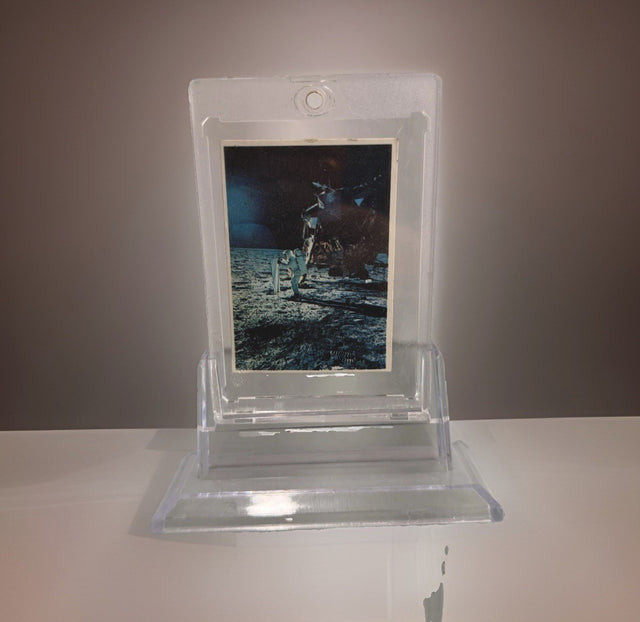
1969 Space Candy Buzz Aldrin Apollo 11 On The Moon Card #19 Taylor-Reed Display
$59.00 USD
-

1980 Polo Player Green Pink Chalk Pastel Bears Andy Warhol Signature AS-IS
$399.00 USD
-

After Andy Warhol Moon Landing Line Drawing 5/50 w/ Astronaut Autographs As-Is
$175.00 USD
-

After John Lennon "I Do" Framed Print, Marked A/P Unverified
$99.00 USD
-

After Roy Lichtenstein I Love Liberty Framed Pop Art Print
$75.00 USD
-

Alice in Wonderland DNYC –$1 Dollar Bills Signed & Numbered Rare
$90.00 USD
-

Alkaline Trio Signed Acoustic Guitar Pickguard Autograph PSA/DNA AN21501
$100.00 USD
-

Andy Warhol The Beatles 1980 Vintage Poster Framed Pop Art Times Books Stokes
$349.00 USD
-

Angels & Airwaves — “Valkyrie Missile: A Brighter Tomorrow”
$89.00 USD
-
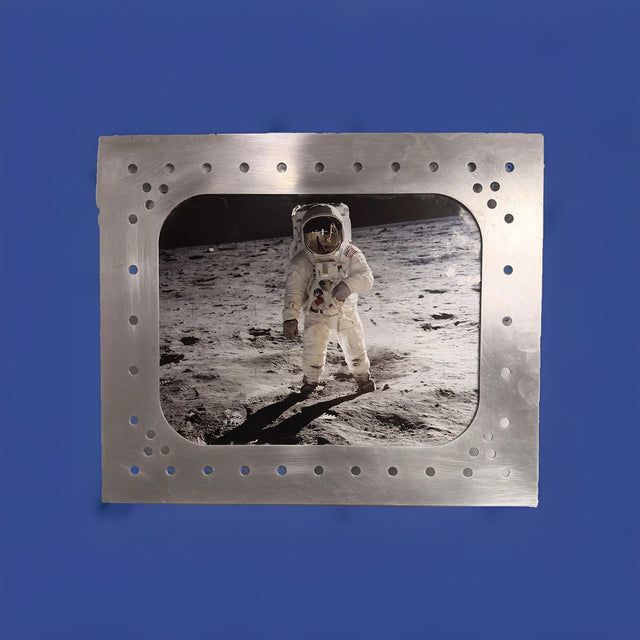
Apollo 11 Astronaut on the Moon NASA Photo Riveted Aluminum Spacecraft Frame
$89.00 USD


Browse the collection for current listings.