

Gauntlet Gallery — Invader Print Index
Invasion Kit #01 (Albinos)
Work Summary & Collector Notes
Invasion Kit #01 (Albinos) is the inaugural entry in Invader's Invasion Kit series, released by Space Shop in 350 copies produced across 2000 to 2003. As the first numbered kit, it launched the artist's object-based 'invasion' format and introduced the recurring albino motif that would echo through later works.
Collector notes: 350 examples. Evidence indicates a possible 150 unsigned/unnumbered tranche followed by 200 signed and numbered examples. Do not assume every example is signed; verify the production tranche and physical markings of the specific kit.
Why It Matters
Being kit #01, this piece holds foundational significance as the origin point of the entire Invasion Kit series. Its albino theme also seeds a motif Invader would return to, including the later Albino Invader print. The extended 2000-2003 production window reflects its role at the very start of the artist's object output.
Collector Perspective
The larger run of 350, spread over three years of production, makes #01 comparatively more available than later kits, yet its status as the series opener gives it outsized importance to completists. As a sculptural object, original components and condition remain the key value drivers, with the inaugural number adding lasting appeal.
Historical Context
Invader describes Invasion Kits as studio-produced editions that are both conceptual and functional. Kit #01 brought the street-mosaic method into a collectible object, but sources disagree on whether it should be dated 2000, 2001, 2002 or across the 2000–2003 period.
Documented Release Details
- Object type
- Ceramic mosaic kit
- Release-date note
- Sources variously date the release from 2000 to 2003; use circa 2000–2003 pending a studio archive record.
- Series
- Invasion Kits
- Medium and materials
- Ready-to-use composition of 63 ceramic tiles; approximately 14 × 18 cm when assembled.
- Edition details
- 350 examples. Evidence indicates a possible 150 unsigned/unnumbered tranche followed by 200 signed and numbered examples.
- Signature and marks
- Do not assume every example is signed; verify the production tranche and physical markings of the specific kit.
Documented History and Meaning
History note: Invader's official FAQ defines Invasion Kits as studio-produced, ready-to-use limited editions that are both conceptual and functional.
Meaning / interpretation: Invader defines an Invasion Kit as a studio-produced, ready-to-use limited edition that functions as both a conceptual object and a kit for making a mosaic. This interpretive note follows the cited artist or publisher context.
Release context: The first studio Invasion Kit translated the street-mosaic method into an editioned, functional object.
Authentication, Presentation and Provenance
- Original presentation
- Documented examples retain sealed original packaging and an instruction/user guide; contents must be checked copy by copy.
- Authentication note
- Compare the physical example with the documented signature, numbering, printer/publisher marks, dimensions, support and edition structure. A matching number or seller-issued certificate alone does not authenticate a copy.
- Provenance note
- Edition origin is attributed to Space Shop. Copy-level provenance is separate: retain invoices, labels, prior ownership records and condition photographs for the specific example.
Sources and Verification
Verification status: Mixed evidence — date and signature structure remain disputed
- Invader — About / FAQ — Invader studio · primary artist source · Accessed 2026-07-11 · Artist-authored project history, Invasion Kit definition, and cataloging practice.
- Invasion Kit #01 (Albinos) — Christie's · major auction house / physical example · Accessed 2026-07-11 · Physical description, tile count, approximate dimensions, edition and retained packaging for the catalogued example.
Known conflicts or unresolved points:
- Published sources conflict on year (2000, 2001, 2002, and circa 2000–2003).
- Signature and numbering may differ between early and later tranches of the edition.
FAQ
How many examples were made?
The stated total is 350. Evidence suggests the markings may differ between an early tranche of 150 and a later tranche of 200, so do not assume every kit is signed.
What should remain with the kit?
Documented examples retain the ceramic tiles, sealed original packaging and an instruction or user guide. Contents must be checked copy by copy.
Why is the date shown as circa 2000–2003?
Reliable published records conflict. The wider date range keeps that uncertainty visible instead of choosing one year without a definitive studio source.
Related Invader Works


Shop Invader at Gauntlet Gallery
Live listings with authentication, provenance and documentation.
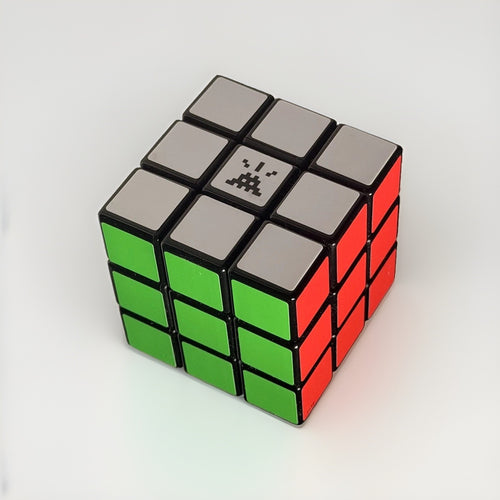
Space Invader x Rubik's Cube RubikCubiste MIMA 2022 Limited Edition Boxed
$185.00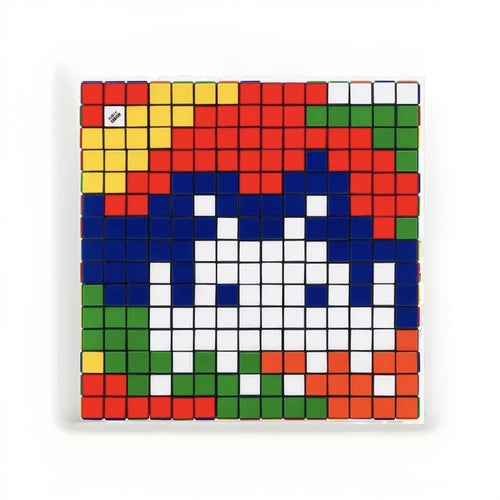
Invader Rubik Camouflage HENI Signed & Numbered 196/812 Giclee Panel 2023
$3,999.00Be first when new Invader pieces drop
You're on the list ✓ — first look at every new Invader arrival.
Shop Invader
Explore current pieces available from the gallery.
-

Space Invader x Rubik's Cube RubikCubiste MIMA 2022 Limited Edition Boxed
$185.00 USD
-
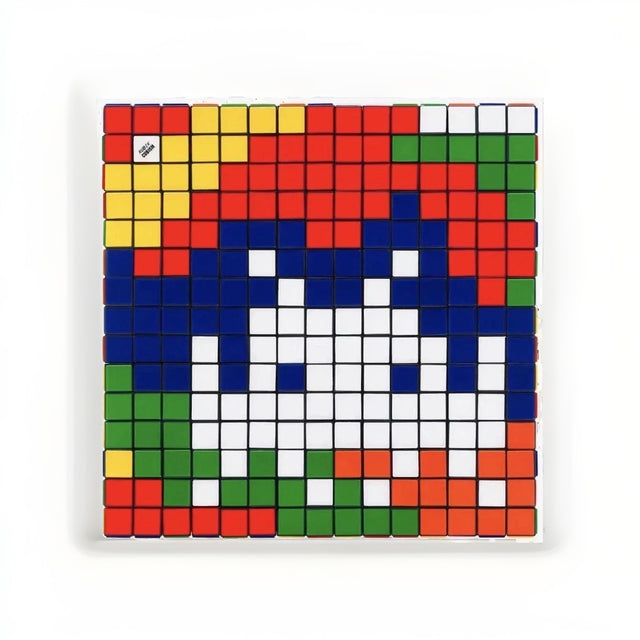
Invader Rubik Camouflage HENI Signed & Numbered 196/812 Giclee Panel 2023
$3,999.00 USD

Browse the collection for current listings.