

Gauntlet Gallery — Complete Damien Hirst Print Index
Transcendent Head
Work Summary & Collector Notes
Transcendent Head is a hand-painted plastic skull finished in household gloss using Hirst's Spin technique, released by Other Criteria in 2014. Standing roughly 17 x 14 x 21 cm, it belongs to an edition of 50 unique multiples spanning three named forms, so no two skulls in the group resolve identically.
Collector notes: The saved release record describes: Unique multiple within an edition of 50. Edition-specific signature, numbering, and stamp details were not stated in the saved release record. Verify signing and numbering against a documented example of this edition.
Why It Matters
The piece collapses two of Hirst's signature vocabularies into one object: the memento-mori skull and the centrifugal Spin painting. Because each skull is spun individually, the edition is nominally 50 but functionally unique, giving collectors a rare intersection of sculptural multiple and gestural, one-off surface within a single controlled release.
Collector Perspective
Collectors weigh this as an object rather than a wall print: it occupies a shelf, reads in the round, and carries the tactile density of gloss on plastic. The unique-within-edition status means condition and the specific swirl pattern matter more than a simple edition number, so close inspection of the painted surface is worthwhile.
Historical Context
The skull has recurred across Hirst's career, most famously in the diamond-encrusted For the Love of God (2007). The Spin method, which he has used since the mid-1990s, applies paint to a rotating form. Transcendent Head folds both threads back into his signature, published through his own Other Criteria imprint.
Documented Release Details
- Object type
- Editioned print or object
- Release date
- 2014
- Release-date note
- Catalog-listed release year from the saved secondary record; primary release-page confirmation remains pending.
- Medium and materials
- Hand Painted Multiple; catalog dimensions 17 x 14 x 21 cm.
- Edition details
- The saved release record describes: Unique multiple within an edition of 50.
- Signature and marks
- Edition-specific signature, numbering, and stamp details were not stated in the saved release record. Verify signing and numbering against a documented example of this edition.
Documented History and Meaning
History note: This page treats Damien Hirst's broader career as background context, not proof that this specific edition belongs to any single exhibition or event. Release-level facts here come from a saved secondary catalog record.
Meaning / interpretation: Read as documented context rather than stated intent: The skull has recurred across Hirst's career, most famously in the diamond-encrusted For the Love of God (2007). This is an interpretive reading of the release context, not a statement of the artist's intent for this specific work. This interpretive note follows the cited artist or publisher context.
Release context: The saved catalog lists 2014 and attributes the edition to Other Criteria. The saved description also notes: Published by Other Criteria.
Authentication, Presentation and Provenance
- Original presentation
- Original packaging or presentation was not documented in the release sources reviewed.
- Authentication note
- Compare the support, dimensions, edition number, and signature against a documented example of this edition. Gauntlet Gallery does not authenticate works purchased from third parties.
- Provenance note
- Edition origin is attributed in the saved record to Other Criteria. That does not establish the ownership history of an individual copy: retain the original invoice, reseller or gallery paperwork, labels, correspondence, and condition photographs.
Sources and Verification
Verification status: Secondary catalog snapshot; artist-level context added
- Saved release record — Art Collectorz · secondary catalog snapshot · Accessed 2026-07-13 · Starting record for title, year, edition, dimensions, medium, and release description. Primary confirmation against the original release page remains pending.
- Damien Hirst — official site — Damien Hirst studio (Science Ltd.) · primary artist source · Accessed 2026-07-13 · Official artist site; career context, not an individual-edition record.
- Damien Hirst — Wikipedia · reference encyclopedia · Accessed 2026-07-13 · General artist-level biographical and career reference.
- Damien Hirst (Q294326) — Wikidata · reference knowledge base · Accessed 2026-07-13 · Structured identifier used for the artist across catalog metadata.
FAQ
Is each Transcendent Head identical?
No. The work is a unique multiple within an edition of 50. The Spin technique produces a distinct paint pattern on every skull, so each example varies even within the same named category.
What is it made of?
Household gloss paint applied to a plastic skull, worked using Hirst's Spin painting method. It is a three-dimensional object, not a print.
Who published it?
Other Criteria, Hirst's own publishing and editions company, released the edition in 2014.
How does it relate to the skull motif?
It draws on Hirst's long-running memento-mori skull imagery, reworked here as a painted sculptural multiple rather than a flat image.
Related Damien Hirst Works


Shop Pop Art - Andy Warhol, Keith Haring, Basquiat
Explore current pieces available from the gallery.
-

Andy Warhol The Beatles 1980 Vintage Poster Framed Pop Art Times Books Stokes
$349.00 USD
-

After Roy Lichtenstein I Love Liberty Framed Pop Art Print
$75.00 USD
-

Shepard Fairey Warhol Collages (Silver)
$225.00 USD
-

Shepard Fairey Keith Haring Signed Numbered Screen Print OBEY Portrait /450
$699.00 USD
-

Shepard Fairey Keith Haring Signed Numbered FRAMED Print 2020 Obey Giant 23/450
$395.00 USD
-
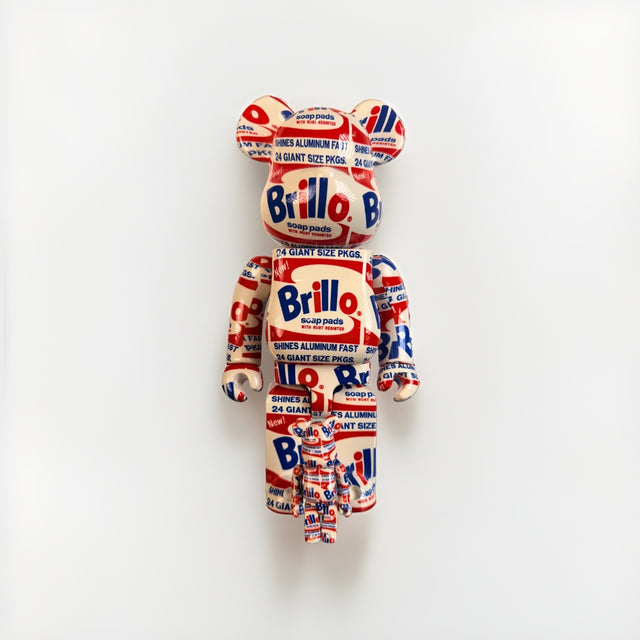
Bearbrick BE@RBRICK Andy Warhol Brillo 400% 100% Set Original 2020 Medicom New
$275.00 USD
-
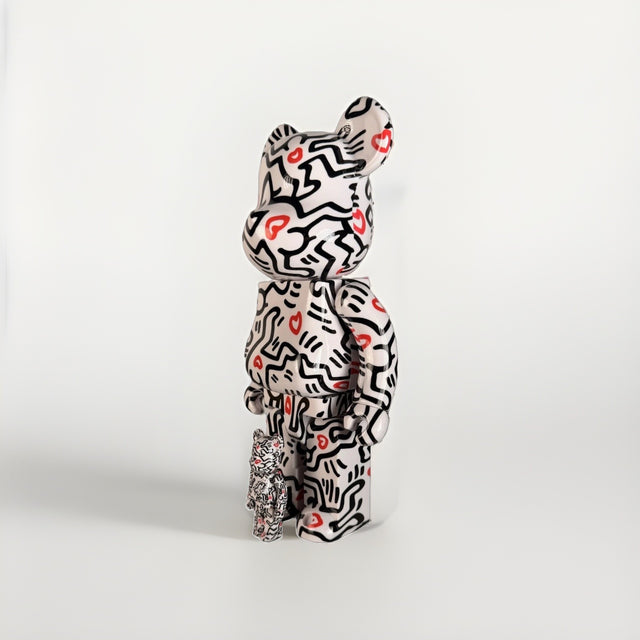
BE@RBRICK Keith Haring 400% + 100% Set Medicom Toy Bearbrick Foundation Art New
$199.00 USD
-

Oilstick Skull Drawing Manner of Basquiat Signed Antique Gold Frame Red Velvet
$175.00 USD
-

One Line Marker Drawing 1985 w/ Basquiat Estate COA - UNVERIFIED Sold As-Is
$149.00 USD
-

1980 Polo Player Green Pink Chalk Pastel Bears Andy Warhol Signature AS-IS
$399.00 USD
-

After Andy Warhol Moon Landing Line Drawing 5/50 w/ Astronaut Autographs As-Is
$175.00 USD
-

Keith Haring (Attributed) Marker Drawing on Paper Bag Signed - Unauthenticated
$199.00 USD


Browse the collection for current listings.