

Gauntlet Gallery — Complete Damien Hirst Print Index
Lepidine
Work Summary & Collector Notes
"Lepidine" is a Damien Hirst spot screenprint, 980 x 760 mm, produced as a silkscreen with metallic silver in a signed and numbered edition of 150. Built from 24 colors over an underprint of white, silver and a glaze, it belongs to the vivid metallic run of Hirst's most recognizable Spot series.
Collector notes: The saved release record describes: Edition of 150. The saved release record describes: signed; numbered. Verify each feature against a documented example of this edition.
Why It Matters
The Spots are the design most closely identified with Hirst, and "Lepidine" pushes the series toward greater surface drama. The metallic silver texture is juxtaposed against smooth, pure spot color, demonstrating the mutability of the format. Among the boldest and most vibrant spot prints, it treats the grid as a vehicle for contrast and optical impact.
Collector Perspective
An edition of 150 offers wider availability than Hirst's etchings, while the metallic silver treatment marks it as a distinctive variant rather than a standard spot print. The 24-color build with a silver underprint is a technical selling point. Collectors should confirm the signature, edition number and Other Criteria provenance, and inspect the metallic layer for condition.
Historical Context
Hirst's Spot paintings, begun in the late 1980s, became his signature contribution to a systematic, seemingly mechanical mode of color abstraction. The pharmaceutical naming convention, drawn from chemical compounds, runs throughout the series; "Lepidine" continues that scheme. These metallic spot prints represent a later, more materially ambitious chapter of the ongoing project.
Documented Release Details
- Object type
- Editioned screenprint
- Release date
- 2009
- Release-date note
- Catalog-listed release year from the saved secondary record; primary release-page confirmation remains pending.
- Medium and materials
- Screen Print; catalog dimensions 98 x 76 cm; Silkscreen print with metallic silver; Joyous and alluring, the texture of these newly produced metallic Spot prints is brightly juxtaposed with the smooth, pure colours of the print and is proof of the mutability and boldness of this series of Hirst's works; Each of Damien Hirst's prints is made up of 24 colours with an under print of white, silver and a glaze.
- Edition details
- The saved release record describes: Edition of 150.
- Signature and marks
- The saved release record describes: signed; numbered. Verify each feature against a documented example of this edition.
Documented History and Meaning
History note: This page treats Damien Hirst's broader career as background context, not proof that this specific edition belongs to any single exhibition or event. Release-level facts here come from a saved secondary catalog record.
Meaning / interpretation: No per-work artist statement is recorded for this edition. Any thematic reading should be treated as interpretation of the imagery, not a documented statement of the artist's intent. This interpretive note follows the cited artist or publisher context.
Release context: The saved catalog lists 2009 and attributes the edition to Other Criteria.
Authentication, Presentation and Provenance
- Original presentation
- Original packaging or presentation was not documented in the release sources reviewed.
- Authentication note
- Compare the support, dimensions, edition number, and signature against a documented example of this edition. Gauntlet Gallery does not authenticate works purchased from third parties.
- Provenance note
- Edition origin is attributed in the saved record to Other Criteria. That does not establish the ownership history of an individual copy: retain the original invoice, reseller or gallery paperwork, labels, correspondence, and condition photographs.
Sources and Verification
Verification status: Secondary catalog snapshot; artist-level context added
- Saved release record — Art Collectorz · secondary catalog snapshot · Accessed 2026-07-13 · Starting record for title, year, edition, dimensions, medium, and release description. Primary confirmation against the original release page remains pending.
- Damien Hirst — official site — Damien Hirst studio (Science Ltd.) · primary artist source · Accessed 2026-07-13 · Official artist site; career context, not an individual-edition record.
- Damien Hirst — Wikipedia · reference encyclopedia · Accessed 2026-07-13 · General artist-level biographical and career reference.
- Damien Hirst (Q294326) — Wikidata · reference knowledge base · Accessed 2026-07-13 · Structured identifier used for the artist across catalog metadata.
FAQ
What makes "Lepidine" distinctive among spot prints?
It is a silkscreen with metallic silver, built from 24 colors over a white, silver and glaze underprint, giving it a textured, high-contrast surface.
What is the edition size?
An edition of 150, signed and numbered.
Why is it named after a chemical compound?
Hirst's spot works follow a naming convention drawn from chemical and pharmaceutical compounds.
What are the dimensions?
980 x 760 mm.
Related Damien Hirst Works


Shop Pop Art - Andy Warhol, Keith Haring, Basquiat
Explore current pieces available from the gallery.
-

Andy Warhol The Beatles 1980 Vintage Poster Framed Pop Art Times Books Stokes
$349.00 USD
-

After Roy Lichtenstein I Love Liberty Framed Pop Art Print
$75.00 USD
-

Shepard Fairey Warhol Collages (Silver)
$225.00 USD
-

Shepard Fairey Keith Haring Signed Numbered Screen Print OBEY Portrait /450
$699.00 USD
-

Shepard Fairey Keith Haring Signed Numbered FRAMED Print 2020 Obey Giant 23/450
$395.00 USD
-
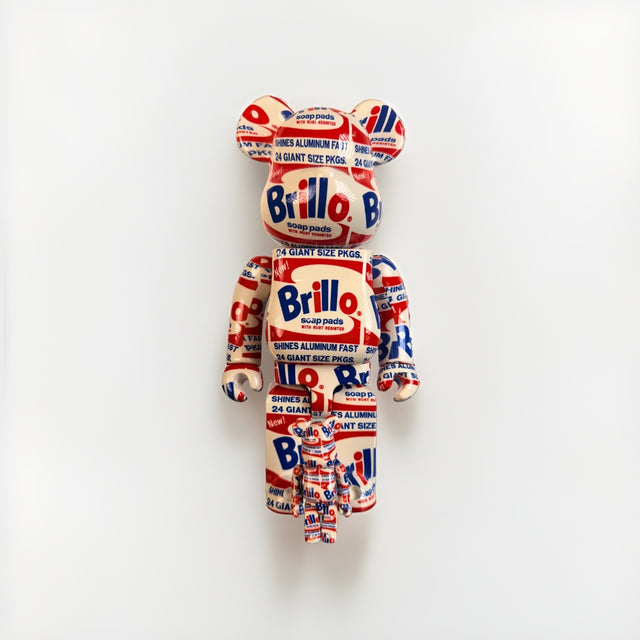
Bearbrick BE@RBRICK Andy Warhol Brillo 400% 100% Set Original 2020 Medicom New
$275.00 USD
-
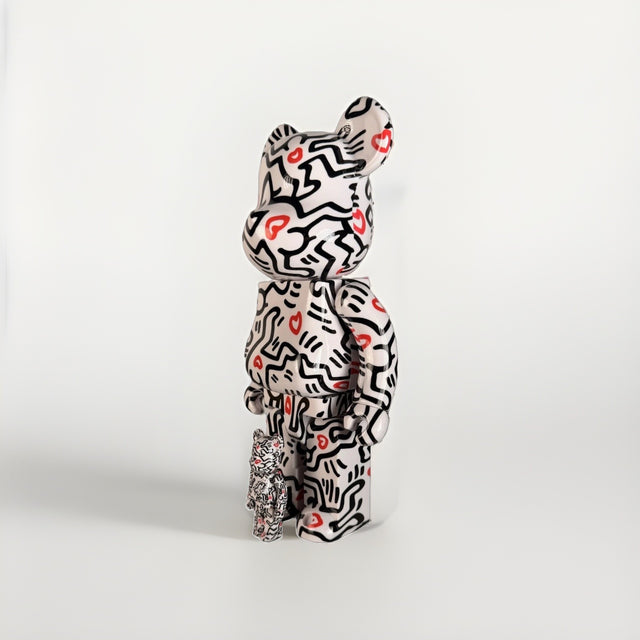
BE@RBRICK Keith Haring 400% + 100% Set Medicom Toy Bearbrick Foundation Art New
$199.00 USD
-

Oilstick Skull Drawing Manner of Basquiat Signed Antique Gold Frame Red Velvet
$175.00 USD
-

One Line Marker Drawing 1985 w/ Basquiat Estate COA - UNVERIFIED Sold As-Is
$149.00 USD
-

1980 Polo Player Green Pink Chalk Pastel Bears Andy Warhol Signature AS-IS
$399.00 USD
-

After Andy Warhol Moon Landing Line Drawing 5/50 w/ Astronaut Autographs As-Is
$175.00 USD
-

Keith Haring (Attributed) Marker Drawing on Paper Bag Signed - Unauthenticated
$199.00 USD


Browse the collection for current listings.