

Gauntlet Gallery — Banksy Prints
Di-Faced Tenners (First Edition)
Work Summary & Collector Notes
An uncut printer's sheet of Banksy's "Di-Faced Tenners" — spoof British ten-pound notes that swap Queen Elizabeth II's portrait for the face of Princess Diana and rename the issuing authority "Banksy of England," with "Bank of England" replaced by "Banksy" and other satirical alterations to the standard £10 design. The sheet shown carries five rows of two notes (the orange Diana-portrait face beside the grey reverse), pencil-annotated at the lower edge; it is among the most recognizable and conceptually loaded objects in Banksy's catalogue.
Collector notes: Edition; saved release record states an edition size of 45. Edition-specific signature, numbering, and stamp details were not stated in the saved release record. Verify signing and numbering against a documented example of this edition.
Why It Matters
Di-Faced Tenners collapses three of Banksy's favourite targets — money, monarchy and celebrity — into a single forged object. By replacing the sovereign with Diana, the "people's princess" whose image was endlessly monetized by the media, and by literally counterfeiting legal tender (£1 million worth was printed), Banksy turned currency into a readymade critique of capitalism and the cult of fame. The notes famously escaped the gallery: bundles were thrown into the crowd at Notting Hill Carnival and London's 2004 Reading Festival, and some were reportedly accepted as real cash in shops. The work sits at the intersection of art, prank and political statement, and a complete uncut sheet preserves the moment before the object was cut into the "money" Banksy intended to scatter.
Collector Perspective
First Edition Di-Faced Tenners were issued in a Giclée edition of just 45, making this one of the genuinely scarce Banksy works on the market rather than a mass-issue POW screenprint. Single notes surface occasionally, but full uncut sheets like this one — showing multiple notes in their printer's state with original pencil annotation — are considerably harder to find and command a premium for their completeness and display impact. As with all Banksy paper, condition and provenance are decisive: the small edition size, the iconic subject matter and the object's authentication history (Banksy-authenticated examples carry far stronger demand than loose unauthenticated notes) drive value. This is a blue-chip name with deep, liquid demand, but buyers should insist on clear provenance given how widely the notes were distributed and reproduced.
Historical Context
Produced in 2004 during Banksy's peak Stencil Boom Era, Di-Faced Tenners references the death of Princess Diana in 1997 and the relentless tabloid commodification of her image, while skewering the authority of the Bank of England itself. The notes were not made for the wall — Banksy printed roughly £1 million in face value and released bundles into festival and carnival crowds, where their convincing detail meant some entered circulation as if real, briefly raising the spectre of actual forgery. The work prefigures Banksy's later large-scale interventions in money and consumerism, from the Walled Off Hotel to Gross Domestic Product, and remains the artist's definitive statement on currency.
Documented Release Details
- Object type
- Editioned print
- Release date
- 2004
- Release-date note
- Catalog-listed release year from the saved secondary record; primary release-page confirmation remains pending.
- Medium and materials
- Giclee.
- Edition details
- Edition; saved release record states an edition size of 45.
- Signature and marks
- Edition-specific signature, numbering, and stamp details were not stated in the saved release record. Verify signing and numbering against a documented example of this edition.
Documented History and Meaning
History note: This page treats Banksy's broader career as background context, not proof that this specific edition belongs to any single exhibition or event. Release-level facts here come from a saved secondary catalog record.
Meaning / interpretation: Read as documented context rather than stated intent: Produced in 2004 during Banksy's peak Stencil Boom Era, Di-Faced Tenners references the death of Princess Diana in 1997 and the relentless tabloid commodification of her image, while skewering the authority of the Bank of England itself. This is an interpretive reading of the release context, not a statement of the artist's intent for this specific work. This interpretive note follows the cited artist or publisher context.
Release context: The saved catalog lists 2004.
Authentication, Presentation and Provenance
- Original presentation
- Original packaging or presentation was not documented in the release sources reviewed.
- Authentication note
- Compare the support, dimensions, edition number, and signature against a documented example of this edition. Gauntlet Gallery does not authenticate works purchased from third parties.
- Provenance note
- Edition origin is attributed in the saved record to the release source named in the saved record. That does not establish the ownership history of an individual copy: retain the original invoice, reseller or gallery paperwork, labels, correspondence, and condition photographs.
Sources and Verification
Verification status: Secondary catalog snapshot; artist-level context added
- Banksy — Wikipedia · reference encyclopedia · Accessed 2026-07-13 · General artist-level biographical and career reference.
- Banksy (Q133600) — Wikidata · reference knowledge base · Accessed 2026-07-13 · Structured identifier used for the artist across catalog metadata.
FAQ
What does this work depict?
It is an uncut sheet of Banksy's spoof British £10 notes. Each note replaces Queen Elizabeth II with the face of Princess Diana and changes 'Bank of England' to 'Banksy of England,' alongside other satirical alterations to the standard tenner design.
What is the edition size?
This First Edition is a Giclée edition of 45.
Is it signed?
The listing does not specify a signature. Di-Faced Tenners examples vary; this sheet carries a pencil edition annotation at the lower edge. Buyers should confirm signing and authentication details directly, as Banksy-authenticated examples carry materially stronger demand.
What is the medium?
Giclée print, produced in 2004.
Why is it called 'Di-Faced Tenners'?
The title is a pun on 'defaced' — the notes are deliberately altered currency — and on 'Di,' for Princess Diana, whose portrait replaces the Queen's.
Who is Banksy?
Banksy is an anonymous England-based street artist who emerged from Bristol in the early 1990s, known for fast stencil work, dark humour and anti-capitalist, anti-establishment imagery, as well as high-profile stunts.
Related Banksy Works


Shop Banksy at Gauntlet Gallery
Live listings with authentication, provenance and documentation.
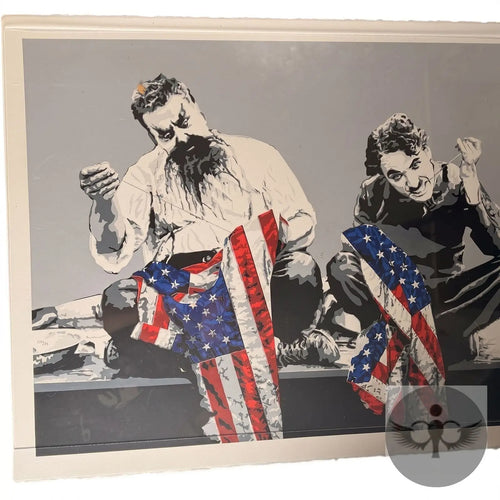
Mr. Brainwash 2018 "Recovery Plan" Signed Screenprint of Chaplin with USA Flag
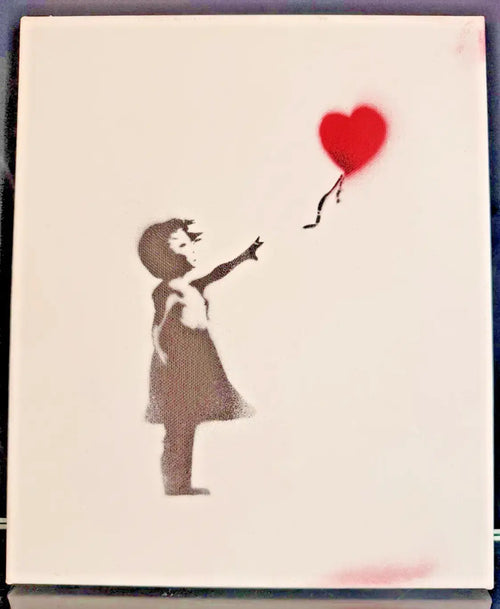
Banksy Girl with Balloon Dismaland 2/12 Signed Stencil Canvas 2015 Ticket
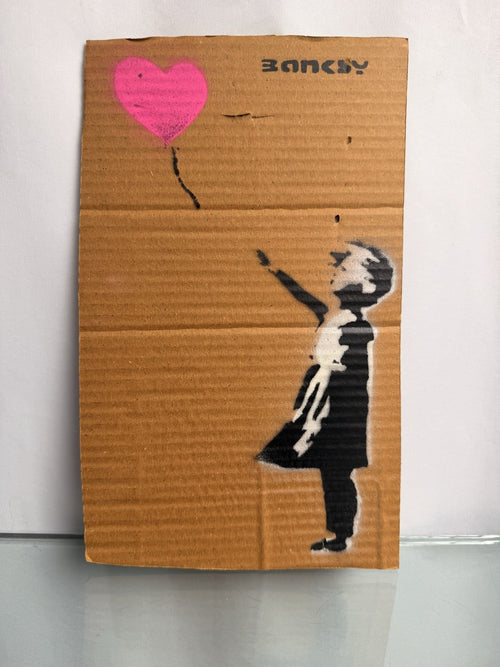
WMMS Signed Original Stencil Spray Art on Cardboard Banksy Dismaland Style 3/3
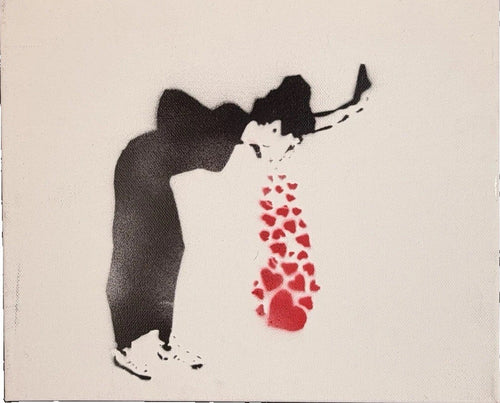
Banksy Dismaland Achieve Greatness 1/10 Signed Stencil Canvas 2015 Ticket
Be first when new Banksy pieces drop
You're on the list ✓ — first look at every new Banksy arrival.
Shop Banksy & Dismaland
Explore current pieces available from the gallery.

Browse the collection for current listings.