

Gauntlet Gallery — Banksy Prints
Four Soup Cans (Grey)
Work Summary & Collector Notes
Four Soup Cans (Grey) presents a 2x2 grid of identical Tesco Value-brand cream of tomato soup cans, each rendered with a white-and-blue striped lower body and a red "Tesco value" banner above the words "Cream of Tomato Soup" and a "400g" weight. By substituting Britain's cheapest supermarket own-label tin for a premium American product, Banksy directly satirises Andy Warhol's Campbell's Soup Cans, recasting Pop Art's celebration of consumer abundance as a comment on budget austerity and class.
Collector notes: Edition; saved release record states an edition size of 70. Edition-specific signature, numbering, and stamp details were not stated in the saved release record. Verify signing and numbering against a documented example of this edition.
Why It Matters
The print is one of Banksy's most pointed engagements with art history, hijacking the single most recognisable icon of American Pop Art and relocating it to a British discount supermarket. Where Warhol made the brand glamorous and aspirational, Banksy's swap to a Tesco Value tin (then a visual shorthand for the cheapest possible groceries) turns the joke back on consumer culture, equating mass-market art and mass-market food as products sold to the same crowd. It compresses his recurring anti-capitalist, anti-consumerist themes into a deadpan, instantly readable image, and is a defining example of his "appropriate and subvert" strategy alongside works like his reworked Monet and Warhol's Marilyn.
Collector Perspective
The Soup Cans series exists in several colourways; this Grey variant on a plain background was issued in an edition of 70 as a screen print, making it scarcer than Banksy's large open or unsigned runs. As an art-historical "name" image with broad recognition, it sits among the more liquid Banksy multiples, though the smaller edition and colour variant mean condition, signature status, and paperwork materially affect where a given example lands in the market.
Historical Context
Made in 2006, during Banksy's Stencil Boom Era when his market and public profile were rapidly expanding (the year of the Barely Legal Los Angeles show), the work directly references Andy Warhol's 1962 Campbell's Soup Cans, the foundational object of Pop Art. Banksy substitutes Tesco's Value range, the UK's no-frills budget line introduced in the 1990s and culturally synonymous with cheapness, so the homage doubles as social commentary on British class and supermarket consumerism. The Soup Cans were among the multiples published through Pictures on Walls, the print house central to disseminating his work in this period.
Documented Release Details
- Object type
- Editioned screenprint
- Release date
- 2006
- Release-date note
- Catalog-listed release year from the saved secondary record; primary release-page confirmation remains pending.
- Medium and materials
- Screen Print.
- Edition details
- Edition; saved release record states an edition size of 70.
- Signature and marks
- Edition-specific signature, numbering, and stamp details were not stated in the saved release record. Verify signing and numbering against a documented example of this edition.
Documented History and Meaning
History note: This page treats Banksy's broader career as background context, not proof that this specific edition belongs to any single exhibition or event. Release-level facts here come from a saved secondary catalog record.
Meaning / interpretation: Read as documented context rather than stated intent: Made in 2006, during Banksy's Stencil Boom Era when his market and public profile were rapidly expanding (the year of the Barely Legal Los Angeles show), the work directly references Andy Warhol's 1962 Campbell's Soup Cans, the foundational object of Pop Art. This is an interpretive reading of the release context, not a statement of the artist's intent for this specific work. This interpretive note follows the cited artist or publisher context.
Release context: The saved catalog lists 2006.
Authentication, Presentation and Provenance
- Original presentation
- Original packaging or presentation was not documented in the release sources reviewed.
- Authentication note
- Compare the support, dimensions, edition number, and signature against a documented example of this edition. Gauntlet Gallery does not authenticate works purchased from third parties.
- Provenance note
- Edition origin is attributed in the saved record to the release source named in the saved record. That does not establish the ownership history of an individual copy: retain the original invoice, reseller or gallery paperwork, labels, correspondence, and condition photographs.
Sources and Verification
Verification status: Secondary catalog snapshot; artist-level context added
- Banksy — Wikipedia · reference encyclopedia · Accessed 2026-07-13 · General artist-level biographical and career reference.
- Banksy (Q133600) — Wikidata · reference knowledge base · Accessed 2026-07-13 · Structured identifier used for the artist across catalog metadata.
FAQ
What does Four Soup Cans (Grey) depict?
A 2x2 grid of four identical tins of Tesco Value cream of tomato soup, each with blue-and-white stripes, a red value banner and a 400g label, parodying Andy Warhol's Campbell's Soup Cans by swapping in Britain's cheapest supermarket own-brand.
How large is the edition?
This Grey colourway was produced as a screen print in an edition of 70.
Is this print signed?
The title does not specify, so this should be treated as the standard edition; both signed and unsigned examples of Banksy's Soup Cans exist, and signed copies command a significant premium.
What is the medium?
It is a screen print (screenprint) on paper, dating from 2006.
Who is Banksy?
Banksy is an anonymous England-based street artist who emerged from Bristol in the early 1990s, known for fast stencil work, dark humour and anti-capitalist, anti-war and anti-establishment imagery, with many prints published through Pictures on Walls.
Related Banksy Works


Shop Banksy at Gauntlet Gallery
Live listings with authentication, provenance and documentation.
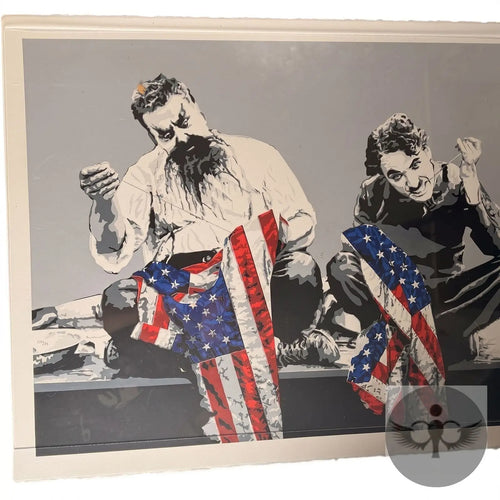
Mr. Brainwash 2018 "Recovery Plan" Signed Screenprint of Chaplin with USA Flag
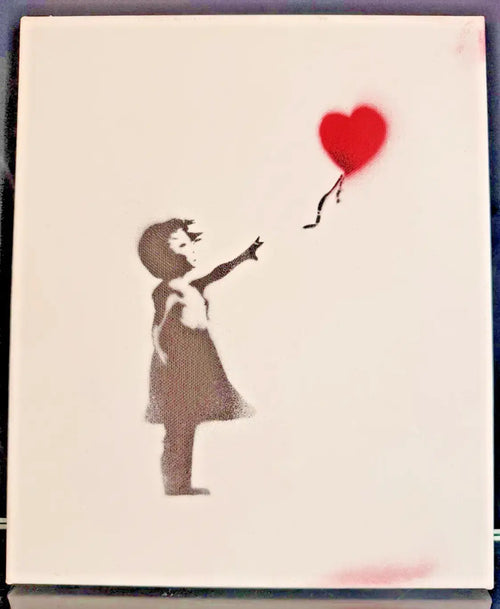
Banksy Girl with Balloon Dismaland 2/12 Signed Stencil Canvas 2015 Ticket
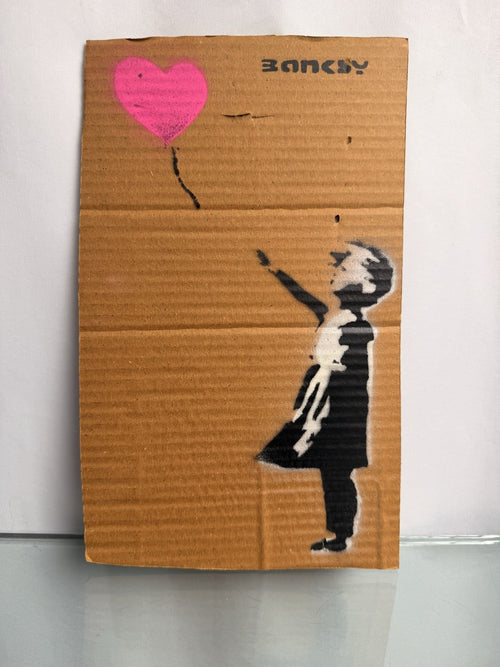
WMMS Signed Original Stencil Spray Art on Cardboard Banksy Dismaland Style 3/3
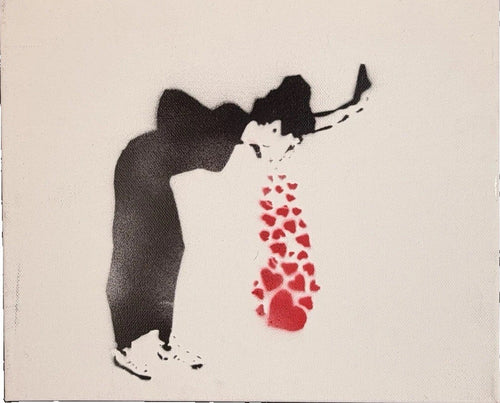
Banksy Dismaland Achieve Greatness 1/10 Signed Stencil Canvas 2015 Ticket
Be first when new Banksy pieces drop
You're on the list ✓ — first look at every new Banksy arrival.
Shop Banksy & Dismaland
Explore current pieces available from the gallery.

Browse the collection for current listings.