

Gauntlet Gallery — Banksy Prints
Trolleys (On End Paper)
Work Summary & Collector Notes
Trolleys (On End Paper) depicts three prehistoric-looking hunters in mid-attack — one swinging a club overhead, another crouched, a third lunging with a spear — converging not on prey but on three abandoned wire supermarket shopping trolleys scattered across a grassy plain under an open sky. Banksy collapses Stone Age survival and modern consumerism into a single image, presenting the shopping cart as the absurd quarry of the contemporary hunter-gatherer.
Collector notes: Edition; saved release record states an edition size of 56. Edition-specific signature, numbering, and stamp details were not stated in the saved release record. Verify signing and numbering against a documented example of this edition.
Why It Matters
The print is one of Banksy's sharpest visual jokes about consumerism: by casting the supermarket trolley — the everyday vehicle of acquisition — as wild game stalked by spear-wielding cavemen, he frames shopping itself as a primal, instinctual hunt that has barely evolved. The juxtaposition of stencilled primitive figures against an idyllic painterly landscape (open blue sky, golden field) sharpens the satire, suggesting the consumer impulse is hardwired rather than civilised. It sits squarely in his anti-capitalist body of work and remains one of his most quoted "the trolley as prey" compositions, later echoed in his larger Trolley Hunters canvas.
Collector Perspective
This is a genuinely scarce edition — 56 prints — far smaller than the multi-hundred runs of Banksy's better-known POW screen prints, which underpins its desirability among serious collectors. The "On End Paper" designation refers to the heavier decorative end paper stock this variant was printed on, distinguishing it from the standard release and giving it a distinct collecting identity. Given the low edition size and the strength of the Trolleys image within the consumerism theme, it occupies a respectable mid-to-upper position in the screen-print market rather than the very top tier reserved for Girl with Balloon or Love Is in the Air.
Historical Context
Produced in 2007, the print belongs to Banksy's Art-World Era, the period when his market exploded and his consumerism critique was at its most pointed — the same window that produced works like Morons and Festival (Destroy Capitalism). The Trolleys motif directly satirises Western consumer culture by equating the supermarket cart with hunted prey, a recurring idea Banksy developed into a major canvas, Trolley Hunters, which later became one of his most valuable paintings at auction. The image's "cavemen vs. shopping carts" gag reflects the mid-2000s climate of accelerating retail consumption that Banksy repeatedly targeted.
Documented Release Details
- Object type
- Editioned screenprint
- Release date
- 2007
- Release-date note
- Catalog-listed release year from the saved secondary record; primary release-page confirmation remains pending.
- Medium and materials
- Screen Print.
- Edition details
- Edition; saved release record states an edition size of 56.
- Signature and marks
- Edition-specific signature, numbering, and stamp details were not stated in the saved release record. Verify signing and numbering against a documented example of this edition.
Documented History and Meaning
History note: This page treats Banksy's broader career as background context, not proof that this specific edition belongs to any single exhibition or event. Release-level facts here come from a saved secondary catalog record.
Meaning / interpretation: Read as documented context rather than stated intent: Produced in 2007, the print belongs to Banksy's Art-World Era, the period when his market exploded and his consumerism critique was at its most pointed — the same window that produced works like Morons and Festival (Destroy Capitalism). This is an interpretive reading of the release context, not a statement of the artist's intent for this specific work. This interpretive note follows the cited artist or publisher context.
Release context: The saved catalog lists 2007.
Authentication, Presentation and Provenance
- Original presentation
- Original packaging or presentation was not documented in the release sources reviewed.
- Authentication note
- Compare the support, dimensions, edition number, and signature against a documented example of this edition. Gauntlet Gallery does not authenticate works purchased from third parties.
- Provenance note
- Edition origin is attributed in the saved record to the release source named in the saved record. That does not establish the ownership history of an individual copy: retain the original invoice, reseller or gallery paperwork, labels, correspondence, and condition photographs.
Sources and Verification
Verification status: Secondary catalog snapshot; artist-level context added
- Banksy — Wikipedia · reference encyclopedia · Accessed 2026-07-13 · General artist-level biographical and career reference.
- Banksy (Q133600) — Wikidata · reference knowledge base · Accessed 2026-07-13 · Structured identifier used for the artist across catalog metadata.
FAQ
What does Trolleys (On End Paper) depict?
Three primitive, caveman-like hunters — one swinging a club, one crouching, one thrusting a spear — attacking three abandoned wire supermarket shopping trolleys scattered across a grassy field under an open blue sky, equating modern shopping with a primal hunt.
What is the edition size?
The edition is just 56 prints, making it considerably scarcer than most of Banksy's mainstream screen-print releases.
What does 'On End Paper' mean?
It refers to the specific heavier decorative end paper stock this variant was printed on, distinguishing it from the standard paper release of the Trolleys image.
Is this print signed?
What is the medium?
It is a screen print (silkscreen) produced in 2007.
Who is Banksy?
Banksy is an anonymous England-based street artist who emerged from Bristol in the early 1990s, known for fast stencil work, dark humour, and anti-capitalist, anti-establishment imagery, with prints historically published through Pictures on Walls.
Related Banksy Works


Shop Banksy at Gauntlet Gallery
Live listings with authentication, provenance and documentation.
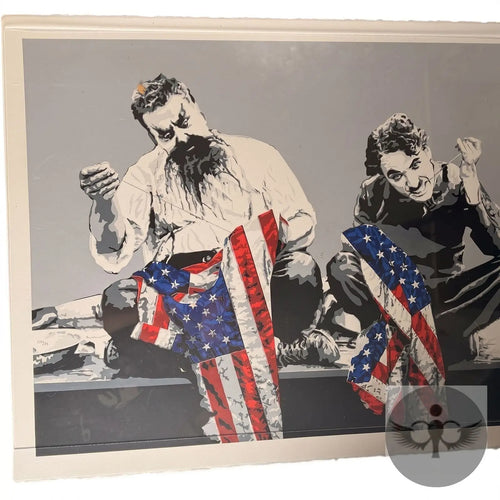
Mr. Brainwash 2018 "Recovery Plan" Signed Screenprint of Chaplin with USA Flag
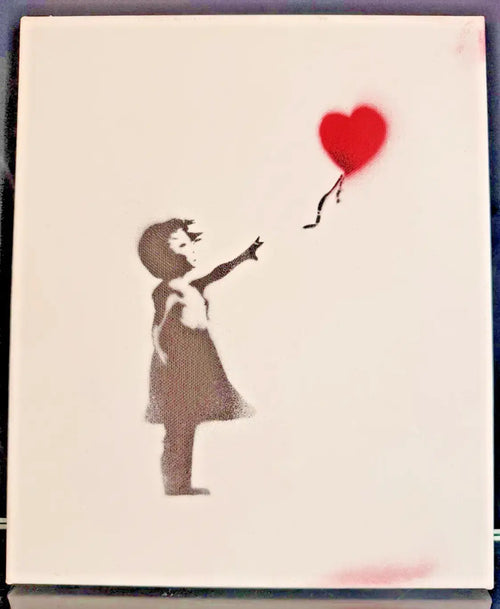
Banksy Girl with Balloon Dismaland 2/12 Signed Stencil Canvas 2015 Ticket
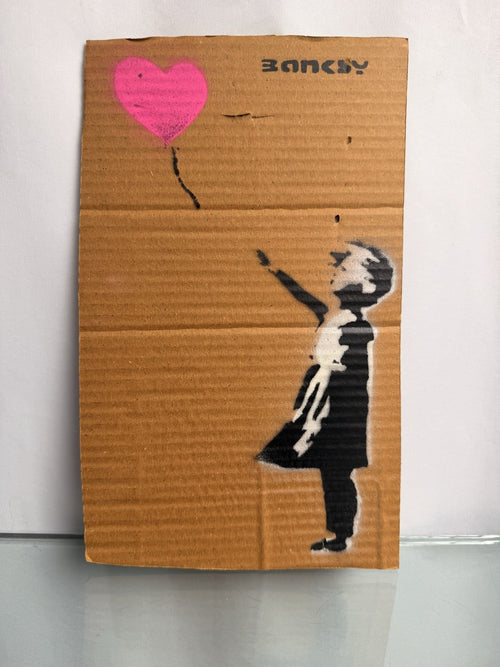
WMMS Signed Original Stencil Spray Art on Cardboard Banksy Dismaland Style 3/3
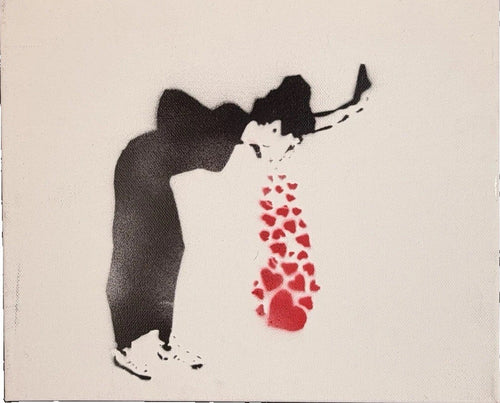
Banksy Dismaland Achieve Greatness 1/10 Signed Stencil Canvas 2015 Ticket
Be first when new Banksy pieces drop
You're on the list ✓ — first look at every new Banksy arrival.
Shop Banksy & Dismaland
Explore current pieces available from the gallery.

Browse the collection for current listings.