

Gauntlet Gallery — Banksy Prints
Welcome Mat (First Edition)
Work Summary & Collector Notes
Welcome Mat (First Edition) is a doormat Banksy created for Gross Domestic Product, its brown coir surface spelling "Welcome" in orange cursive lettering that was hand-stitched from the shredded fabric and torn nylon webbing of genuine life vests recovered from the Mediterranean migrant crossing. Sold as part of Banksy's 2019 anti-retail homeware project, it converts the most banal symbol of domestic hospitality into a pointed indictment of how Europe actually receives refugees arriving by sea.
Collector notes: Edition label was not stated, and total quantity was not documented in the saved record. Edition-specific signature, numbering, and stamp details were not stated in the saved release record. Verify signing and numbering against a documented example of this edition.
Why It Matters
Few Banksy editions collapse object and message as bluntly as this one: a doormat is literally the thing you wipe your feet on at a threshold, and Banksy makes it from the discarded safety gear of people who drowned or were turned away trying to cross that same threshold into Europe. Produced in collaboration with refugees at the Khora workshop in Athens, who stitched each mat from real recovered life jackets, it carries genuine material provenance rather than printed imagery, blurring the line between artwork, craft object, and political statement. As a centerpiece of Gross Domestic Product, it crystallizes Banksy's late-2010s pivot from wall stencils to mass-produced "homewares" that weaponize consumer goods, and it ties directly to his concurrent migrant-rescue activism, including the funding of the rescue vessel later named Louise Michel.
Collector Perspective
This is an object, not a print, and that shapes everything about its collectibility. Each Welcome Mat is a handmade textile sewn from salvaged life-vest material, so no two are identical and condition/material wear matter more than they would for paper editions. The Gross Domestic Product pieces were distributed through a lottery rather than open sale, deliberately suppressing speculation, which means clean provenance, an intact GDP receipt, and any associated documentation are decisive for value. As a three-dimensional, materially charged GDP work tied to a specific humanitarian cause, it occupies a niche but historically important corner of the market; demand is real but the pool of buyers comfortable with a non-wall, non-print object is narrower than for the classic stencil prints.
Historical Context
Gross Domestic Product launched in October 2019 as a homewares brand and a mock storefront in Croydon, South London, conceived partly as a response to a greeting-card company's attempt to trademark Banksy's name; the conceit was that making and selling his own merchandise would help him defend authorship. The store displayed goods but sold nothing in person, with stock released via an online lottery. Welcome Mat sits squarely within Banksy's intensifying engagement with the European migrant crisis in this period, the years following the peak of Mediterranean sea crossings, when life jackets had become the defining visual emblem of mass drownings off Greece and Italy. The mats were made with refugee labor in Athens, folding the production process itself into the work's meaning.
Documented Release Details
- Object type
- Editioned print or object
- Release date
- 2019
- Release-date note
- Catalog-listed release year from the saved secondary record; primary release-page confirmation remains pending.
- Medium and materials
- Medium and materials were not documented in the saved record.
- Edition details
- Edition label was not stated, and total quantity was not documented in the saved record.
- Signature and marks
- Edition-specific signature, numbering, and stamp details were not stated in the saved release record. Verify signing and numbering against a documented example of this edition.
Documented History and Meaning
History note: This page treats Banksy's broader career as background context, not proof that this specific edition belongs to any single exhibition or event. Release-level facts here come from a saved secondary catalog record.
Meaning / interpretation: Read as documented context rather than stated intent: Gross Domestic Product launched in October 2019 as a homewares brand and a mock storefront in Croydon, South London, conceived partly as a response to a greeting-card company's attempt to trademark Banksy's name; the conceit was that making and selling his own merchandise would help him defend authorship. This is an interpretive reading of the release context, not a statement of the artist's intent for this specific work. This interpretive note follows the cited artist or publisher context.
Release context: The saved catalog lists 2019.
Authentication, Presentation and Provenance
- Original presentation
- Original packaging or presentation was not documented in the release sources reviewed.
- Authentication note
- Compare the support, dimensions, edition number, and signature against a documented example of this edition. Gauntlet Gallery does not authenticate works purchased from third parties.
- Provenance note
- Edition origin is attributed in the saved record to the release source named in the saved record. That does not establish the ownership history of an individual copy: retain the original invoice, reseller or gallery paperwork, labels, correspondence, and condition photographs.
Sources and Verification
Verification status: Secondary catalog snapshot; artist-level context added
- Banksy — Wikipedia · reference encyclopedia · Accessed 2026-07-13 · General artist-level biographical and career reference.
- Banksy (Q133600) — Wikidata · reference knowledge base · Accessed 2026-07-13 · Structured identifier used for the artist across catalog metadata.
FAQ
What does Welcome Mat actually depict?
It is a functional brown coir doormat with the word "Welcome" stitched in orange cursive script. The lettering and trim are hand-sewn from the shredded fabric and webbing of real life jackets recovered from Mediterranean migrant sea crossings, turning a hospitality cliché into a comment on how refugees are received.
Is it a print or an object?
It is a three-dimensional textile object, not a paper print. Each mat is individually handmade from salvaged life-vest material, so examples vary slightly from one another.
What is the edition size?
The edition size for this First Edition is not confirmed in our records.
Is it signed?
Signature status is not confirmed here.
Who is Banksy?
Banksy is an anonymous England-based street artist who emerged from Bristol in the early 1990s, known for fast stencil work, dark humour, and anti-war, anti-capitalist messaging. Gross Domestic Product (2019) was his self-run homewares project, of which Welcome Mat is one of the most politically charged pieces.
Related Banksy Works


Shop Banksy at Gauntlet Gallery
Live listings with authentication, provenance and documentation.
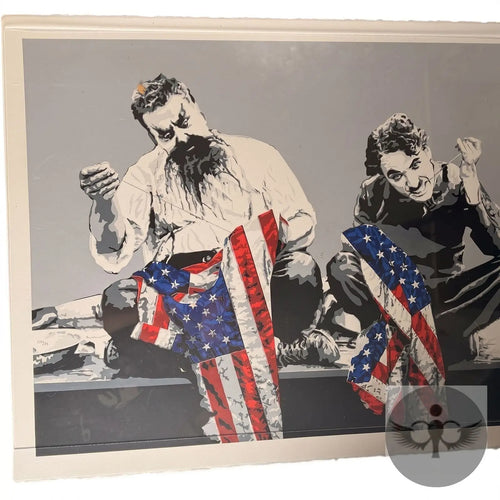
Mr. Brainwash 2018 "Recovery Plan" Signed Screenprint of Chaplin with USA Flag
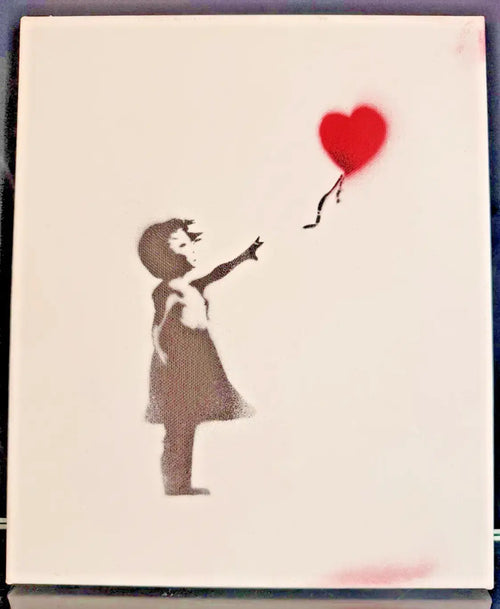
Banksy Girl with Balloon Dismaland 2/12 Signed Stencil Canvas 2015 Ticket
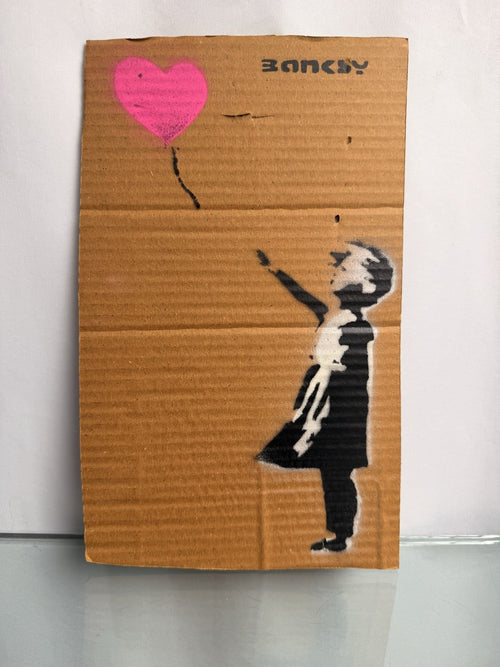
WMMS Signed Original Stencil Spray Art on Cardboard Banksy Dismaland Style 3/3
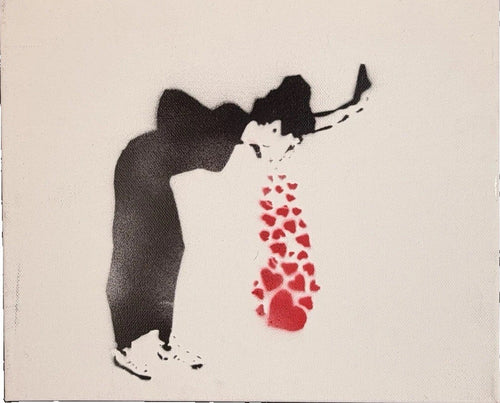
Banksy Dismaland Achieve Greatness 1/10 Signed Stencil Canvas 2015 Ticket
Be first when new Banksy pieces drop
You're on the list ✓ — first look at every new Banksy arrival.
Shop Banksy & Dismaland
Explore current pieces available from the gallery.

Browse the collection for current listings.