Provenance Research: How to Trace the Ownership History of a Collectible
Provenance — the documented ownership history of a work — is one of the most important factors in both authentication and valuation. A piece with a traceable ownership chain back to a known, credible source is fundamentally more secure than a piece with an unknown or asserted history. Building provenance research skills is a core collector competency.
Why Provenance Matters Beyond Authentication
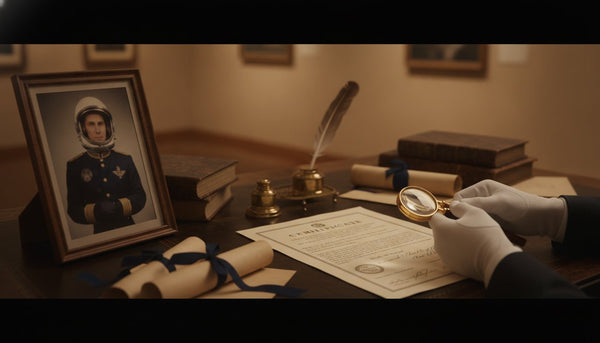
Authentication establishes that a piece is genuine. Provenance establishes that this specific piece has a credible history — it wasn't stolen, wasn't involved in fraud, and has moved through the market in documentable ways. For space and music memorabilia, provenance connects a piece to its specific story: the difference between "signed photograph" and "photograph signed at the Apollo 15 crew press conference."
How to Research Provenance
- Auction records — Heritage, Sotheby's, Christie's, Phillips all maintain searchable databases of past sales. If a piece appeared at auction, it has a public provenance anchor.
- Gallery documentation — Purchase receipts from established galleries function as provenance documentation. Retain all original receipts and invoices from every acquisition.
- Authentication service records — PSA, JSA, Zarelli, and Pest Control maintain certification databases. Certification numbers can be verified against these databases.
- Physical evidence — Exhibition stickers on the backs of frames, previous auction lot stickers, and storage labels all provide provenance clues.
Red Flags in Provenance Stories
Stories without documentation, unverifiable private collection claims, missing links in the chain, and seller resistance to providing documentation all warrant heightened scrutiny. The strength of a provenance story is inversely related to how much it relies on being taken on faith.