The condition of your collection determines its value — and condition is largely determined by how well you store and care for works over time. Improper storage is the most preventable cause of value loss in art collections, yet it's also the most commonly neglected aspect of collecting. This guide covers the standards used by museums and professional collections for long-term preservation.
Climate Control: The Foundation of Preservation
| Parameter | Museum Standard | Danger Zone | Effect of Violation |
|---|---|---|---|
| Temperature | 65–70°F (18–21°C) | Below 55°F or above 80°F | Brittleness, paint cracking |
| Relative Humidity | 45–55% RH | Below 30% or above 65% | Mold, foxing, warping, embrittlement |
| Fluctuation | Less than 5°F / 5% RH daily | Rapid changes | Expansion/contraction stress; cracking |
| UV Light | Below 75 lux for paper | Direct sunlight, unfiltered fluorescent | Fading, discoloration, ink breakdown |
| Pollution | Filtered air; low dust | Urban pollution, smoke, cooking fumes | Surface soiling, chemical degradation |
Archival Framing Standards
Mat Board
- Archival: 100% cotton rag or acid-free buffered alpha-cellulose mat board. pH neutral or slightly alkaline. No optical brighteners.
- Non-archival (avoid): Regular cardboard — acidic and causes mat burn (yellowing) over years.
Glazing
- UV-filtering glass: Blocks 99%+ of UV radiation. Museum standard.
- UV-filtering acrylic (Tru Vue Optium Museum Acrylic): Same UV protection, lighter, shatter-resistant. Better for large pieces.
- Standard glass: No UV protection — acceptable only for non-valuable decorative pieces.
Storage for Unframed Works
- Flat file storage: Steel (not wood) archival flat files with acid-free lining.
- Archival portfolio boxes: Acid-free clamshell boxes with works interleaved with acid-free glassine or tissue.
- Vertical slot storage: For larger prints — padded, archival slots with no rough surfaces.
- Avoid: Plastic bags (trap moisture), rubber bands (stain and deform), wooden shelves without barrier, basements and attics.
Professional Storage Options
- Crozier Fine Arts: Largest dedicated fine art storage company in North America. Used by Christie's, Sotheby's, and major collectors.
- Uovo (NYC, L.A., Miami): Tech-forward storage with digital inventory management. Preferred by contemporary collectors.
- Iron Mountain Fine Art: Alternative for institutional-grade climate-controlled storage.
Preservation Checklist
- ☐ Climate: 65–70°F, 45–55% RH, minimal fluctuation
- ☐ Framed works: UV-filtering glass/acrylic, archival mat and backing
- ☐ Unframed works: acid-free boxes or flat files, archival interleaving
- ☐ Display: no direct sunlight; UV-filtering window film
- ☐ Handling: cotton gloves; support from below
- ☐ Condition photos updated annually
- ☐ Professional conservator consulted for any cleaning or treatment
Citations: [1] American Institute for Conservation, "Caring for Your Collections," 2024. [2] Library of Congress, "Storage of Works on Paper." [3] Getty Conservation Institute, Environmental Guidelines for Museums, 2024. [4] Tru Vue, UV Protection standards for museum glazing.
Available at Gauntlet Gallery
Explore current pieces available from the gallery.
-

1963 Farquhar Earth in Space Transparent Celestial Globe 16" Compass VTG
$699.00 USD
-

1967 Beatles Richard Avedon STERN Original Posters Set of 4 Linen Backed Copy
$999.00 USD
-
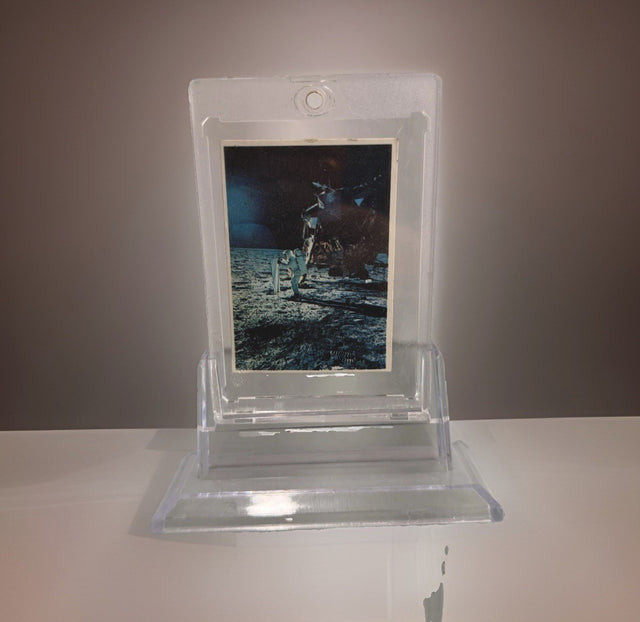
1969 Space Candy Buzz Aldrin Apollo 11 On The Moon Card #19 Taylor-Reed Display
$59.00 USD
-

1980 Polo Player Green Pink Chalk Pastel Bears Andy Warhol Signature AS-IS
$399.00 USD
-

After Andy Warhol Moon Landing Line Drawing 5/50 w/ Astronaut Autographs As-Is
$175.00 USD
-

After John Lennon "I Do" Framed Print, Marked A/P Unverified
$99.00 USD


Browse the collection for current listings.