This article provides general educational information only. Consult a qualified tax professional before making tax-related decisions regarding your collection.
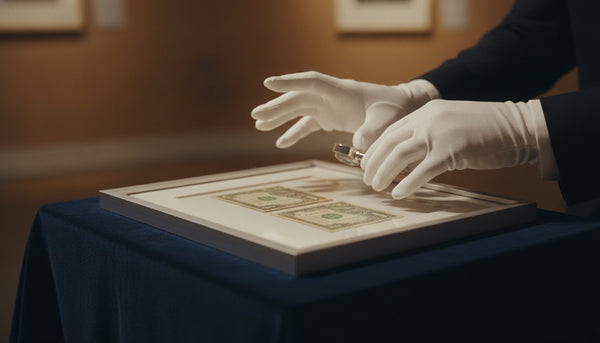
Art collecting intersects with tax planning in several important ways that sophisticated collectors actively manage. Understanding the tax treatment of art — from purchase through sale, donation, or estate transfer — can meaningfully affect the economics of collecting over a lifetime.
The Collectibles Tax Rate: The Hidden Disadvantage
The IRS classifies art and collectibles as a separate asset class taxed at a maximum 28% long-term capital gains rate — compared to 15–20% for stocks. For a $15,000 gain on a print, that's $4,200 in federal tax versus $2,250–$3,000 for the same gain on equities.
Charitable Donation Strategy: The Appreciation Play
The most powerful tax strategy in art collecting is donating appreciated works to qualified museums. If you purchased a print for $3,000 now worth $18,000 and donate it directly to a qualifying museum, you deduct the $18,000 fair market value as a charitable contribution — avoiding both the capital gains tax and generating a significant income tax deduction. The combined advantage versus a sale can exceed $10,000 on a single transaction.
Key Requirements
- Qualified appraisal required for deductions over $5,000 (ASA/AAA certified appraiser)
- Related use requirement: the museum must use the art in its exempt purpose
- Must be held over one year (short-term donations deduct only at cost basis)
- Form 8283 required; Part B for deductions over $5,000 requires appraiser's signature
The Stepped-Up Basis Estate Advantage
When you die with appreciated art in your estate, heirs receive a stepped-up cost basis equal to fair market value at death. All pre-death appreciation is never subject to income tax. For high-appreciation assets like Basquiat or Haring works, this can represent hundreds of thousands of dollars in tax savings to heirs on significant collections.
Cost Basis Documentation
From the moment of purchase, maintain original purchase receipts (price, date, seller), records of costs that increase basis (restoration, conservation), and any appraisal costs. Missing documentation forces reconstruction of basis — often at the IRS's less-favorable interpretation.
Collector Checklist: Tax-Aware Art Collecting
- ☐ Cost basis documented from purchase date for every item
- ☐ Holding period tracked (over 1 year for long-term rate)
- ☐ Donation strategy evaluated for appreciated pieces
- ☐ Qualified appraiser engaged for donation deductions over $5,000
- ☐ Estate plan reviewed with attorney for stepped-up basis optimization
- ☐ CPA familiar with art/collectibles tax treatment engaged for significant transactions
Citations: [1] IRS Publication 526, Charitable Contributions. [2] IRS Publication 544, Sales and Other Dispositions. [3] American Society of Appraisers, Qualified Appraisal Standards. [4] Tax Foundation, "Collectibles Capital Gains," 2024.