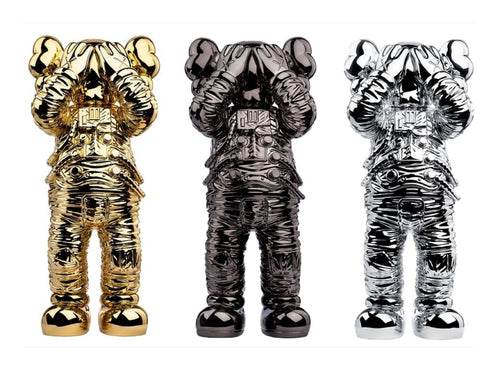
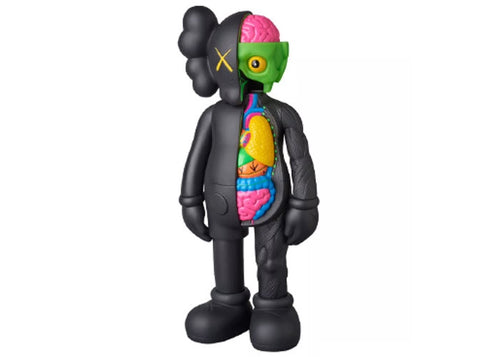
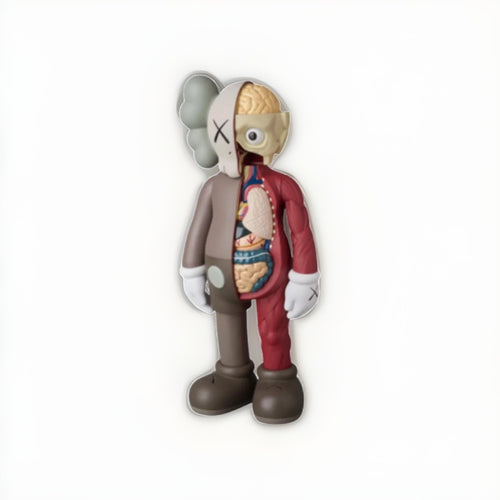
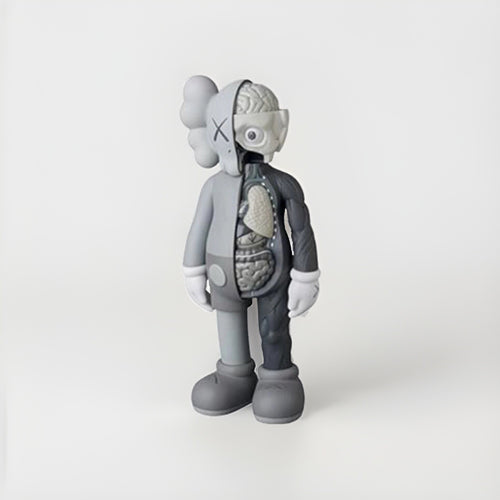
Should you buy KAWS COMPANION or BFF first? For nearly every new collector, COMPANION is the right first piece. It is the original 1999 character, the most recognizable silhouette in contemporary collectible art, and the figure with the deepest, most liquid secondary market. BFF is the right second piece.
That answer ships with caveats — colorway, edition, condition, and intent all change the calculus. Below is the framework Gauntlet Gallery uses with collectors, built on more than 160,000 comparable sales across street art and contemporary collectibles.
Who is KAWS?

KAWS is Brian Donnelly, born 1974 in Jersey City. He began as a graffiti artist subverting bus-stop and phone-booth ads in the 1990s, introduced the X-eyed COMPANION character in 1999, and has since become one of the most commercially dominant living artists. His auction record stands at $14.7 million, set at Sotheby's Hong Kong in 2019 for The KAWS Album. His annual secondary-market volume now exceeds $200 million across vinyl figures, signed prints, plush toys, inflatables, and fashion collaborations.
Two characters anchor the collectible market: COMPANION (1999) and BFF (2012). Knowing how they differ is the foundation of building a KAWS collection that holds value.
COMPANION: The Original
What it is
COMPANION debuted in 1999 as a Bounty Hunter collaboration — a Mickey-Mouse-derived figure with crossbones for eyes and X marks on the gloves. It is the character that defined KAWS's vocabulary: skeletal hands at the chest, downcast posture, instantly legible silhouette.
Why it's the strongest first piece
- Liquidity. COMPANION moves faster than any other KAWS character on the secondary market. There is always a buyer at the right price.
- Recognition. The X-eye silhouette is the most photographed KAWS form. It reads instantly in a room and in a listing thumbnail.
- Price discovery. Twenty-five years of sales data means comp pricing is precise. You know what you should pay and what you should sell for.
- Edition depth. COMPANION exists in dozens of colorways and sizes — Original Fake, Open Edition, Brooklyn Museum, Holiday inflatables, MoMA editions — letting you enter at multiple price points.
BFF: The Softer Counterpart

What it is
BFF was introduced in 2012 as a pink, plush-textured figure with ear-like appendages and the same X-eyed face. It reads as a hug rather than a slouch — explicitly designed as a comforting counterpoint to COMPANION's melancholy.
Why it's the right second piece, not first
- Cultural resonance is softer. BFF is beloved, but it does not carry COMPANION's twenty-five-year cultural weight.
- Thinner trading history. The data set is twelve years deep instead of twenty-five, so price discovery is less precise — especially on rare colorways.
- Narrower silhouette recognition. Outside core collectors, BFF reads as "a KAWS thing" rather than "the KAWS thing."
- Excellent diversifier. Once a collection has a COMPANION anchor, BFF adds tonal contrast and pink-palette appeal that pure COMPANION stacks lack.
Side-by-Side Comparison
| Attribute | COMPANION | BFF |
|---|---|---|
| Year introduced | 1999 | 2012 |
| Visual cue | X-eyes, skeletal hands, downcast posture | Pink body, ear-like appendages, plush texture |
| Cultural weight | Defining KAWS form; museum-anchored | Affectionate counterpart; younger-collector appeal |
| Secondary-market liquidity | Highest of any KAWS character | Strong but thinner |
| Primary colorways | Black, Grey, Brown, Original Fake | Pink (primary), Black, Grey |
| Entry price (open editions) | $300-$600 | $400-$800 |
| Mid-tier (museum editions, 11") | $1,500-$3,500 | $1,800-$4,000 |
| Top-tier (rare colorways, large format) | $8,000-$45,000+ | $5,000-$25,000+ |
| Appreciation track record | 5x-20x retail on limited editions | 3x-15x retail on limited editions |
Ranges reflect verified-condition pieces with original packaging. Gauntlet Gallery's 160,000+ comparable sales dataset informs these bands.
Primary Colorways vs Special Editions

Primary colorways
Black, Grey, and Brown COMPANION (and Black/Grey BFF) are the canonical entry points. Buy these first. They are the most counterfeited but also the most documented, which makes authentication cleaner. They form the foundation of every serious collection.
Special editions
Brooklyn Museum, MoMA, Dior, Uniqlo, NGV (National Gallery of Victoria), Holiday inflatables, and event-specific drops carry institutional or scarcity premiums. Limited editions have historically appreciated 5x to 20x retail within five years. These are second-stage purchases — buy them once you can authenticate independently and have established a relationship with a dealer who can.
What Each Piece Represents
COMPANION is the loneliness piece. KAWS has described the character as carrying the emotional weight of being seen but disconnected. It reads as contemporary melancholy rendered in cartoon vocabulary — which is precisely why it lands with collectors raised on animation but living adult lives.
BFF is the connection piece. The pink palette, plush texture, and embracing posture are explicit comfort. Where COMPANION is the diary entry, BFF is the hug. Collectors often pair the two intentionally — the slouch and the squeeze.
The Case for COMPANION First

- You will resell at some point. Even committed collectors trade up. COMPANION sells faster, at tighter spreads, on every platform.
- It anchors a collection. A COMPANION in the room signals seriousness; BFF reads as a companion piece without one.
- Comp pricing is sharper. Twenty-five years of data means you negotiate from a stronger position.
- It is the character most associated with KAWS's auction record. Cultural narrative compounds.
The Case for BFF First (Narrow but Real)
- You are buying for a child or a softer aesthetic. BFF reads warmer in a domestic space.
- You already own a COMPANION via a partner or family. Diversification matters.
- A specific BFF colorway is undervalued. Occasionally a pink open-edition BFF trades below intrinsic value during oversupply windows.
Authentication: Non-Negotiable on Either
The KAWS counterfeit rate on open marketplaces sits at an estimated 40-60%, with fakes appearing within 72 hours of every official drop. This is not optional diligence — it is the entire investment thesis.
Every KAWS piece sold by Gauntlet Gallery ships with our TrueCOA blockchain authentication system: a single, tamper-proof certificate of authenticity anchored on-chain that you can verify online. The certificate resolves to a blockchain-anchored record tied to the specific piece, not the model. If you cannot independently verify the piece, you cannot price it — and you cannot resell it.
For the full authentication framework — packaging tells, stamp variance, weight signatures, blacklight checks, and chip verification flow — see our KAWS Collector Guide.
Bottom Line
Buy COMPANION first. Buy a Black, Grey, or Brown primary colorway in original packaging from a dealer who issues TrueCOA documentation. Once you have an anchor piece you can authenticate, price, and resell with confidence, layer in BFF in pink for tonal contrast. That two-piece foundation positions you to graduate into Brooklyn Museum, MoMA, and Holiday editions where the 5x-20x appreciation lives.
Gauntlet Gallery has been authenticating and trading KAWS since 2012 and maintains one of the most granular comparable-sales datasets in the secondary market.