Compare like-for-like signed objects or artifacts with matching mission association, signer, condition, authentication and provenance; a category-wide rate or median mixes different objects.
Green Day has sold 75 million records worldwide, earned a 2015 Rock and Roll Hall of Fame induction, and helped define a generation of rock — yet Billie Joe Armstrong signed memorabilia continues to trade at a structural discount to peers like Springsteen, Bon Jovi, or McCartney. For collectors who understand the comp structure, that gap is an opportunity.
What Is a Billie Joe Armstrong Signed Guitar Worth in 2026?

The current authenticated market for Billie Joe Armstrong signed guitars sits in three clean tiers, defined by substrate, documentation, and provenance. Whether you are buying, selling, or insuring, your piece almost certainly fits one of the comp bands below.
Price Tiers by Configuration
| Configuration | Authentication | Comp Range |
|---|---|---|
| Signed pickguard only | PSA / Beckett / JSA | $400 - $1,200 |
| Full-size signed electric (Stratocaster style) | PSA / Beckett / JSA | $1,500 - $3,500 |
| Full-size signed acoustic | PSA / Beckett / JSA | $2,200 - $5,000 |
| Full band signed (BJ + Mike Dirnt + Tre Cool) | PSA / Beckett / JSA | $3,000 - $9,000 |
| Stage-used + signed | PSA / Beckett / JSA + photo match | $5,000 - $15,000+ |
| Charity-event documented (Bridge School, Global Citizen) | Event LOA + grader | $8,000 - $20,000+ |
Acoustic vs Electric Premium
A signed Fender Stratocaster style electric in the $1,800-$2,400 band will typically have a matching-condition acoustic comp at $2,400-$3,200.
The Tour-Period Premium: Why Dates Matter
The premium exists because tour-window pieces have a tighter provenance story: a venue, a date, often a photo or witness. In our database, a generic signed Stratocaster pickguard averages $675; the same item with verified Saviors Tour signing context averages $850-$925.
How to Verify Tour-Window Provenance
- Dated event LOA from the charity, venue, or signing event
- Photo-match to a known signing line or meet-and-greet
- Ticket stub or wristband bundled with the piece
- Grader notes referencing the event in the PSA/Beckett/JSA write-up
The Full-Band Multiplier

A Green Day guitar signed by Billie Joe alone is one asset class. The same guitar signed by all three core members — Billie Joe Armstrong, Mike Dirnt, and Tre Cool — is a different asset class entirely, generally trading at 50-100% over the single-signed comp. The reason is supply: Armstrong signs frequently at events; getting all three signatures on a single substrate is rare, and the market prices that scarcity directly.
In our 2024-2026 comp window, a single-signed Stratocaster averaged $2,150. Full-band-signed equivalents averaged $3,400-$4,300, with one charity-context piece breaking $7,800.
Stage-Used Multipliers: The 2-3x Rule
The math is straightforward: photo-matched stage use moves the piece from "autograph collectible" to "performance artifact," which expands the buyer pool to include institutional collectors, museums, and high-end private collections.
Documentation standards for stage-used pieces:
- Photo-match by a recognized service (Resolution Photomatching, MEARS for instruments)
- Roadie or tech LOA naming the specific tour leg
- Wear patterns consistent with use (strap rash, fret wear, pick scratches)
- Hardware match (pickup configuration, knob wear) to known tour photos
Authentication: Why PSA, Beckett, and JSA Matter

Three letters separate a $400 piece from a $1,400 piece on identical substrate: PSA, BAS (Beckett Authentication Services), or JSA (James Spence Authentication). These are the only autograph authenticators that Gauntlet Gallery, the major auction houses, and serious collector communities accept without secondary verification.
The Authentication Hierarchy
| Tier | Authenticators | Market Acceptance |
|---|---|---|
| Tier 1 (canonical) | PSA, Beckett (BAS), JSA | Verify the opinion and identifier with the named authenticator; acceptance varies by buyer and venue. |
| Tier 2 | Roger Epperson REAL, Tracks | Check the stated opinion’s scope and the intended sale venue’s requirements. |
| Tier 3 | In-person event LOA only | Check the signer, event evidence and the intended sale venue’s documentation requirements. |
| Not accepted | Unauthenticated, COA-only from unknown issuers | An unknown issuer’s certificate does not independently establish authenticity or a predictable resale discount. |
Gauntlet Gallery applies the Music category authentication canon — Beckett, JSA, and PSA standards — to every Armstrong piece we list, with cross-grading on any item entering at six figures or charity-provenance status.
Why the Armstrong Market Is Underpriced
Green Day was inducted into the Rock and Roll Hall of Fame in 2015. Historically, Hall of Fame induction reprices a band's memorabilia within 5-10 years — Nirvana, Pearl Jam, and R.E.M. all saw signed-guitar comps double or triple post-induction. Armstrong's market has lagged this curve, partially because the 2020-2022 touring pause suppressed supply discovery and partially because the pop-punk collector cohort is younger and only now entering peak buying years.
The 2024 Dookie 30th anniversary cycle and the 2024 Saviors World Tour have both refreshed media coverage and collector interest. We expect single-signed Stratocaster comps to move from the current $1,800-$2,400 band into the $2,400-$3,200 band over the next 24-36 months, with full-band and stage-used comps moving proportionally.
Buying and Selling: How Gauntlet Gallery Prices Armstrong Pieces

Every Armstrong piece we authenticate runs through three valuation passes:
- Premium adjustment for full-band signatures, stage use, charity provenance, or inscriptions
- Market velocity check against current 90-day sell-through rates for the Armstrong category
The result is a defensible list price with documented comps — the same methodology we apply across Fairey, KAWS, Warhol, and our broader music memorabilia inventory.
Ready to Buy or Sell a Signed Green Day Piece?
Whether you are sourcing a signed Stratocaster, evaluating a full-band acoustic for resale, or insuring a stage-used piece, Gauntlet Gallery's signed music collection and authentication desk are the fastest path to a verified comp.
Browse Signed Music Collection
Frequently Asked Questions
How much is a Billie Joe Armstrong signed guitar worth?
A PSA, Beckett, or JSA authenticated full-size signed guitar trades between $1,500 and $5,000, depending on substrate (electric vs acoustic), signing surface, and tour-period context.
Does a full-band signature (Billie Joe + Mike Dirnt + Tre Cool) add value?
A $2,150 single-signed Stratocaster comp typically maps to a $3,400-$4,300 full-band equivalent in our 2024-2026 data.
What authentication should I require?
Only PSA, Beckett (BAS), or JSA. These three are the canonical authenticators for autographed music memorabilia.
Is a stage-used signed guitar worth more than a signed-only guitar?
Stage-used and signed guitars trade at 2-3x the signed-only comp, provided the stage use is documented via photo-match, roadie LOA, or hardware verification. The premium reflects expansion into the institutional and museum buyer pool.
Shop Music memorabilia
Explore current pieces available from the gallery.
-
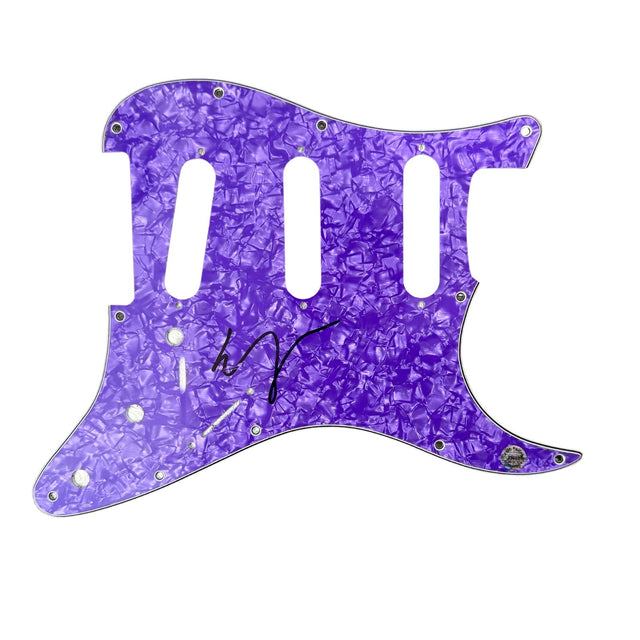
Vampire Weekend Ezra Koenig Signed Guitar Pickguard Autograph Hologram COA
$100.00 USD
-
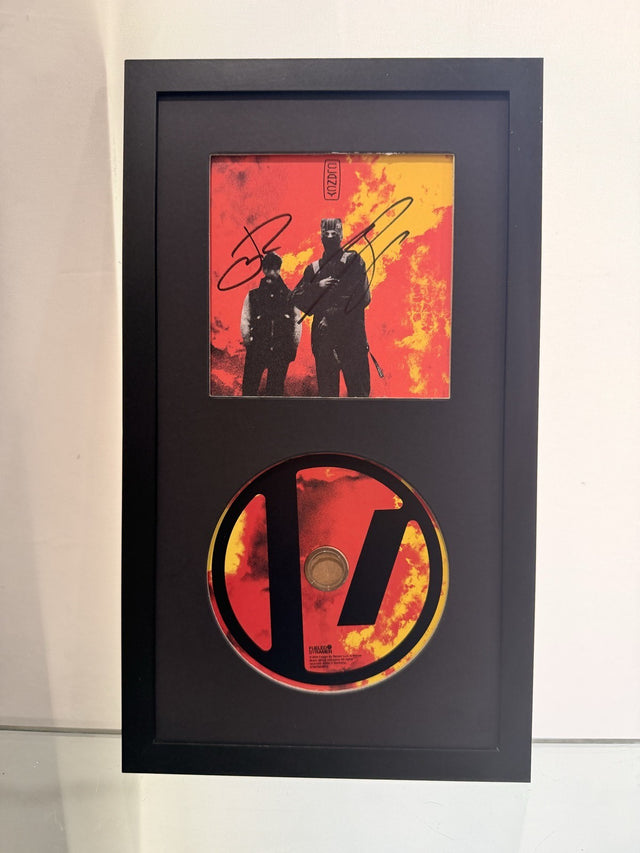
Twenty One Pilots Signed Clancy CD Framed Display Tyler Joseph Josh Dun Auto
$199.00 USD
-
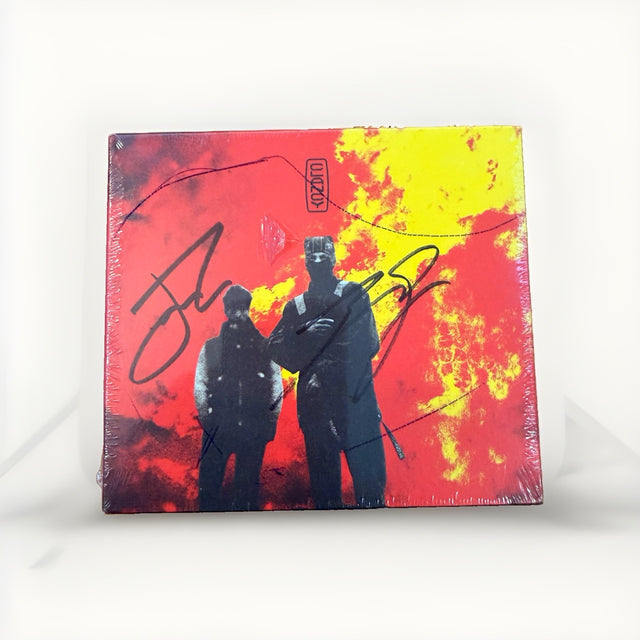
Twenty One Pilots Clancy Signed CD Tyler Joseph Josh Dun Sealed Unopened 2024
$189.00 USD
-
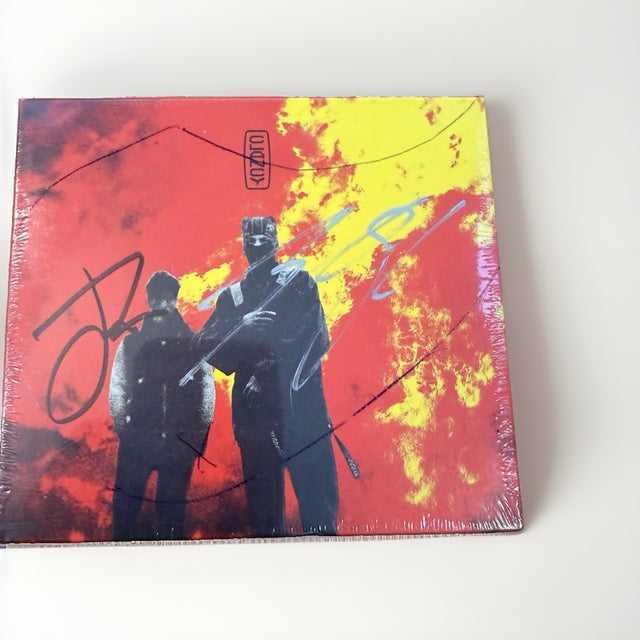
Twenty One Pilots Clancy Signed CD Sealed Tyler Joseph Josh Dun Silver Autograph
$189.00 USD
-
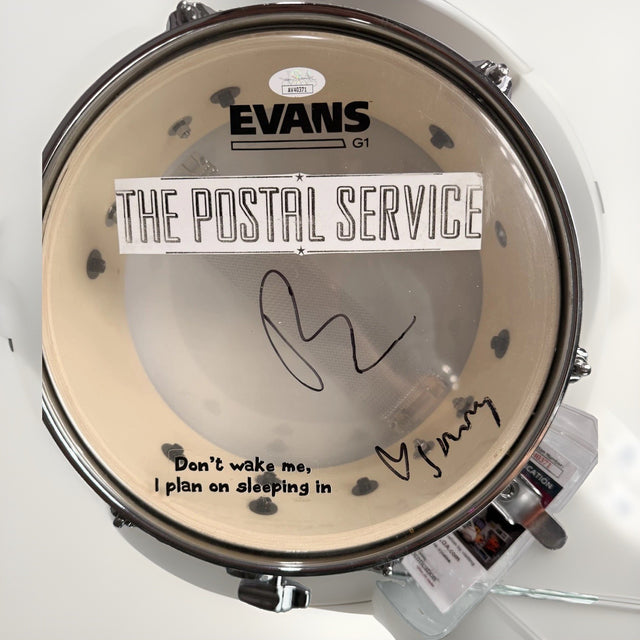
The Postal Service Dual Signed Evans M-80 Drumhead JSA A40371
$499.00 USD
-
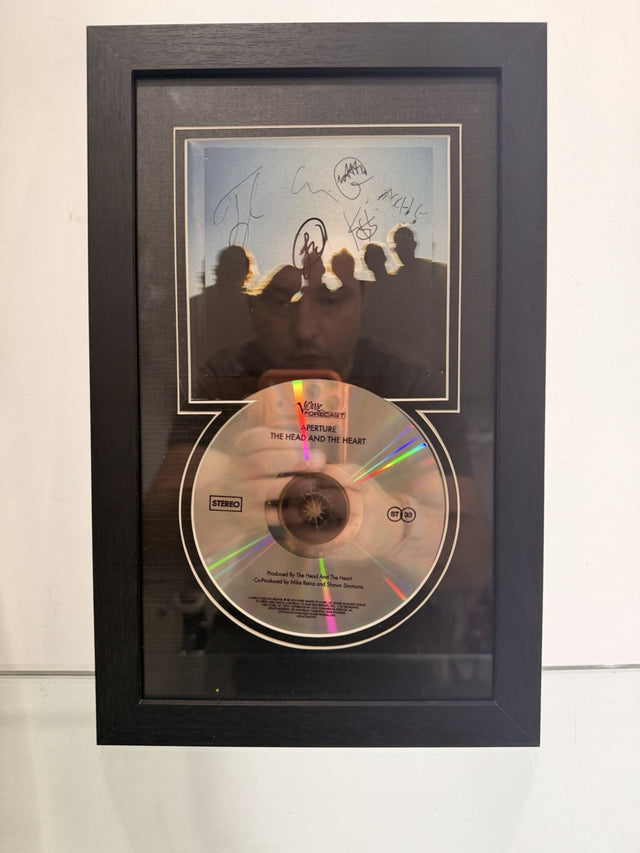
The Head and the Heart Band Signed Framed 'aperture' CD COVER ALBUM
$65.00 USD
Browse the collection for current listings.