DEATH NYC Goku Black vs Goku Van Gogh Mashup AP Signed Ltd Ed Print COA — Collector Guide, Value & Authentication
This isn't just a print. It's a collision of worlds — a Saiyan battle detonated inside a post-impressionist dreamscape, frozen in archival ink at the exact moment both universes refuse to yield.
The drop was absolute pandemonium. A secret location in SoHo, word leaked on the dark web, and suddenly you had hypebeasts, art flippers, and dead-serious collectors clawing over each other for a piece of something that shouldn't exist but somehow does: Goku Black and Goku locked in their most visceral rivalry, suspended against the swirling cypresses and thunderous wheat-gold sky of Van Gogh's A Wheatfield with Cypresses. This is what DEATH NYC does best, and this print is one of the clearest arguments they have ever made.
What This Print Depicts
DEATH NYC built its reputation on cultural collisions that feel both inevitable and impossible the moment you see them. The Goku Black vs Goku mashup is a precise distillation of that instinct. On one side you have Goku — Dragon Ball Z's boundlessly optimistic Saiyan, a character who has achieved godhood purely through the refusal to stop fighting. On the other you have Goku Black, the corrupted mirror-image who weaponized that same power for destruction. The rivalry between them is one of the most emotionally loaded in anime history, a meditation on identity, corruption, and what remains when everything good is stripped from a hero.
Van Gogh's A Wheatfield with Cypresses (1889, painted during his voluntary stay at the Saint-Paul-de-Mausole asylum) is a work built entirely from violent motion — wheat convulsing in wind, cypresses spiraling like dark flames, a sky that churns rather than simply exists. It is a landscape that feels like it is barely containing something seismic. DEATH NYC recognized that this backdrop does not merely frame the Saiyan conflict. It mirrors it. The swirling impasto strokes become ki energy. The dark cypresses become shadow portals. The gold of the wheat becomes Super Saiyan aura. The choice is not arbitrary; it is surgical.
The result is a piece that speaks simultaneously to Dragon Ball Z fans who grew up on the Goku Black arc, Van Gogh enthusiasts who understand the psychological weight behind those brushstrokes, and street-pop collectors who have tracked DEATH NYC since the artist began plastering walls in New York and beyond. That triple audience is exactly what makes this print commercially and culturally durable.
Authentication
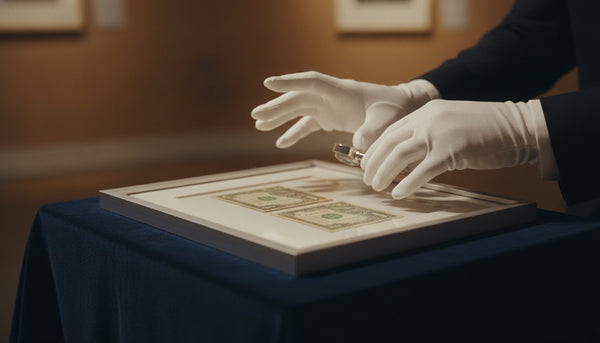
Provenance is everything in the limited-edition print market, and DEATH NYC's authentication chain is one of the cleanest in street pop art. Here is what to verify before purchase or resale:
- Certificate of Authenticity (COA): The COA must feature a physically raised gold embossed seal. Run your finger across it — if it lies flat, you are holding a reproduction. Embossing requires physical pressure tooling and cannot be replicated by standard printing processes.
- Hand Signature: Every authentic DEATH NYC print carries the artist's original hand-signature in pen, applied directly to the print surface after production. Signatures should show natural variation in pressure and ink flow. Printed or stamped signatures are a disqualifying red flag.
- Edition Numbering: Standard DEATH NYC editions typically run 50 to 100 copies. Artist Proof (AP) designations sit outside this main sequence, reserved from the primary run — making them inherently scarcer. The AP designation should appear hand-written in the margin alongside the signature.
- Original Retail Price: This print retailed at approximately $100. Provenance documentation showing original sale price supports authenticity and anchors secondary-market valuation conversations.
- Paper and Print Quality: Authentic DEATH NYC prints use archival-grade paper stock with consistent ink saturation. Examine edges under strong light for registration marks or offset patterns that suggest mass reproduction.
At Gauntlet Gallery we conduct multi-point authentication checks on every DEATH NYC piece before it enters our inventory. Our team cross-references edition numbers against known sale records and verifies physical COA characteristics in person.
Collector Value
The investment case for DEATH NYC is straightforward when you look at the data. Popular mashup motifs from the artist — particularly those pairing globally recognized anime characters with blue-chip fine-art backdrops — have demonstrated 2x to 5x appreciation within 12 to 24 months on the secondary market. Pieces that combine high-recognition IP (Dragon Ball Z has maintained a global active fanbase for over 30 years) with fine-art pedigree (Van Gogh is among the five most recognized painters in Western art history) carry a demand floor that single-reference pieces do not.
The AP designation sharpens that calculus further. If the main edition runs 75 copies, the AP pool is likely fewer than 10 pieces in circulation globally. Scarcity at that level is structural, not manufactured — it reflects the physical realities of how editions are produced and proofed.
Since 2012, Gauntlet Gallery has tracked more than 160,000 comparable sales across the street-pop and limited-edition print category. That data set informs our acquisition pricing, our condition grading, and the forward-looking valuations we share with collectors. DEATH NYC as an artist has shown consistent secondary-market demand growth, driven by the expansion of anime culture into mainstream Western collecting and by the street-pop segment's continued cross-pollination with institutional fine art.
For the collector with a medium-term horizon — 18 to 36 months — the Goku Black vs Goku Van Gogh AP represents a coherent thesis: iconic IP, blue-chip fine-art backdrop, artist-proof scarcity, authenticated provenance, and a price of entry that remains accessible relative to comparably scarce works in adjacent categories.
Own the moment where two of history's most turbulent creative universes finally meet.